

Why Half of Lucknow’s Commuters Shun Public Transport: New Study Maps the Gaps
A new survey-based study of Lucknow, India finds that over half of commuters avoid public transport, with multinomial regression showing ...
A new survey-based study of Lucknow, India finds that over half of commuters avoid public transport, with multinomial regression showing ...

A multi-agent AI system called LISBOA grounds travel and mobility answers in live Lisbon data, lifting judged quality scores by ...
A new single-number metric, the spatial range exponent, reveals a universal decay of mobility correlations across US cities and flags ...
A new discrete choice model called WorkReach shows that workers consistently commute farther for economically sophisticated jobs while revealing accessibility ...

Researchers in Cairo have developed a hybrid CNN–BiLSTM deep learning model fed by IoT sensor data that forecasts urban traffic ...
A large-scale cross-cultural eye-tracking study of 1,272 people in 22 cities finds that perceived safety in autonomous mobility is driven ...
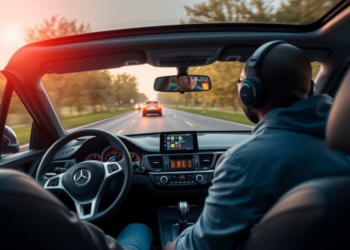
Researchers in Porto have developed a game theory-inspired machine learning framework that gives each transportation mode its own tailored feature ...
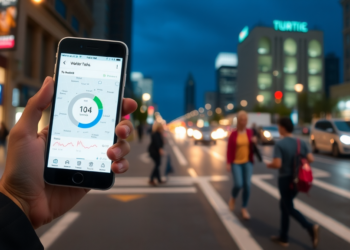
Researchers have coupled Google's anonymised smartphone foot traffic data with a stochastic end-use model to simulate city-scale water demand in ...

A new multi-agent LLM framework converts 25 years of WIPO patent data into simulated industry–academia R&D collaboration plans for urban ...
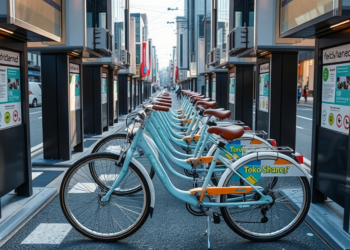
By analysing fifteen-minute snapshots of bicycle availability at more than 3,200 Tokyo stations across three seasons, researchers classified bike-share docks ...


Embark on a thrilling journey of discovery with Scienmag.com—your ultimate source for cutting-edge breakthroughs. Immerse yourself in a world where curiosity knows no limits and tomorrow’s possibilities become today’s reality!