


Computational method predicts thousands of new exfoliable 2D materials from ordinary crystals
A new computational method from HZDR and TU Dresden predicts separable atomic layers in any crystal, identifying 2,531 promising two-dimensional ...
A new computational method from HZDR and TU Dresden predicts separable atomic layers in any crystal, identifying 2,531 promising two-dimensional ...

A connectedness analysis found that AI, robotics, semiconductor, hydrogen and water markets transmitted shocks rapidly within a highly integrated financial ...
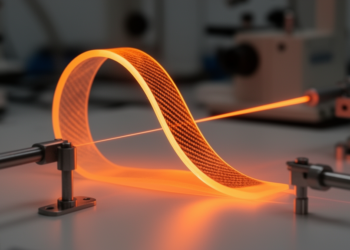
A new theoretical model unites fractional heat conduction, rotation, magnetic fields, and fiber reinforcement to show how thermal memory dampens ...

A systematic review identifies post-CMOS hardware neurons as a promising route toward faster, more energy-efficient and adaptive brain-inspired computing for ...

Oregon State University chemists have patented a water-based precipitation process that separates zirconium from hafnium with a record separation factor ...
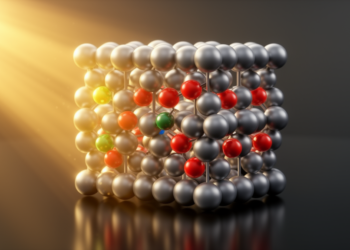
A new density functional theory study compares single, mixed, and multi-doping strategies in ZnO, identifying co-dopant combinations like Al–Mg and ...
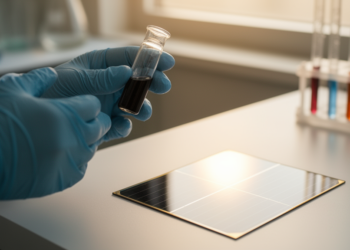
Princeton-led researchers have shown that adding a volatile eutectic mixture of zinc bromide and methyl ammonium chloride during fabrication dramatically ...
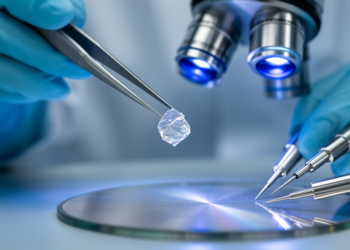
Researchers at South Korea's Institute for Basic Science chemically converted a single tungsten diselenide crystal into a complete high-performance transistor, ...
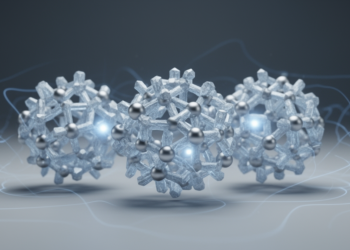
A new study shows that doping zinc oxide nanoparticles with silver simultaneously increases their hardness and elastic moduli while boosting ...
A neural-network potential developed in Japan enables simulations of 100,000-atom silicon crystals, revealing that hydrogen-induced platelets contain two to three ...


Embark on a thrilling journey of discovery with Scienmag.com—your ultimate source for cutting-edge breakthroughs. Immerse yourself in a world where curiosity knows no limits and tomorrow’s possibilities become today’s reality!