

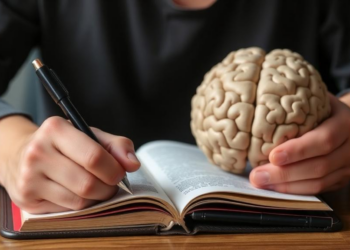
Motor priming rewires resting brain rhythms in writer’s cramp, pointing to smarter dystonia therapies
A Duke University fMRI study shows that a motor priming task reverses cerebellar resting-state activity in writer's cramp patients compared ...
A Duke University fMRI study shows that a motor priming task reverses cerebellar resting-state activity in writer's cramp patients compared ...

A conductance-based computer model of the Parkinsonian brain circuit shows that deep brain stimulation and rhythmic visual input reshape network ...
Twenty years after Susan Spencer proposed that seizures arise from connected brain networks rather than a single focus, a new ...
A comparative analysis of more than 32,000 publications shows temporal interference stimulation growing fastest among brain stimulation technologies while early ...
A case report describes a man whose severe neuropathic pain after a 1991 gunshot spinal cord injury fell from 8/10 ...
Brain-computer interfaces promise to restore movement and communication to people whose nervous systems no longer can, but the technology has ...
A Duke-led meta-analysis of nine clinical trials finds that transcranial magnetic stimulation produces a mild-to-moderate, statistically significant improvement in focal ...
A new theoretical framework proposes that pupil dynamics measured non-invasively can serve as a systems-level biomarker linking dopamine and norepinephrine ...
A systematic review of 28 clinical studies finds that no repetitive transcranial magnetic stimulation protocol yet qualifies as a routine ...
A new review from University of Miami researchers argues that the effectiveness of vagus nerve stimulation in targeted plasticity therapy ...

Embark on a thrilling journey of discovery with Scienmag.com—your ultimate source for cutting-edge breakthroughs. Immerse yourself in a world where curiosity knows no limits and tomorrow’s possibilities become today’s reality!