

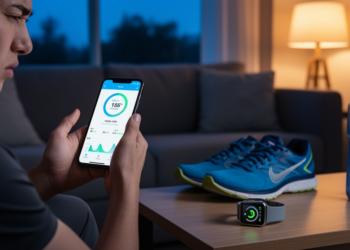
Your Fitness App Is Missing the Point: New Research Reveals Why Personalization Fails
A Swedish study of 24 adults shows that fitness apps and wearables fail to sustain engagement because personalization relies on ...
A Swedish study of 24 adults shows that fitness apps and wearables fail to sustain engagement because personalization relies on ...

A randomized controlled trial of 486 new meditation app subscribers found that pairing time-contingent financial incentives with outcome-focused messages roughly ...
A camera-based AI system running on an ordinary tablet scored the Balance Error Scoring System more consistently than real-time human ...
A study of 1,655 patient-submitted smartphone images of a urine-based tuberculosis adherence test found that 72 percent were clearly interpretable, ...
A randomized controlled trial found that a 45-minute mobile game called esTOCma significantly improved teachers' knowledge of OCD, reduced stigma, ...
A randomized pilot trial found that a four-week self-compassion program delivered through a mobile messaging app was feasible and improved ...
Researchers in Colombia and Brazil have validated a two-device wearable system costing under $83 that measures heart rate and respiratory ...
A prospective study of 327 lung cancer patients found that higher daily step counts measured by smartphone during radiotherapy were ...
A matched cohort study found that an AI-driven, gamified mobile health app was associated with significantly greater blood pressure reductions ...

Embark on a thrilling journey of discovery with Scienmag.com—your ultimate source for cutting-edge breakthroughs. Immerse yourself in a world where curiosity knows no limits and tomorrow’s possibilities become today’s reality!