

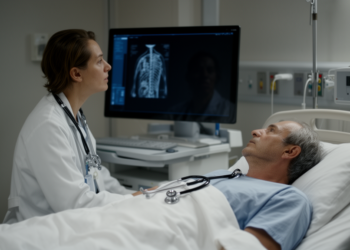
Medical AI: are Osler’s principles lost in translation?
An opinion article argues that medical AI should strengthen, rather than displace, bedside observation, clinical reasoning and the physician-patient relationship.
An opinion article argues that medical AI should strengthen, rather than displace, bedside observation, clinical reasoning and the physician-patient relationship.

A lightweight ShuffleNetV2 model distinguished active from non-active pulmonary tuberculosis on chest radiographs with a prospective AUC of 0.896 and ...

DROID-RV estimated right-ventricular size and function from echocardiogram videos, while predictions in a primary-care cohort were associated with heart failure, ...

A retrospective study in high-grade serous tubo-ovarian carcinoma found that HRDPath inferred homologous recombination deficiency from pathology slides with an ...
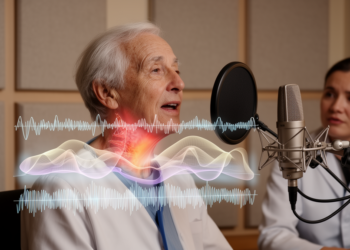
A benchmark study combining entropy-guided partitioning, machine learning and fuzzy inference improved voice-based Parkinson’s disease classification on two public datasets.

A quantitative analysis of 42 medical AI policies from seven major economies finds strong strategic vision but weak implementation tools, ...

Researchers have developed a fuzzy inference network that embeds prior knowledge from multiple medical data modalities and classified four types ...

Medical artificial intelligence (AI) is rapidly evolving from a theoretical construct into a tangible instrument that has the potential to ...


Embark on a thrilling journey of discovery with Scienmag.com—your ultimate source for cutting-edge breakthroughs. Immerse yourself in a world where curiosity knows no limits and tomorrow’s possibilities become today’s reality!