

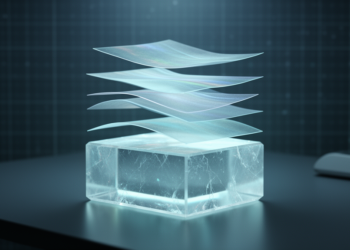
Computational method predicts thousands of new exfoliable 2D materials from ordinary crystals
A new computational method from HZDR and TU Dresden predicts separable atomic layers in any crystal, identifying 2,531 promising two-dimensional ...
A new computational method from HZDR and TU Dresden predicts separable atomic layers in any crystal, identifying 2,531 promising two-dimensional ...
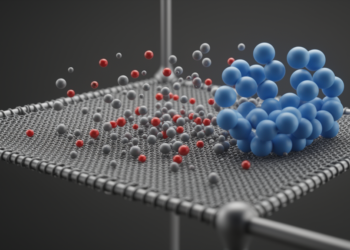
Graphene–amorphous carbon bilayer membranes just 2 nanometres thick combine sharp molecular sieving with CO2 permeance of up to 5,000 gas ...
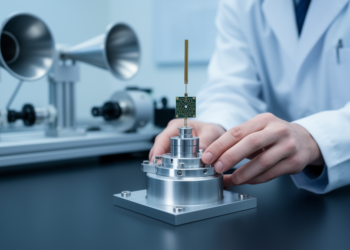
Researchers report a simulated graphene-based terahertz MIMO antenna with a 1.33 THz bandwidth and machine learning-assisted optimization, though no prototype ...
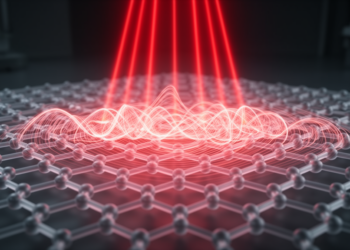
Researchers at the Technion and in Germany report in Nature Physics the first direct optical control of electrons in a ...

Researchers at the University of Arkansas and the University of Michigan report a graphene-based energy harvester that converts ambient 60 ...
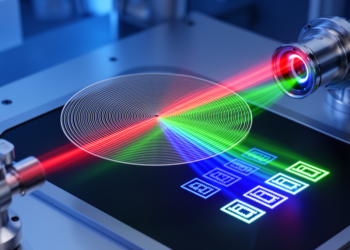
An experimental graphene optical system uses red, green and blue light challenges, transformer-assisted image analysis and binary codes to create ...
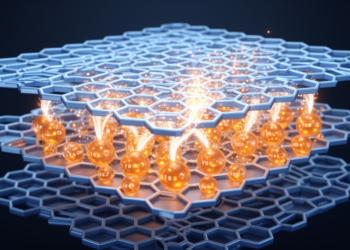
Researchers used nanoscale electrochemistry to show that magic-angle twisted bilayer graphene enhances iodide oxidation catalysis through moiré-engineered electronic states.
A new review argues that engineering atomically sharp interfaces in two-dimensional materials can break flash memory's long-standing trade-offs among speed, ...
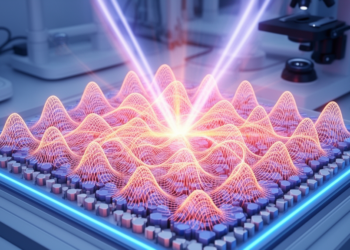
A mini-review distinguishes chirality concepts and maps device platforms for programmable chiral metasurfaces aimed at 6G terahertz systems.

An experimental study found that sub-nanometer bends in graphene produced a model-consistent flexoelectric response that depended on curvature rather than ...


Embark on a thrilling journey of discovery with Scienmag.com—your ultimate source for cutting-edge breakthroughs. Immerse yourself in a world where curiosity knows no limits and tomorrow’s possibilities become today’s reality!