


Improved 2.5D-UNet Enhances Pseudo-CT Generation for Head PET Attenuation Correction
A 2.5D-UNet architecture using consecutive PET slices outperforms standard 2D models in generating pseudo-CT scans for PET attenuation correction.
A 2.5D-UNet architecture using consecutive PET slices outperforms standard 2D models in generating pseudo-CT scans for PET attenuation correction.
Researchers developed a topology-aware point-cloud generation framework combining simplicial diffusion and multi-scale graph decoding to preserve global structural coherence without ...

Researchers evaluated two variational autoencoder loss functions across 1,260 synthetic datasets from three tabular benchmarks, finding an additive balance component ...

A scientific review of 202 published studies evaluates how advanced fractionation pretreatments, genetic engineering tools, and integrated biorefinery models can ...

A multi-agent retrieval-augmented framework coordinates specialized language models to deliver structured, rubric-aligned feedback on student writing while restricting direct answer ...

Strengthening community health worker programs provides a cost-effective pathway to expand primary care and accelerate universal health coverage in lower-income ...

A study evaluating retrieval-augmented language models across diabetes management tasks found improved semantic similarity and clinician preference, though performance gains ...
A new survey of 94 studies charts the rise of retrieval-augmented generation in biomedicine and identifies trade-offs among reasoning depth, ...
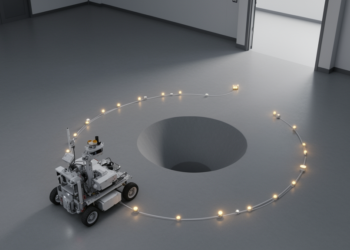
A constrained optimization method generated collision-free waypoints that helped simulated point-mass and wheelchair-type robots overcome local minima in artificial potential ...
A new theoretical study argues that generative AI stabilizes interpretation before moral judgment forms, shifting the focus of AI ethics ...


Embark on a thrilling journey of discovery with Scienmag.com—your ultimate source for cutting-edge breakthroughs. Immerse yourself in a world where curiosity knows no limits and tomorrow’s possibilities become today’s reality!