

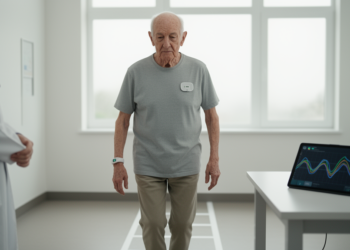
Wearable Sensors and AI Are Rewriting How Parkinson’s Disease Is Measured, Landmark Study Finds
A bibliometric analysis of 3,332 publications shows wearable sensor research in Parkinson's disease has grown exponentially since 2019, shifting from ...
A bibliometric analysis of 3,332 publications shows wearable sensor research in Parkinson's disease has grown exponentially since 2019, shifting from ...
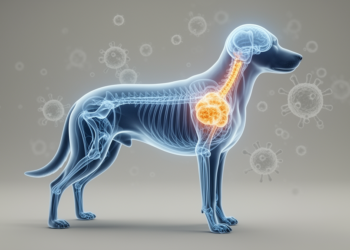
Chronic pain in dogs has long been treated as a problem of worn joints, strained tendons, and stiffened connective tissue. ...

A signed network analysis of gait shows that total hip arthroplasty restores covarying whole-body coordination within six months while trading-off ...

A case report describes how an 8-month multidisciplinary protocol combining rTMS, brain-computer interface training, and multimodal assessment was associated with ...
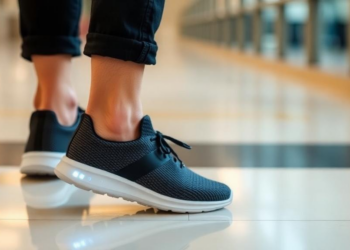
Rutgers engineers have built a self-powered smart shoe that harvests energy from each footstep and uses onboard artificial intelligence to ...

A new iScience study shows that human walking shifts between discrete and rhythmic control regimes as speed changes, with converging ...
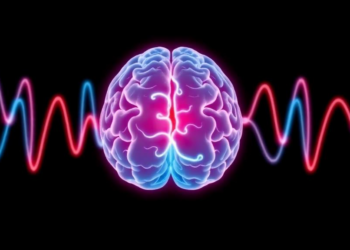
A new study shows that ten sessions of high-frequency magnetic stimulation targeting the primary motor cortex improved freezing of gait ...

A matched-cohort study finds that Parkinson's patients with nocturnal hypokinesia show slower turning, poorer backward walking, and fewer daily steps, ...
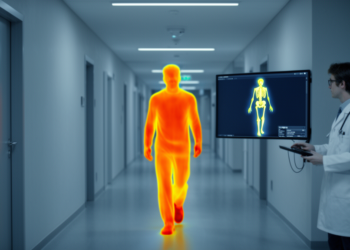
A new survey compares marker-based, markerless and thermal imaging approaches to human pose estimation for detecting gait changes linked to ...
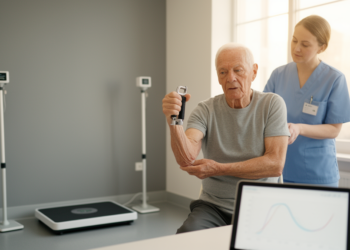
An unsupervised machine learning analysis of 23 physical performance measures in 368 older adults identified three performance clusters that aligned ...


Embark on a thrilling journey of discovery with Scienmag.com—your ultimate source for cutting-edge breakthroughs. Immerse yourself in a world where curiosity knows no limits and tomorrow’s possibilities become today’s reality!