


Simulations Reveal Oblique Magnetic Fields Enhance Heat Transfer While Nanoparticles Impede Cooling
Numerical modeling indicates that angling a magnetic field at thirty degrees enhances convective heat transfer by up to seventy-eight percent ...
Numerical modeling indicates that angling a magnetic field at thirty degrees enhances convective heat transfer by up to seventy-eight percent ...

A critical scientific review evaluates how discrete element modeling captures grain-scale deformation mechanisms to improve geotechnical slope stability assessments and ...

A new viscoelastic material model predicts denture adhesive behavior by integrating temperature, swelling, and pH variables into finite element simulations.

A third-order characteristic-based-split finite element algorithm accurately simulates aerodynamic forces and galloping stability across single and four-bundled crescent-iced power conductors.

A biophysical model demonstrates how membrane tension and cell-nucleus mechanical coupling regulate confined cell migration through narrow constrictions.

A computational investigation reveals that bio-inspired helicoidal sandwich skew plates achieve up to fourteen point seven percent higher natural frequencies ...

Researchers developed a trapezoid cryo-FIB milling strategy combined with finite element mechanical modeling to enable dual-axis cryo-electron tomography and prevent ...

A new gold-coated photonic crystal fiber sensor demonstrates high sensitivity for detecting glycerine concentrations, offering a precise alternative to traditional ...
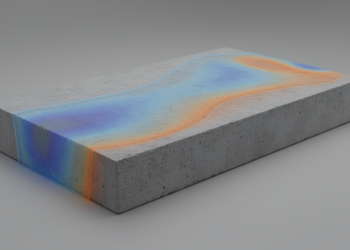
Researchers developed three-dimensional deep learning architectures that predict shrinkage stresses and displacements in monolithic concrete slabs within seconds using voxel ...

Researchers have developed a weakly coupled numerical homogenization approach that efficiently captures interconnected electromagnetic losses and thermal heating across layered ...


Embark on a thrilling journey of discovery with Scienmag.com—your ultimate source for cutting-edge breakthroughs. Immerse yourself in a world where curiosity knows no limits and tomorrow’s possibilities become today’s reality!