

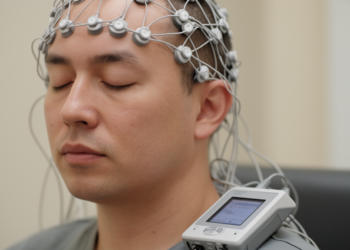
EEG Fatigue Detection Improves via Personal Spectral Baselines
A new EEG framework improves cross-subject driving fatigue detection by using early personal spectral references and causal long-sequence residual encoding.
A new EEG framework improves cross-subject driving fatigue detection by using early personal spectral references and causal long-sequence residual encoding.

A physics-informed graph neural network achieved 92.48% overall accuracy in predicting industrial robotic arm fatigue life across variable-load conditions.

An international study of 1758 men with non-metastatic prostate cancer found that pre-radiotherapy fatigue and diabetes were the strongest predictors ...

Additively manufactured CoCrNi hybrid metamaterials with precipitation-hardened inner fillings show a dual-plateau compressive response and fatigue life extended by over ...

A systematic review of 46 studies finds that most external training load metrics are supported as measures of external movement ...

A study of 807 rheumatic disease patients found fatigue partially mediated the association between disease activity and all physical quality-of-life ...

A UK Biobank study of 1,444 breast cancer survivors links higher allostatic load, a composite of 11 stress-related biomarkers, to ...

A randomized controlled trial found that eight weeks of home-based, remotely supervised pranayama breathing training significantly improved sleep quality, daytime ...

A Perspective in Frontiers in Sports and Active Living proposes a task- and time-specific framework requiring responsiveness, predictive validity and ...

The Bulletin of the National Research Centre's August 2026 editorial highlights five studies, including the first laboratory test of a ...


Embark on a thrilling journey of discovery with Scienmag.com—your ultimate source for cutting-edge breakthroughs. Immerse yourself in a world where curiosity knows no limits and tomorrow’s possibilities become today’s reality!