

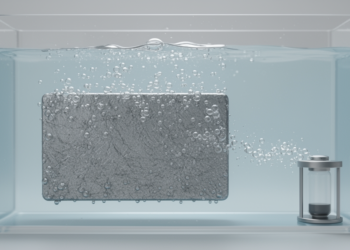
Zinc Chemistry Breakthrough Turns Metal into a Reusable Hydrogen Battery
Researchers have used machine learning to discover that lactate ligands unlock reversible zinc oxidation, enabling a safe, circuit-free carrier that ...
Researchers have used machine learning to discover that lactate ligands unlock reversible zinc oxidation, enabling a safe, circuit-free carrier that ...
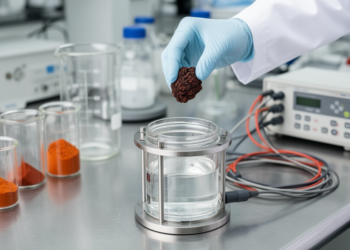
Researchers at BITS Pilani transformed ordinary hematite, the iron oxide found in rust, into a high-performance supercapacitor electrode using simple ...
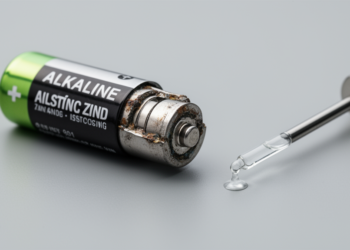
A University of Waterloo team combined electrochemical experiments with neural networks and genetic algorithms to predict aluminum anode corrosion in ...
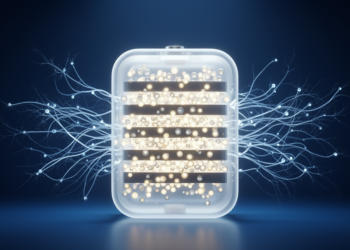
A new review shows that hybrid deep learning and swarm-optimized AI models are achieving near-perfect prediction of lithium-ion battery charge, ...
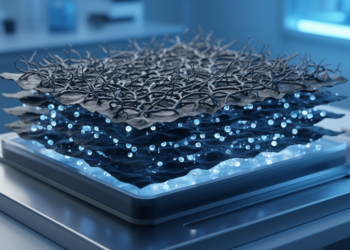
Researchers have grown a reduced graphene oxide–polypyrrole composite directly on stainless steel by chemical bath deposition, achieving a specific capacitance ...
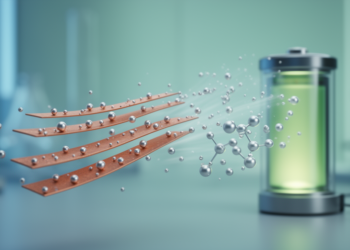
The pursuit of practical carbon-neutral technologies has pushed researchers to explore catalysts that can transform carbon dioxide into liquid products ...
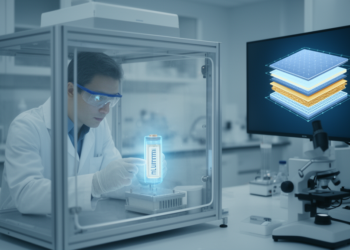
A new review collection in Frontiers in Batteries and Electrochemistry shows battery research converging on safer interfaces, smarter manufacturing, computational ...

Researchers in China have created a tin-nickel-copper multiphase alloy film that survives 2000 fast-charging cycles while retaining high lithium-storage capacity.
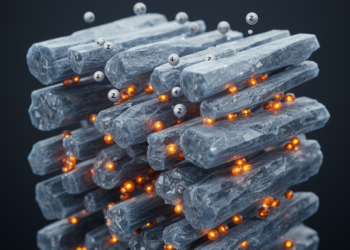
Researchers at IIT Indore found that substituting a quarter of the vanadium in VO2 cathodes with cheap, earth-abundant iron expands ...
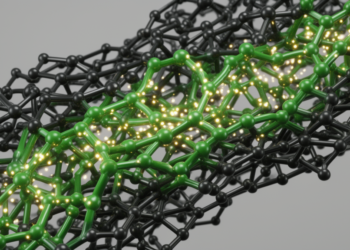
A new review shows that fusing polyaniline with carbon nanomaterials from graphene to carbon dots dramatically boosts capacitance, cycling stability, ...


Embark on a thrilling journey of discovery with Scienmag.com—your ultimate source for cutting-edge breakthroughs. Immerse yourself in a world where curiosity knows no limits and tomorrow’s possibilities become today’s reality!