


Orange peel waste becomes selenium nanoparticles in 30-minute microwave synthesis
Brazilian researchers converted discarded orange peels into stable selenium nanoparticles in a 30-minute microwave reaction, with the peel extract acting ...
Brazilian researchers converted discarded orange peels into stable selenium nanoparticles in a 30-minute microwave reaction, with the peel extract acting ...
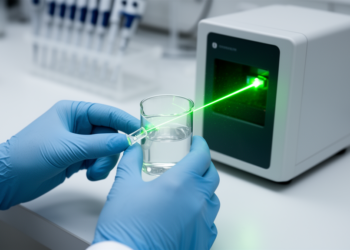
A new open-access protocol uses continuous dynamic light scattering to track protein self-assembly minute by minute, with the full workflow ...
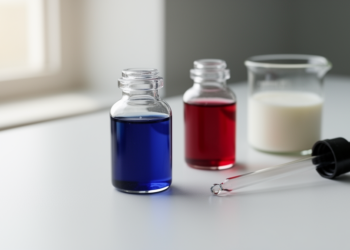
In a controlled laboratory study, citrate-stabilized gold nanoparticles showed a concentration-dependent red-to-blue color shift with caprylic acid, while palmitic and ...
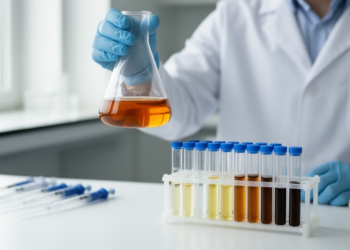
A critical review and a new experimental case study show that pH, temperature, and plant-extract concentration must be tuned together, ...
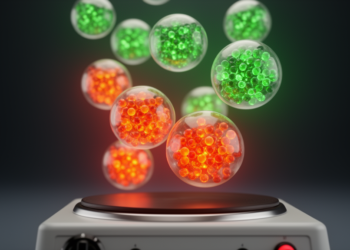
Perylene-loaded PNIPAM nanoparticles reversibly switch their fluorescence between yellow excimer emission and blue monomer emission as temperature crosses the polymer's ...
Argentine researchers have used statistical design of experiments to optimize a reducing-agent-free synthesis of gold nanoparticles in alkaline water, achieving ...


Embark on a thrilling journey of discovery with Scienmag.com—your ultimate source for cutting-edge breakthroughs. Immerse yourself in a world where curiosity knows no limits and tomorrow’s possibilities become today’s reality!