

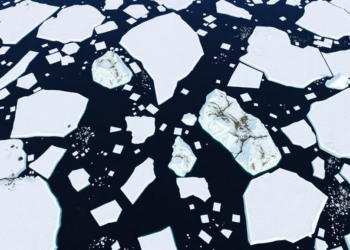
Colliding Ice Floes Explain the Strange Drift of Arctic Sea Ice
A UC Riverside-led study shows that collisions between sea ice floes, not exotic forces, explain the Arctic ice's puzzling speeds ...
A UC Riverside-led study shows that collisions between sea ice floes, not exotic forces, explain the Arctic ice's puzzling speeds ...

Researchers at Sun Yat-sen University developed a slow feature analysis-based method that outperformed dynamical and hybrid prediction systems in independent ...
A new coupled model study shows that how the Antarctic Peninsula blocks or redirects winds can shift simulated Weddell Sea ...
A new Climate Dynamics study shows that near-surface winds over the Tibetan Plateau have declined far faster than climate models ...
A new aquaplanet modeling study shows that realistic seafloor topography alone can sustain major ocean circulation systems and hemispheric climate ...
A new modeling study shows that warming sea surface temperatures and Arctic sea ice loss leave opposing fingerprints on the ...
A new modeling study shows that greening in China cools and moistens its local climate while greening in India warms ...
A 50-year RegCM5 simulation over the Yellow River Basin shows that the new Moloch non-hydrostatic core reduces wind speed bias ...
A new PLOS Climate study using SSP scenario simulations shows that historical carbon dioxide emissions from the world's largest oil, ...
New research shows the soot fraction of human black carbon emissions has more than doubled since 1750, making today's black ...

Embark on a thrilling journey of discovery with Scienmag.com—your ultimate source for cutting-edge breakthroughs. Immerse yourself in a world where curiosity knows no limits and tomorrow’s possibilities become today’s reality!