

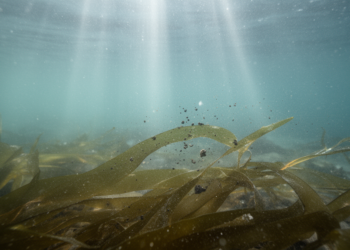
Marine Algae Boost Arctic Removal of Organic Pollutants from Shelf Waters
A study of Eurasian Arctic shelf sediments finds marine-derived organic carbon binds far more contaminants than terrestrial carbon, and modeled ...
A study of Eurasian Arctic shelf sediments finds marine-derived organic carbon binds far more contaminants than terrestrial carbon, and modeled ...

A reconstruction of glacier mass balance from 1975 to 2013 finds a 54% acceleration in mass loss after 2000 and ...

A 122-year analysis of rainfall across India's 14 mainland agro-climatic zones finds declining winter and monsoon rainfall in northern, central ...

A 47-year reanalysis study finds the East Asian summer front has migrated northward, with the late-summer shift exceeding 200 km ...

A study combining HEC-RAS flood modelling, ArcGIS spatial analysis and CRITIC and VIKOR statistics builds a Flood Resilience Index that ...

A CHARLS analysis of 1,393 Chinese adults aged 45 to 80 links each additional cumulative heatwave day to higher risk ...

A cross-sectional study in Bangladesh found that children living in high climate vulnerability areas had significantly higher odds of experiencing ...

A study of 358 rural households in Meket District, northeastern Ethiopia, found highland households had the highest resilience capacity index ...

A 15-year airborne measurement study in Nature shows the Amazon is a net carbon source, with deforestation and fire as ...

A new perspective article documents how the Connecting Climate Minds initiative engaged nearly 1,200 participants across seven world regions to ...


Embark on a thrilling journey of discovery with Scienmag.com—your ultimate source for cutting-edge breakthroughs. Immerse yourself in a world where curiosity knows no limits and tomorrow’s possibilities become today’s reality!