

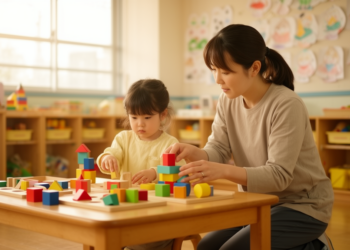
Japanese Teachers Can Now Screen Kids’ Executive Function Before School Starts
A validated Japanese teacher-rated version of the CHEXI questionnaire now lets educators screen five- and six-year-olds' working memory and inhibition ...
A validated Japanese teacher-rated version of the CHEXI questionnaire now lets educators screen five- and six-year-olds' working memory and inhibition ...

A new study of 220 children shows that by middle childhood, kids prefer to learn from and befriend people who ...
A large matched longitudinal study in Moscow found that children who lived through Russia's six-month COVID-19 lockdown gained far less ...
A Dutch Perspective article introduces ABI+ and calls for developmental, trans-sectoral support systems that follow children with acquired brain injury ...
A systematic scoping review of 182 studies finds that research on children's executive function in Africa remains sparse, geographically concentrated, ...
A new study of Kyrgyz schoolchildren finds that those raised at high altitude are shorter but have superior lung function, ...
A new clinical study of 119 mothers finds that parenting stress and infants' low effortful control are the strongest independent ...
A large ABCD Study analysis found that children born late preterm show subtle regional brain-volume and white matter diffusion differences ...
When preschoolers look at picture books without any words, some illustrations make a story feel instantly understandable while others leave ...
A two-year study of 340 Chinese preschoolers identified four distinct social skill subtypes and found that a richer early home-rearing ...

Embark on a thrilling journey of discovery with Scienmag.com—your ultimate source for cutting-edge breakthroughs. Immerse yourself in a world where curiosity knows no limits and tomorrow’s possibilities become today’s reality!