

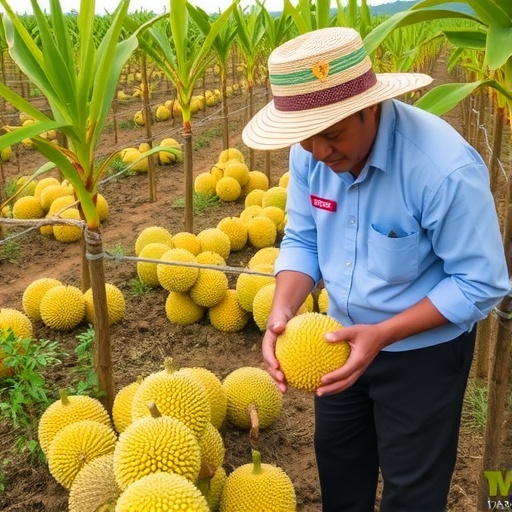
In the face of escalating climate change and water scarcity, the quest for sustainable agricultural practices has become increasingly vital, particularly in regions heavily reliant on water-intensive crops like durian. A groundbreaking study by Anunthawichak, Akkaratatta, and Kiettikunwong published in the journal Discover Sustainability has explored a novel approach to water management that integrates hybrid solar irrigation technology into durian cultivation in Thailand. This innovative method demonstrates the potential for transforming agricultural practices while simultaneously addressing the pressing concerns of environmental sustainability.
The durian, famously dubbed the “king of fruits,” is not only a culinary delicacy but also an economic powerhouse in Thailand. The cultivation of this fruit, however, poses significant challenges in water management, as traditional irrigation practices often deplete local water sources and contribute to unsustainable agricultural landscapes. The research team has focused on developing a sustainable irrigation system that melds solar energy with traditional water management practices, highlighting the importance of integrating renewable technologies into agriculture.
According to the researchers, the hybrid solar irrigation system functions by harnessing solar energy during the day, which powers pumps to extract groundwater or distribute surface water. This irrigation system minimizes reliance on fossil fuels, thereby reducing the carbon footprint associated with durian farming. Furthermore, the implementation of solar panels in agricultural settings allows farmers to generate their own power, promoting energy independence and reducing operational costs in the long run.
The study emphasizes that the sustainable management of water resources is parallel to the need to improve crop yield and quality. By utilizing hybrid solar irrigation, farmers can optimize water usage, ensuring that durians receive adequate hydration without over-extraction of local water supplies. The researchers conducted multiple field trials to compare the effectiveness of hybrid solar irrigation against traditional methods, revealing significant improvements in water use efficiency and plant health.
One of the significant findings from the field trials is the remarkable reduction in water waste associated with this new irrigation technique. Traditional irrigation often results in considerable runoff, leading to soil erosion and decreased fertility. In contrast, the hybrid solar system has demonstrated a capacity to deliver water directly to plant roots with minimal evaporation losses, thereby enhancing water retention in the soil and promoting healthier crop growth.
The analysis also revealed that the integration of solar technology into irrigation practices could be a game-changer for rural farmers in Thailand. Many of these farmers operate on tight margins and face economic hardships driven by rising energy costs and climate fluctuations. By adopting hybrid systems, farmers can expect increased productivity and a more reliable income, ultimately fostering economic resilience in their communities.
Moreover, the study underscores the social implications of adopting sustainable technologies in agriculture. Empowering farmers with access to renewable energy solutions not only enhances their agricultural practices but also promotes social equity. As farmers become more energy-independent, they can participate in local and regional markets more competitively, providing them with greater opportunities for economic advancement.
The researchers also addressed potential challenges to the widespread adoption of hybrid solar irrigation. Initial setup costs for solar panels and irrigation systems can be prohibitive for small-scale farmers. To tackle this issue, the authors advocate for government incentives and support programs designed to lower the financial barriers associated with switching to sustainable technologies. By promoting subsidies or facilitated financing options, policymakers can play a crucial role in accelerating the transition.
Furthermore, the impact of climate change on regional water availability poses an ongoing concern. The research emphasizes that hybrid solar irrigation systems are not only efficient but also adaptable to changing climatic conditions. As weather patterns become increasingly unpredictable, this technology can provide farmers with a reliable irrigation solution that adjusts to fluctuations in water availability due to drought or flooding.
The results and recommendations from Anunthawichak and colleagues extend beyond Thailand; they offer a blueprint for sustainable agricultural practices worldwide. As countries grapple with their water and energy resources, the implementation of hybrid solar irrigation can serve as an exemplary model for integrating renewable resources into conventional farming practices, inspiring global efforts towards sustainable food production.
In conclusion, the research conducted by Anunthawichak, Akkaratatta, and Kiettikunwong represents a significant stride towards sustainable agriculture through innovative water management techniques. As the world increasingly recognizes the impact of climate change on food systems, studies such as this serve as beacons of hope, illustrating the resilience and adaptability of farmers and the technologies that support them. By fostering the integration of sustainable practices, Thailand sets a precedent that could reverberate globally, paving the way for a greener agricultural future.
The integration of hybrid solar irrigation in durian cultivation exemplifies the potential for renewable technologies to transform traditional farming practices. By addressing both water scarcity and energy dependence, researchers advocate for a multifaceted approach to sustainability that encompasses social, economic, and environmental dimensions. In the relentless pursuit of innovation within agricultural sectors, this study provides a pivotal perspective that could shape the future of farming in an era defined by climate resilience and sustainability.
Subject of Research: Hybrid solar irrigation in durian cultivation in Thailand.
Article Title: Creating sustainable water management in durian cultivation in Thailand with hybrid solar irrigation.
Article References:
Anunthawichak, SI., Akkaratatta, C. & Kiettikunwong, N. Creating sustainable water management in durian cultivation in Thailand with hybrid solar irrigation.
Discov Sustain (2025). https://doi.org/10.1007/s43621-025-02388-y
Image Credits: AI Generated
DOI: 10.1007/s43621-025-02388-y
Keywords: sustainable agriculture, hybrid solar irrigation, water management, durian cultivation, Thailand, renewable energy.


