

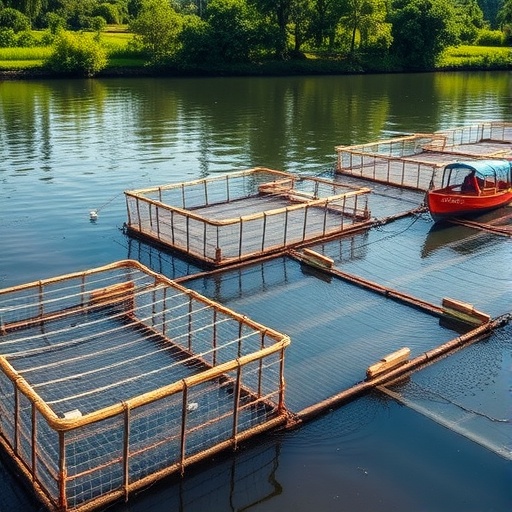
In recent years, aquaculture has emerged as a vital component of global food security, particularly in regions where traditional agriculture may falter due to changing climatic conditions or freshwater scarcity. However, the sustainability and resilience of aquaculture systems, especially floating net cage aquaculture, have been called into question. A groundbreaking study titled “Sustainability-based approaches for improving the unpredictable ecological features of floating net cage aquaculture in Pegametan Bay, North Bali, Indonesia” sheds light on this pressing issue. The authors, Z.A. Ariadji, R. Anugrah, P. Aditiawati, and their colleagues, have embarked on a mission to enhance the ecological integrity of aquaculture environments while ensuring food production remains sustainable.
Floating net cage aquaculture, prevalent in coastal regions worldwide, poses unique ecological challenges. The rapid expansion of these systems often leads to unanticipated ecological shifts in the local environment. Factors such as nutrient loading, competition with wild fish populations, and altered habitats contribute to a fragile balance that can be easily disrupted. This study takes a comprehensive approach, assessing these challenges not only from a local perspective but also in the context of global aquaculture practices.
The research focuses on Pegametan Bay, a crucial area for aquatic biodiversity in North Bali. This bay is characterized by an intricate web of marine life, making it both an opportunity and a challenge for sustainable aquaculture. The study highlights the urgent need to consider ecological features when planning and implementing floating net cage systems. With increasing demand for fishery products, ensuring that aquaculture practices do not lead to irreparable harm to ecosystems is paramount.
One of the key findings of the study is the importance of integrated management strategies that consider both the ecological and socio-economic aspects of aquaculture. The researchers advocate for a multi-disciplinary approach, involving ecologists, fishery managers, and local communities in decision-making. This collaborative effort can lead to the development of aquaculture methods that are not only efficient in production but also restorative to the surrounding environment.
In addition to stakeholder involvement, the study emphasizes the role of innovative technologies in fostering sustainability. For instance, the use of monitoring systems to track water quality and ecological health can help aquaculture operators make data-driven decisions. These technologies can provide real-time feedback, enabling adjustments in farming practices that mitigate negative ecological impacts. The integration of technology with traditional aquaculture methods represents a paradigm shift towards more responsible practices.
Furthermore, the research delves into the specific ecological features that are often overlooked in floating net cage systems. For instance, the role of local fish species as both predators and prey is critical in maintaining ecological balance. Understanding these interactions can inform placement and management strategies for net cages, enhancing the overall health of marine populations while promoting fish farming efficiency.
The study also presents a novel framework for assessing the ecological impacts of floating net cage aquaculture. By employing indicators such as biodiversity indices and water quality metrics, the researchers provide a comprehensive toolkit for evaluating the sustainability of fishing practices. This framework can serve as a benchmark for future studies, guiding aquaculture operations toward more ecological awareness and responsibility.
As the global aquaculture market continues to grow, the stakes are high. Issues such as overfishing and habitat destruction are looming larger than ever, raising alarms among environmentalists and policymakers alike. The findings from Pegametan Bay underscore the necessity for urgent policy interventions that can balance economic growth in aquaculture with environmental accountability. Innovations in policy frameworks, alongside scientific research, could pave the way for sustainable practices that benefit both local communities and the planet.
What sets this research apart is its emphasis on practical solutions that can be immediately implemented. The authors propose a series of actionable recommendations for stakeholders, from local fishers to governmental bodies. This includes training programs aimed at educating fishers on best practices, as well as establishing community-led initiatives to monitor and protect local marine environments. By putting the power in the hands of local communities, the researchers are not only fostering ecological awareness but also promoting social equity.
Moreover, the researchers tackle the broader implications of these findings for the global aquaculture industry. As more countries face the repercussions of unsustainable fishing practices, lessons from Pegametan Bay could serve as a model for other regions grappling with similar challenges. The call for sustainability resonates beyond Indonesia, offering a blueprint for integrating ecological considerations into aquaculture systems worldwide.
In an era where climate change is wreaking havoc on natural resources, the importance of sustainable practices cannot be overstated. The study underscores the critical relationship between ecological health and fishery productivity, challenging preconceived notions about profitability in aquaculture. It demonstrates that by prioritizing the environment, we can cultivate a fishery industry that is resilient to both economic and ecological shocks.
As the conversation around sustainable solutions continues to evolve, research findings such as these become essential in shaping future aquaculture practices. The implications of the work done by Ariadji, Anugrah, Aditiawati, and their team extend beyond local boundaries, urging a global dialogue on sustainable fisheries. Their commitment to understanding and improving the ecological features of floating net cage aquaculture marks a significant step in the right direction.
In conclusion, the integration of scientific research into practical aquaculture solutions is vital for the future of global food systems. The study from Pegametan Bay is more than just an academic endeavor; it represents a call to action. For a world increasingly reliant on aquaculture, the time to prioritize sustainability has never been more pressing. By fostering a culture of ecological awareness within the aquaculture community, stakeholders can work collectively toward ensuring that our oceans remain vibrant and productive for generations to come.
Subject of Research: Sustainability in floating net cage aquaculture
Article Title: Sustainability-based approaches for improving the unpredictable ecological features of floating net cage aquaculture in Pegametan Bay, North Bali, Indonesia
Article References:
Ariadji, Z.A., Anugrah, R., Aditiawati, P. et al. Sustainability-based approaches for improving the unpredictable ecological features of floating net cage aquaculture in Pegametan Bay, North Bali, Indonesia.
Discov Sustain (2026). https://doi.org/10.1007/s43621-025-02495-w
Image Credits: AI Generated
DOI:
Keywords: aquaculture, sustainability, ecological impact, floating net cages, Pegametan Bay, North Bali, marine biodiversity, community involvement, innovative technology.


