

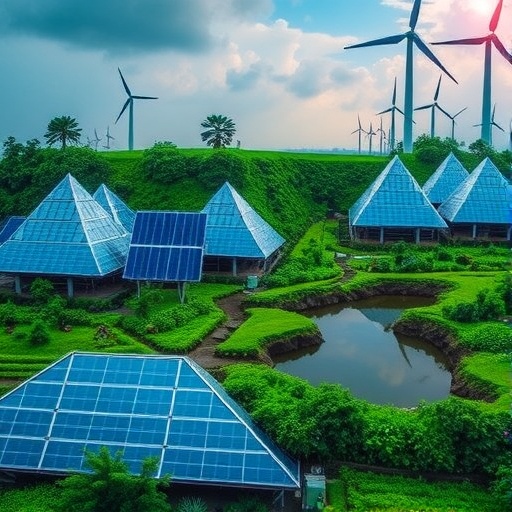
In the context of climate change and environmental degradation, the pursuit of sustainable energy solutions has become increasingly vital for many nations, particularly for developing economies like Bangladesh. A recent study by Qamruzzaman investigates the link between renewable energy, foreign direct investment (FDI), and trade openness concerning environmental sustainability in Bangladesh. The study provides a comprehensive analysis by utilizing advanced statistical methods, specifically the load capacity factor and Fourier functions, to yield insights into how these factors can support Bangladesh in achieving environmental sustainability while promoting economic growth.
The landscape of global energy production is undergoing a significant transformation, with renewable energy sources taking center stage. In Bangladesh, the transition to renewable energy is not merely an environmental imperative but essential for addressing the growing energy demands of an expanding population and economy. This research underscores the importance of adopting renewable energy technologies, such as solar and wind power, that can significantly reduce the country’s reliance on fossil fuels, thereby lowering greenhouse gas emissions and contributing to climate mitigation efforts.
One of the core pillars of Qamruzzaman’s research is the relationship between FDI and renewable energy deployment. The influx of foreign capital can accelerate technological advancements and facilitate the adoption of cleaner energy solutions. Foreign investment in renewable energy projects brings not only financial resources but also technical expertise, thereby enhancing the operational efficiency and sustainability of energy infrastructures in Bangladesh. The study demonstrates that a strategic approach towards attracting FDI can prove advantageous for bolstering the sustainable energy sector.
Furthermore, the role of trade openness is pivotal in this equation. By fostering an open trade environment, Bangladesh can enhance its access to international markets and technologies, which is crucial for the successful implementation of renewable energy initiatives. Trade policies can significantly influence the technological exchange and cooperation required for advancing renewable energy deployment. The research highlights that reducing trade barriers and encouraging imports of renewable energy technologies can accelerate the development of a more sustainable energy framework in Bangladesh.
However, the study does not shy away from the various challenges that Bangladesh faces on this path toward sustainability. Despite the potential benefits, the country must grapple with issues such as insufficient infrastructure, regulatory hurdles, and the urgent need for skilled labor. These barriers can impede the efficiency and effectiveness of renewable energy projects, limiting their successful integration into the national energy grid. By addressing these obstacles comprehensively, Bangladesh can create a conducive environment for sustainable growth.
Crucially, the integration of load capacity factor analysis allows for an assessment of how efficiently renewable energy systems operate under various conditions. The load capacity factor acts as a measurement tool that offers insights into the reliability and performance of renewable energy plants. Qamruzzaman’s innovative application of Fourier functions further enhances this analysis by revealing patterns in energy production that can inform future planning and investment decisions. Understanding these operational metrics is vital for optimizing renewable energy systems and ensuring they meet the demands of both immediate and long-term energy needs.
In a broader context, the research sheds light on the intersection between environmental policy and economic development. Environmental sustainability in Bangladesh is not merely an environmental concern; it is intertwined with economic growth strategies. Policymakers must strike a delicate balance between stimulating economic activity and ensuring that such activities do not compromise environmental integrity. Qamruzzaman’s findings provide a roadmap for decision-makers to align energy policy with sustainable development goals, ultimately leading to a greener economy.
Additionally, the environmental benefits of transitioning to renewable energy extend beyond carbon footprint reduction. The move towards cleaner energy sources can also alleviate health issues associated with air pollution generated by traditional fossil fuel usage. By reducing exposure to harmful emissions, Bangladesh can promote better public health outcomes while simultaneously tackling environmental challenges. Thus, the study emphasizes that investments in renewable energy not only protect the environment but also promote the well-being of citizens.
International cooperation emerges as another critical theme in the study. Addressing climate change and fostering sustainable energy practices cannot be achieved in isolation. Collaborative frameworks between Bangladesh and other nations, particularly those with advanced renewable technologies, could significantly boost the local industry. Such partnerships could facilitate knowledge transfer and establish best practices, making renewable energy implementation more effective.
As the world looks toward a future dominated by sustainability, the lessons from Bangladesh’s journey can offer valuable insights to similar developing economies facing environmental challenges. The study reveals that integrating renewable energy with a strategic focus on FDI and trade can yield substantial dividends in promoting environmental sustainability while fostering economic growth. This framework presents a holistic approach that other nations can emulate to address their unique energy challenges.
Moreover, the potential for creating green jobs through renewable energy investments is an essential local economic driver. The shift towards renewable energy technologies opens avenues for new employment opportunities, ranging from manufacturing to installation and maintenance of renewable energy systems. This burgeoning sector can empower communities and boost local economies while contributing positively to climate goals.
In conclusion, Qamruzzaman’s research underscores the critical role of renewable energy, FDI, and trade openness in shaping the future of environmental sustainability in Bangladesh. By leveraging these interconnected factors, the country has an opportunity to transform its energy landscape, drive economic development, and become a regional leader in sustainable practices. This comprehensive exploration of the elements that contribute to environmental sustainability is not just a call to action for Bangladesh but a blueprint for other nations navigating similar paths towards a sustainable future.
Through these innovative approaches, the hope for a balanced coexistence between economic prosperity and environmental stewardship becomes palpable, reinforcing the notion that sustainable development is achievable when guided by a well-structured and integrative strategy.
Subject of Research: Renewable energy, FDI, and trade openness for environmental sustainability in Bangladesh.
Article Title: Renewable energy, FDI, and trade openness for environmental sustainability in Bangladesh: insights from load capacity factor and Fourier functions.
Article References:
Qamruzzaman, M. Renewable energy, FDI, and trade openness for environmental sustainability in Bangladesh: insights from load capacity factor and Fourier functions.
Discov Sustain (2026). https://doi.org/10.1007/s43621-025-01873-8
Image Credits: AI Generated
DOI: https://doi.org/10.1007/s43621-025-01873-8
Keywords: Renewable energy, foreign direct investment, trade openness, environmental sustainability, Bangladesh.


