

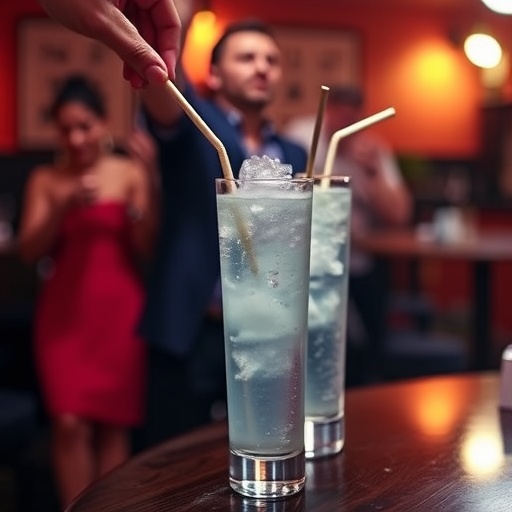
In recent years, the phenomenon of drink spiking has surged into public awareness, revealing alarming implications for social wellbeing and public safety in the United Kingdom. Groundbreaking data derived from extensive forensic and social research will be unveiled at Anglia Ruskin University (ARU) during the upcoming Cambridge Festival on Saturday, 21 March 2026. This data represents the most comprehensive investigation to date into the incidence, nature, and consequences of drink spiking across the UK adult population, with findings poised to inform policy and public health responses extensively.
Drink spiking, a covert act involving the addition of substances into someone’s beverage without their consent or knowledge, encompasses a range of illicit behaviors. These include the adulteration of drinks with illegal drugs, pharmaceutical compounds, or unauthorized alcoholic enhancements. The scope of drink spiking extends beyond traditional assumptions about sexual assault facilitation to include physical assaults, theft, and various prank-related offenses. Of equal concern is the surreptitious delivery of excessive alcohol doses, such as unasked-for double shots, which legally qualify as drink spiking and pose significant risks to victims.
Since 2021, ARU’s forensic science academics have been collaborating with Drinkaware, the UK’s foremost alcohol education charity, to meticulously quantify the prevalence of drink spiking via national sociological surveys conducted by YouGov. The most recent survey, completed in summer 2025 with a representative sample of 7,256 adults, provides a sobering portrait: approximately 2% of UK adults—equating to nearly one million individuals nationwide—reported having been victims of drink spiking within the preceding year. This prevalence underscores an urgent public health crisis that demands immediate attention and targeted interventions.
One of the most troubling aspects exposed by the research is the markedly low rate of official reporting of incidents. Merely 23% of those subjected to drink spiking chose to notify law enforcement authorities. The primary deterrents to reporting were a skepticism regarding police action, cited by 39% of respondents, and impaired memory of the event, as admitted by 38%. These barriers to reporting highlight inherent challenges in victim support and justice delivery that extend beyond mere detection, amplifying the need for enhanced awareness campaigns and victim assistance frameworks.
Gender and demographic analyses reveal that women disproportionately bear the brunt of drink spiking, representing 58% of reported cases. Spatial distribution of incidents identifies bars as the most common settings where spiking occurs (41%), followed by social events at 26%, and nightclubs at 25%. Age segmentation indicates the highest incidence rates among adults aged 25 to 34 years, exposing a particularly vulnerable demographic within nightlife and social drinking contexts, thus necessitating targeted preventive strategies in these environments.
Central to ARU’s ongoing research efforts is the forensic interrogation of biological and beverage samples postulated to have been subject to spiking. This involves developing, refining, and validating analytical methodologies capable of detecting a diverse spectrum of substances, which may be chemically obscure or metabolically degraded by the time of investigation. Techniques such as gas chromatography-mass spectrometry (GC-MS) and liquid chromatography-tandem mass spectrometry (LC-MS/MS) form the backbone of these forensic analyses, ensuring sensitivity and specificity vital for evidentiary purposes.
Complementing laboratory science, ARU’s Spiking Research Team is critically examining the efficacy and reliability of commercially available drink testing kits and personal protective products marketed to consumers. These devices claim to identify potential spiking agents rapidly but vary widely in accuracy and practical usability. Evaluations focus on parameters such as detection limits, false positive/negative rates, user-friendliness, and the breadth of substances detectable, thereby providing evidence-based guidance to consumers and policymakers alike on their real-world utility.
The forthcoming Cambridge Festival event will be spearheaded by Dr Lata Gautam, a distinguished forensic chemist specializing in drug detection methodologies and drug-facilitated sexual assault investigations. Dr Gautam’s expertise encompasses the chemical characterization of spiking agents within diverse beverage matrices and the development of novel analytic protocols optimized for forensic casework. Her presentation will synthesize ARU’s latest research outputs, elucidating the complex chemical and social dynamics of drink spiking with the goal of fostering informed public discourse and scientific engagement.
Dr Gautam emphasizes the multifaceted nature of the problem, noting, “Despite growing recognition, many cases remain hidden in the shadows of unreported incidents. It is imperative to dismantle the social and institutional barriers that discourage victims from seeking justice. Our chemical analyses not only illuminate every nuance of spiking but also underscore the pressing need for accurate, accessible detection tools to empower individuals in vulnerable settings.”
Annabelle Bonus, Director of Research, Strategy and Impact at Drinkaware, echoes this urgency: “Drink spiking constitutes a profound violation that can impact anyone, anywhere. Our collaboration enables the translation of rigorous scientific data into actionable public health policy and survivor support. It is essential that victims feel emboldened to report these crimes, and that society at large is equipped with knowledge and resources to mitigate risk and aid recovery.”
In sum, this extensive research initiative constitutes a critical step towards comprehensively mapping the landscape of drink spiking in the UK. By integrating advanced forensic science with sensitive sociological inquiry, ARU and Drinkaware are pioneering evidence-driven approaches to a complex, underreported crime phenomenon. The dissemination of these findings at the Cambridge Festival promises to galvanize stakeholders across scientific, legal, and public domains to effect meaningful change and enhance societal safety.
As the event approaches, stakeholders and the public are encouraged to engage with the presentation “Safe Sips: Navigating Drink Spiking” to gain unprecedented insight into the hidden dangers lurking in social drinking contexts. The dialogue fostered will be instrumental in shaping future research priorities, enhancing forensic detection capacities, and reinforcing communal resilience against this insidious form of criminal behavior.
Subject of Research: Forensic analysis and social research on the prevalence, detection, and reporting of drink spiking in the UK.
Article Title: Latest Forensic Insights Reveal Scale and Silent Crisis of Drink Spiking in the UK
News Publication Date: Scheduled for public release on 21 March 2026
Web References:
- Cambridge Festival: https://www.festival.cam.ac.uk/
- ARU Spiking Statistics Report (2025): https://media.drinkaware.co.uk/media/q3siznbp/spiking-statistics-2025-monitor.pdf?rmode=pad&v=1dc27ad50d16d40
- Dr Lata Gautam Profile: https://www.aru.ac.uk/people/lata-gautam
Keywords: Drink spiking; forensic science; analytical chemistry; social research; crime reporting; substance detection; forensic toxicology; public health; alcohol-related crime; victim support; forensic methodology; drug-facilitated assault.


