

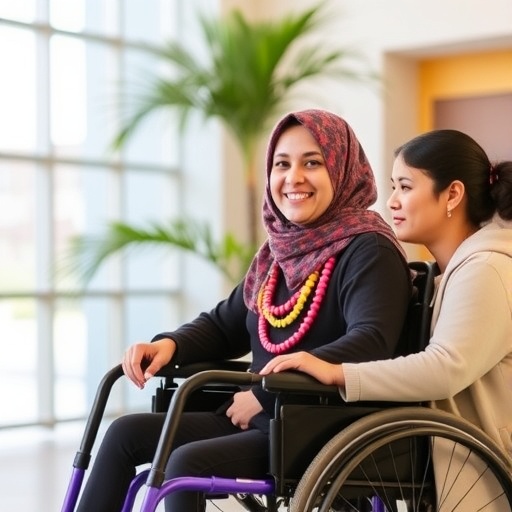
In a groundbreaking quantitative study conducted at Sultan Qaboos University (SQU) in Muscat, Oman, researchers have unveiled insightful data concerning the quality of life experienced by students with disabilities within higher education settings. Spearheaded by Dr. Khawla Al-Mamari of the Department of Psychology, this investigation employed the World Health Organization’s Quality of Life questionnaire (WHOQOL-BREF) to rigorously assess the multidimensional aspects of well-being among physically, visually, and auditorily impaired students enrolled at the university. The findings not only underscore generally high satisfaction levels but also delineate critical areas warranting further institutional enhancement to foster inclusive academic environments.
Sultan Qaboos University, a venerable institution that welcomes dozens of students with disabilities annually, has demonstrated a longstanding commitment by graduating over 170 students with disabilities in the past ten years. Through its specialized Students with Special Needs Affairs Section, SQU has strategically implemented a suite of logistical, psychological, and technical accommodations to mitigate challenges and facilitate seamless integration of these students into the broader campus community. The department’s holistic approach aims at ensuring equitable access and active participation across academic, social, and extracurricular domains.
The study harnessed data from a representative sample of 35 students exhibiting diverse disability profiles, encompassing physical, auditory, and visual impairments. Utilizing the standardized WHOQOL-BREF instrument allowed for a granular evaluation across four primary domains: physical health, psychological well-being, social relationships, and environmental context. Noteworthy is the elevated satisfaction reported in psychological, social, and environmental parameters, reflecting the university’s success in cultivating a supportive and adaptive atmosphere. Contrarily, the physical health domain — measuring facets such as pain, energy, and mobility — registered moderate satisfaction, signaling opportunities for enhanced health-focused interventions.
A pivotal revelation emerged when dissecting the quality of life scores by disability type. Students navigating physical disabilities consistently recorded higher overall quality of life indices compared to their visually and hearing-impaired peers. This stratification points towards differential accessibility and support challenges existing within sensory impairment contexts. It also underscores the complexity of designing universally adaptive measures that cater equitably to the heterogeneous needs of the disabled student populace.
Gender analysis within the study revealed no statistically meaningful disparities in quality of life measures between male and female participants, a finding that situates gender as a less significant variable in this particular domain. However, the stratification by disability type elicited statistically significant divergences within physical and psychological sub-domains. Specifically, students with mobility impairments surpassed others in these dimensions, suggesting that certain disability categories may benefit more substantially from the university’s existing support repertoire.
Dr. Al-Mamari’s team surmised that the overall elevated quality of life indices among students with disabilities at SQU could be attributed to the institution’s proactive strategies encouraging full inclusivity. These encompass infrastructural adaptations, psychological counseling, assistive technology provision, and social integration programs. This holistic model aligns with the growing global emphasis on inclusive education frameworks which prioritize not only academic success but also psychosocial well-being and environmental adaptability.
The research unearthed salient considerations for future enhancements. Foremost among these is the recommendation to broaden the spectrum of inclusive sports programs. Physical activity has been recognized as instrumental in improving physical health outcomes, social cohesion, and psychological resilience among disabled populations. Tailoring such programs to accommodate sensory impairments would address existing service gaps and promote equitable recreational engagement.
Additionally, the study advocates for an expansion in culturally and socially tailored activities designed specifically for students with sensory disabilities. These interventions could mitigate barriers that impede full participation and foster a richer, more diverse campus culture. Such measures have implications beyond mere participation, contributing significantly to identity affirmation, peer support networks, and overall quality of life improvements.
The authors emphasize the necessity for parallel studies across other universities, both regionally and internationally. Comparative data would enable a comprehensive mapping of challenges faced by students with disabilities in various academic milieus and inform the development of best practices. A broader corpus of evidence-based research is indispensable for policy advocacy, resource allocation, and the evolution of inclusive education paradigms.
Intriguingly, mental health indicators extracted from participant responses reflected relatively high well-being, a testament to the university’s psychological support infrastructure. Nonetheless, maintaining and enhancing mental health resources remains critical, given the unique stressors often encountered by students with disabilities, including social stigma, accessibility struggles, and potential academic pressures.
Technological advancements in assistive devices and software have undoubtedly contributed to increased autonomy and academic performance among students with disabilities at SQU. The university’s ongoing investment in such resources underscores its commitment to leveraging innovation in service provision. Future initiatives might explore integrating emerging technologies like AI-driven personalized learning aids or virtual reality environments to further democratize educational access.
In conclusion, the study by Dr. Al-Mamari and her team provides seminal evidence highlighting the generally positive quality of life among students with disabilities at Sultan Qaboos University. It simultaneously identifies pivotal areas for improvement, notably in physical health satisfaction and tailored programming for sensory impairments. These insights furnish university administrators, policymakers, and educators with actionable data that can inform and amplify efforts toward genuinely inclusive and enabling campus environments. The overarching message resonates with the global academic community’s endeavor to transform higher education into an equitable domain where all students can thrive irrespective of physical or sensory challenges.
Subject of Research: People
Article Title: Not provided
News Publication Date: Not provided
Web References: DOI link
Image Credits: Sultan Qaboos University, Oman
Keywords: Education, Environmental health, Social relationships


