

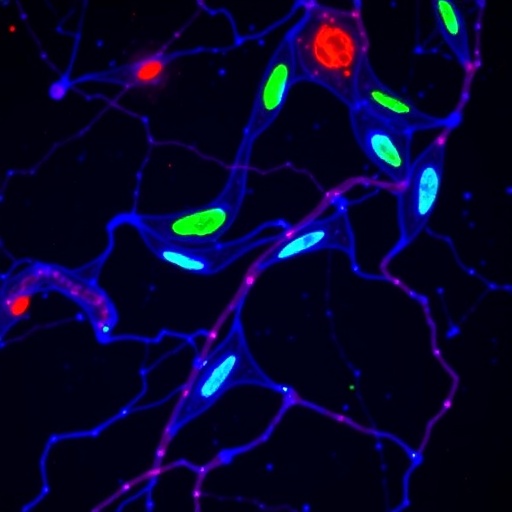
In a groundbreaking study published in Pediatric Research, scientists have uncovered a pivotal molecular mechanism driving the progression of biliary atresia, a life-threatening condition in infants characterized by blockage or absence of bile ducts. This research illuminates the role of the enzyme Sulfotransferase family 2B member 1 (SULT2B1) in promoting the epithelial-mesenchymal transition (EMT) of cholangiocytes, the epithelial cells lining the bile ducts. EMT is a critical biological process whereby epithelial cells acquire mesenchymal properties, enhancing their mobility and invasiveness, and it has been implicated in the fibrotic responses that ultimately obliterate bile ducts in biliary atresia.
The study’s authors, led by Yang et al., have elegantly demonstrated how SULT2B1 activates a signaling cascade involving the Wnt/β-catenin pathway and matrix metalloproteinase 7 (MMP7), fostering EMT in cholangiocytes. Prior to this work, the molecular underpinnings linking sulfotransferases with EMT in biliary disorders remained inexplicably vague, leaving a significant gap in understanding the pathogenesis of biliary atresia. This research not only fills that void but also identifies promising therapeutic targets that may halt or reverse disease progression.
Biliary atresia, resulting in obstructed bile flow, causes severe liver damage and is the foremost indication for pediatric liver transplantation worldwide. Current treatments are limited to surgical interventions like the Kasai procedure or transplantation following the development of end-stage liver disease. The identification of molecular drivers such as SULT2B1 offers an opportunity to develop pharmacological agents that could modify disease at a cellular level, potentially transforming patient outcomes.
At the heart of this study lies the complex Wnt/β-catenin signaling pathway, a core regulator of cellular proliferation, differentiation, and fate determination. In normal physiology, this pathway tightly controls bile duct development and regeneration. However, aberrant activation has been linked to various pathologies including cancer and tissue fibrosis. Yang and colleagues reveal that SULT2B1 potentiates this pathway, stabilizing β-catenin within the cholangiocyte cytoplasm, thereby promoting transcriptional activities that evoke EMT-associated gene expression.
Moreover, the involvement of MMP7, an enzyme known for degrading extracellular matrix components, underscores the destructive remodeling occurring in the bile ducts during biliary atresia. The upregulation of MMP7 as a downstream effect of Wnt/β-catenin activation facilitates the breakdown of the extracellular matrix, a hallmark of EMT and fibrosis. The study demonstrated that inhibiting SULT2B1, Wnt/β-catenin signaling, or MMP7 expression effectively reduced EMT features in cholangiocyte cultures, substantiating the interconnection between these molecules.
The authors utilized a sophisticated array of molecular biology techniques, including gene knockdown via siRNA, immunofluorescence imaging to track protein localization, and quantitative PCR to measure transcriptional changes. Their approach combined in vitro models of cholangiocyte EMT with patient-derived tissue samples, lending both experimental precision and clinical relevance to their findings. Notably, biopsies from biliary atresia patients exhibited elevated SULT2B1 expression correlating with heightened EMT markers, reinforcing the enzyme’s role in disease pathology.
This research opens intriguing new avenues for therapeutic intervention. Targeting SULT2B1 directly with small molecule inhibitors could impede the initiation of EMT in cholangiocytes, preserving bile duct integrity. Alternatively, modulating downstream effectors such as β-catenin nuclear translocation or MMP7 activity presents additional intervention points. Given the critical role of Wnt signaling in multiple organ systems, specificity and safety will be paramount in the design of such targeted therapies.
Apart from pharmaceutical implications, these findings may also inform the development of novel diagnostic biomarkers. Elevated expression levels of SULT2B1 or MMP7 in patient blood or bile samples could potentially serve as early indicators of EMT activation, guiding timely clinical management and prognostic assessment. Early detection is crucial in biliary atresia, where delay in treatment drastically worsens prognosis.
The molecular insights provided by this study also enhance the fundamental understanding of liver biology and disease. The sulfotransferase family has been historically studied in drug metabolism and hormone regulation, but their roles in fibrogenesis and EMT are less explored. By implicating SULT2B1 in the pathological EMT of cholangiocytes, the research broadens the functional repertoire of sulfotransferases in hepatic physiology and pathology.
In addition to elucidating a key pathogenic mechanism, this study underscores the intricate interplay of signaling pathways in driving tissue remodeling diseases. It highlights how cross-talk between enzymatic activity, signal transduction, and matrix degradation orchestrates EMT, a process central to not only biliary atresia but also cancer metastasis and organ fibrosis. These parallels encourage a broader perspective in designing interventions that could have cross-disciplinary benefits.
The potential for translating these findings into clinical practice is significant, yet challenges remain. The complex regulation of Wnt/β-catenin and MMP enzymes demands nuanced modulation to avoid off-target effects. Further preclinical studies are needed to evaluate the efficacy and safety of inhibitors in animal models of biliary atresia. Additionally, the heterogeneity of the disease among patients requires personalized approaches to therapy.
The revelation that SULT2B1 acts as a critical upstream regulator in cholangiocyte EMT propels research efforts forward in the quest for non-surgical treatments for biliary atresia. It provides a molecular foothold from which drug development strategies can be launched, potentially circumventing the need for liver transplantation in vulnerable pediatric populations. This marks a transformative step in hepatobiliary medicine.
As research progresses, it will be essential to explore whether similar mechanisms operate in other fibrotic liver diseases, such as primary sclerosing cholangitis or non-alcoholic steatohepatitis, where EMT and matrix remodeling also play detrimental roles. The discovery of SULT2B1’s function may thus have broader implications for chronic liver disease therapy.
The study by Yang and colleagues exemplifies the power of integrating molecular biology with clinical pathology to unravel complex disease processes. It demonstrates how patient-derived data coupled with mechanistic laboratory models can drive breakthroughs that bridge basic science and medical impact. This integrated approach heralds a new era of targeted, mechanism-based interventions for pediatric liver diseases.
In conclusion, the elucidation of the SULT2B1-driven Wnt/β-catenin/MMP7 axis in cholangiocyte EMT sheds crucial light on the pathogenesis of biliary atresia and suggests novel targets for therapeutic innovation. The prospect of interfering with this pathway to preserve bile ducts and prevent liver failure opens exciting possibilities. As this research gains traction, it is anticipated to catalyze further discoveries and ultimately improve outcomes for infants afflicted with this devastating condition.
Subject of Research: The role of SULT2B1 in promoting cholangiocyte epithelial-mesenchymal transition via the Wnt/β-catenin/MMP7 pathway in biliary atresia.
Article Title: SULT2B1 promotes cholangiocyte epithelial-mesenchymal transition via Wnt/β-catenin/MMP7 pathway in biliary atresia.
Article References:
Yang, T., Yang, S., Mou, W. et al. SULT2B1 promotes cholangiocyte epithelial-mesenchymal transition via Wnt/β-catenin/MMP7 pathway in biliary atresia. Pediatr Res (2025). https://doi.org/10.1038/s41390-025-04304-6
Image Credits: AI Generated
DOI: 10.1038/s41390-025-04304-6 (Published 16 December 2025)


