

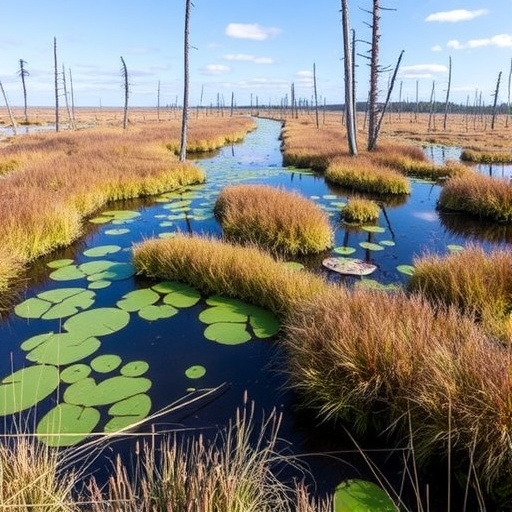
Freshwater wetlands serve as critical ecological sanctuaries, providing habitats for myriad species, supporting biodiversity, and playing a significant role in global water cycles. These ecosystems possess unique characteristics that allow them to thrive in environments with variable moisture levels, making them especially important in subarctic regions where climatic variations are pronounced. However, emerging scientific evidence suggests that these vital ecosystems are increasingly vulnerable to the impacts of climate change, particularly thermal stress caused by rising global temperatures.
In a pioneering study set to release in 2026, researchers Adey, Hughes, and Willson, along with their team, delve into the intricate dynamics of freshwater subarctic wetlands and their susceptibility to future thermal stress. By analyzing temperature variations and modeling potential climate scenarios, the study aims to raise awareness about the significant threats posed to these wetlands from climate warming. As temperatures rise, the implications for flora and fauna that depend on these habitats become critically concerning.
Wetlands are not just mere water bodies; they play an integral role in carbon sequestration and flood control. Their hydrological features make them powerful allies in combating climate change while also serving as buffers against extreme weather events. However, as climate change alters precipitation patterns and increases evaporation rates, these ecosystems could find themselves under stress. This ongoing research highlights the urgent need to monitor these environments closely and to develop strategies aimed at preserving their ecological integrity.
The researchers involved in this groundbreaking work are employing a multi-faceted approach that includes field data collection, laboratory experiments, and climate modeling. By assessing current temperature conditions and predicting future trends, they are constructing a detailed picture of how climate change could influence the health of subarctic wetlands. It is this comprehensive methodology that places their findings at the forefront of climate research and ecosystem conservation efforts.
One of the critical findings of the study suggests that as thermal stress increases, the biodiversity within these wetlands may face unprecedented levels of risk. Many plant and animal species have evolved to thrive within specific temperature ranges, and any significant deviation could disrupt their life cycles, resulting in declines in populations or even local extinctions. Understanding these species’ specific thermal tolerances becomes essential for future conservation strategies.
Furthermore, the study emphasizes the potential for feedback loops that could exacerbate the effects of climate change. For instance, as wetlands experience temperature-induced stress, their ability to sequester carbon may deteriorate, leading to increased greenhouse gas emissions. This creates a cycle that not only affects the wetlands themselves but also contributes to the larger narrative of climate change, making effective environmental stewardship all the more urgent.
The implications of this research extend beyond the immediate ecological concerns. Wetlands are also valuable resources for local communities, providing water supply, recreation, and economic opportunities. As climate-related threats loom, the potential impacts on human populations who rely on these ecosystems for their livelihoods cannot be understated. This intersection of environmental science and human welfare underscores the need for policy responses that prioritize both ecological preservation and social equity.
Moreover, the study sheds light on how different wetland types may respond to thermal stress. While some wetlands may exhibit resilience, others could be significantly more vulnerable. This nuanced understanding of varying susceptibility is crucial for developing targeted conservation approaches that are sensitive to the specific challenges each wetland faces.
As researchers continue to analyze data and draw conclusions, it is clear that public awareness is equally important. Engaging communities in discussions about the importance of wetlands and their role in mitigating climate change is vital. This research serves as a call to action, urging citizens and policymakers alike to consider more robust protections for these ecosystems as climate change continues to unfold.
In conclusion, the research by Adey, Hughes, Willson, and their collaborators serves as an essential contribution to the field of environmental science, specifically regarding the vulnerabilities of freshwater subarctic wetlands to warming temperatures. Their findings not only identify immediate ecological concerns but also open the door to broader discussions about climate resilience, biodiversity conservation, and the impacts of climate change on human communities. The unfolding story of these wetlands highlights an urgent need for concerted efforts in both scientific inquiry and public policy to protect some of our planet’s most precious ecological treasures.
The urgency of addressing these vulnerabilities is underscored by the increasing frequency of extreme weather events that can lead to sudden and severe changes in wetland ecosystems. Scientists must remain vigilant and proactive in monitoring these environmental changes to better understand the ramifications of a warming climate. Only through sustained research and community engagement can effective strategies to protect these wetlands be developed.
Moving forward, the research community’s focus on freshwater subarctic wetlands will likely intensify, exploring not only the impacts of thermal stress on individual species but also the larger ecological networks that depend on healthy wetland environments. This work will continue to be invaluable as debates surrounding climate policy and environmental conservation gain momentum worldwide.
By addressing both the immediate ecological and broader societal implications of changes to wetlands, researchers aim to galvanize action across various sectors. The fate of these wetlands could serve as a bellwether for larger ecosystem responses to climate change, thereby making this research a critical element in understanding and addressing the environmental challenges of the 21st century.
As scientific inquiry progresses, the results will not only elucidate the complexities of climate impacts but also potentially yield transformative solutions that can aid in safeguarding these essential ecosystems for generations to come.
Subject of Research: Vulnerability of Freshwater Subarctic Wetlands to Climate Change
Article Title: Freshwater subarctic wetlands are vulnerable to future thermal stress from climate warming.
Article References:
Adey, A.K., Hughes, R., Willson, A.M. et al. Freshwater subarctic wetlands are vulnerable to future thermal stress from climate warming.
Commun Earth Environ (2026). https://doi.org/10.1038/s43247-025-03080-9
Image Credits: AI Generated
DOI:
Keywords: Climate Change, Wetlands, Thermal Stress, Biodiversity, Environmental Conservation


