

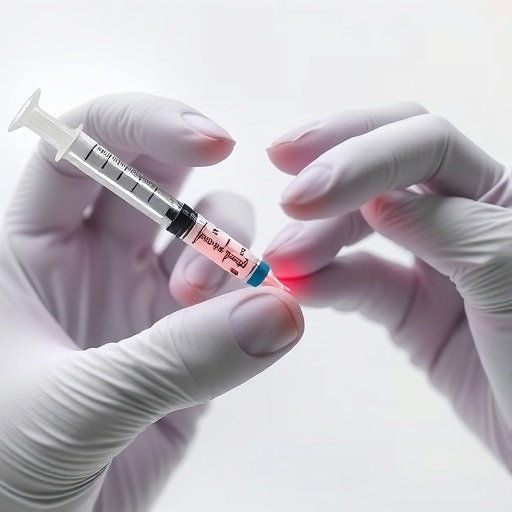
New Extensive Study Reveals Durable Protection of BA.1 mRNA COVID-19 Boosters in Adults Over 50
In a pivotal advancement in our understanding of COVID-19 vaccine efficacy, a comprehensive observational study encompassing more than three million adults in England has demonstrated significant reductions in COVID-19–related hospitalisations and deaths following administration of bivalent BA.1 mRNA booster vaccines during the autumn 2022 campaign. Spearheaded by expert teams from the Universities of Bristol and Oxford, this robust research reinforces the crucial role boosters play in ongoing pandemic management, specifically among populations aged 50 and above.
Published in the esteemed journal Vaccine on February 18, 2026, the study delivers compelling evidence that booster shots not only sustain but importantly amplify immunity against severe COVID-19 outcomes. The investigation utilized the OpenSAFELY research platform to analyse linked general practitioner and hospital records, leveraging big data to perform matched cohort comparisons that adjust for confounding variables such as age, clinical vulnerability, prior vaccine brand, and geographical factors. Through this high-resolution statistical approach, the study achieved an unparalleled depth of insight into real-world vaccine performance over an extended follow-up period approaching one year.
A central revelation from the data is the equivalence in effectiveness between the two leading mRNA booster vaccines deployed during the autumn 2022 programme: Moderna’s BA.1 mRNA-1273 and Pfizer-BioNTech’s BA.1 BNT162b2. Both vaccines demonstrated markedly similar protection against hospitalisation and death due to COVID-19, underscoring that choice between these two platforms may be guided by availability and other practical considerations rather than efficacy differentials. Notwithstanding this equivalency, the researchers noted a slight increase in non-COVID-19 mortality in recipients of the Moderna booster, prompting calls for further investigation into causal pathways or underlying confounders.
The meticulous design of the study permitted the follow-up of more than 2.5 million individuals over a span of nearly 350 days. Within this period, there were 14,436 recorded hospitalisations and 1,152 deaths attributable directly to COVID-19, alongside substantial numbers of non-COVID-19 fatality and unrelated health events such as fractures. The comparative analysis revealed that boosted individuals had risks of hospitalisation reduced by nearly half—from 6.81 to 3.78 per 1,000 persons—and death rates diminished by more than 50%, dropping from 0.61 to 0.29 per 1,000 persons. These findings illustrate the profound protective benefits of the booster, especially in sustaining immunity during periods of viral circulation.
This remarkable level of protection was documented to be strongest within the first 70 days post-booster administration, a critical window during which immune responses peak. However, the study also details the waning nature of this immunity over time, a phenomenon consistent with immunological principles and previous vaccine effectiveness studies. Such decline underscores the importance of monitoring booster-induced immunity longitudinally and tailoring future vaccination strategies to maintain population-level protection, particularly in vulnerable demographics.
Beyond primary COVID-19 endpoints, the research team incorporated an innovative control outcome analysis by examining fracture incidence, an event not biologically linked to vaccination status. The observation of a modest decline in fracture rates among boosted individuals hints at residual confounding—suggesting that characteristics driving vaccine uptake (such as health-seeking behavior or mobility) might also influence health outcomes unrelated to COVID-19. Nevertheless, the substantially smaller effect size in this control parameter supports the robustness and internal validity of the primary results regarding COVID-19 hospitalisation and mortality.
The deployment of the OpenSAFELY platform constituted a cornerstone of this investigation, enabling access to vast quantities of anonymised electronic health records for comprehensive analysis. This integration of real-world data sources with advanced epidemiological methods epitomizes the future of infectious disease research—where rapid, high-fidelity evidence generation can directly inform public health decisions. By harnessing national-scale datasets, the study elegantly adjusted for multiple confounders to isolate the true effectiveness of the booster vaccines independent of external biases.
Dr. Paul Madley-Dowd, the study’s lead statistician at the University of Bristol, emphasized the public health implications of the findings, stating that the data “reinforce the importance of booster vaccination against COVID-19 among people over 50 years old.” This demographic remains at heightened risk of severe disease outcomes, and the demonstrated halving of hospitalisation and death risks post-booster significantly shifts the risk-benefit equation in favor of booster uptake. Dr. Madley-Dowd’s insights reflect a larger global consensus advocating for sustained vaccination efforts as the virus continues to evolve.
Further contributing to the strength of the work was the involvement of multiple prestigious partners, including NHS England, the Wellcome Trust, the Medical Research Council (MRC), the NIHR Bristol Biomedical Research Centre, OpenSAFELY collaborators, and the Bennett Institute for Applied Data Science. The collaboration illustrates a multidisciplinary effort combining epidemiology, biostatistics, and data science, yielding insights with direct translational value for clinical policy and immunization programmes.
Given the demonstrated waning of protection over time, the study stimulates discussion regarding optimal timing and frequency of booster campaigns, especially as new SARS-CoV-2 variants emerge. Continued surveillance and adaptive vaccine formulations remain paramount to maintaining high levels of protection, particularly in older adults who exhibit immunosenescence. Future research directions highlighted by the authors include investigating immunological correlates of protection, differential effectiveness against emerging variants, and integration of booster strategies with other public health interventions.
The consistency observed across both Moderna and Pfizer-BioNTech boosters provides reassurance to healthcare providers and recipients that high-quality protection is achievable regardless of mRNA vaccine brand selection. This equivalency simplifies logistical challenges inherent in large-scale immunisation programmes and supports flexible vaccine deployment depending on supply and access. However, the nuanced signals regarding non-COVID mortality in the Moderna cohort may inform post-marketing surveillance and motivate targeted safety assessments.
In sum, this groundbreaking analysis validates the strategic imperative of booster vaccinations for adults aged 50 and above. By utilizing large-scale linked datasets and sophisticated matching algorithms, the study conclusively demonstrates that bivalent BA.1 mRNA boosters confer substantial, albeit time-limited, reductions in severe COVID-19 outcomes. These insights not only bolster current vaccination policies but also provide a framework for refining booster recommendations as the pandemic landscape evolves. The clinical and societal benefits encapsulated in this research highlight booster vaccination as an indispensable tool in safeguarding at-risk populations and mitigating COVID-19 morbidity and mortality on a population scale.
Subject of Research: People
Article Title: Effectiveness of bivalent BA.1 mRNA booster vaccines during the autumn 2022 COVID-19 booster programme in adults aged 50+ in England: observational matched cohort study using OpenSAFELY
News Publication Date: 18-Feb-2026
Web References:
University of Bristol – Dr Paul Madley-Dowd
NHS England
Wellcome Trust
Medical Research Council (MRC)
National Institute for Health Research (NIHR)
NIHR Bristol Biomedical Research Centre
OpenSAFELY
Bennett Institute for Applied Data Science
References:
DOI: 10.1016/j.vaccine.2026.128276
Keywords: COVID 19 vaccines, Vaccination, mRNA vaccines


