

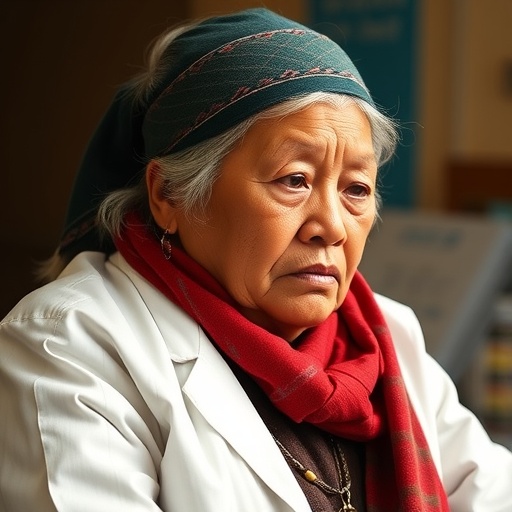
The University of Oklahoma’s Native Nations Center for Tribal Policy Research has unveiled a groundbreaking report that offers an in-depth analysis of the Indian Health Service’s Purchased/Referred Care (PRC) program, focusing on its critical intersection with cancer care for tribal communities. Authored by Grace Fox, a respected tribal healthcare policy analyst of Seminole descent, the report sheds light on the structural and operational intricacies of PRC and its implications for cancer screening, diagnosis, treatment, and follow-up among eligible tribal members. This meticulous study aims to bridge gaps in understanding and improve healthcare outcomes in Native Nations.
Purchased/Referred Care represents a pivotal mechanism within the Indian Health Service framework, designed to facilitate access to non-IHS or non-tribal healthcare providers when local services are either limited or unavailable. The report systematically breaks down the program’s framework, elaborating on eligibility criteria, timelines for patient notification, medical priority levels, coordination with alternate resources, and the inherent fiscal limitations that constrain service delivery. By dissecting these elements, the study highlights the complexities that tribal patients face navigating cancer care pathways through PRC.
Cancer poses a disproportionately severe health challenge for American Indian and Alaska Native populations, with statistics indicating delayed diagnoses, reduced participation in screening programs, and elevated mortality rates compared to the general U.S. populace. Fox emphasizes that timeliness in cancer care is paramount, and delays caused by bureaucratic processes in PRC authorization can adversely impact patient outcomes. This report does not merely present problems but also contextualizes them within the lived realities of tribal citizens striving for timely oncological interventions.
The report integrates federally mandated policies with real-world data, providing granular insights specific to Oklahoma—a state uniquely home to over 39 Tribal Nations, 38 of which hold federal recognition. Remarkably, all counties in Oklahoma qualify as purchased and referred care delivery areas under federal guidelines. Yet, eligibility for PRC remains stringent, requiring strict adherence to documentation and funding prerequisites. This aspect underscores the challenges of uniform healthcare access even within comprehensive designation frameworks.
Fox’s analysis extends to exploring innovative policy options available under existing tribal governance frameworks. The report highlights possibilities including asserting self-determination and self-governance authorities, strategizing regional partnerships, and implementing novel delivery models like mobile cancer screening units and teleoncology—where telemedicine technology is harnessed to remotely provide specialized cancer care. These forward-thinking approaches hold promise for enhancing tribal healthcare infrastructure and reducing critical delays in service provision.
The creation of Grace Fox’s role as a tribal health care policy analyst is itself a testament to collaborative success between the Native Nations Center and the Native American Center for Cancer Health Equity at the Stephenson Cancer Center. Supported by the Improving Cancer Outcomes in Native American Communities (ICON) grant, this position reflects a sustained commitment to transforming research and policy landscapes to better serve tribal health equity. The report embodies ongoing efforts to pool multidisciplinary expertise from researchers, clinicians, and tribal partners dedicated to mitigating cancer disparities.
This comprehensive research has rapidly transcended its initial audience of tribal leaders to capture attention at statewide and national levels. Clinicians, academics, and health organizations have expressed keen interest, recognizing the urgent necessity of comprehending and addressing the bottlenecks embedded in PRC policies. Furthermore, federal policymakers in Washington, D.C., engaged through Congressional support, notably by U.S. Representative Tom Cole, are exploring how to recalibrate federal frameworks to improve cancer care accessibility in tribal nations.
Beyond policy and clinical considerations, Fox brings a deeply personal perspective to the report’s development. Reflecting on her mother’s recent battle with cancer, Fox illustrates the human cost of systemic delays inherent in PRC processes. Her mother’s inability to utilize timely Indian Health Service care due to prolonged procedural timelines poignantly underscores why enhanced pathways—and comprehensive information dissemination—are urgently needed to support tribal patients facing life-threatening conditions.
Importantly, the report deliberately refrains from prescribing definitive policy decisions. Instead, it presents a rigorous, research-driven analysis, offering an array of options that tribal governments may adapt according to their sovereign priorities and governance structures. This approach acknowledges tribal autonomy and the diverse contextual realities across communities, empowering leaders with knowledge while respecting self-governance.
The Native Nations Center itself is powered by a dedicated team, with Evelyn Cox as research project manager, Tana Fitzpatrick, J.D., serving as associate vice president of Tribal Relations, and Quanah Yazzie fulfilling office management duties. Together, they catalyze the production of research assets that amplify the voices of tribal leaders and citizens on a national stage. Their commitment ensures that reports and briefings remain continuously updated and accessible, facilitating informed decision-making in tribal health.
Teleoncology emerges in the report as a beacon of innovation, leveraging advances in telehealth to overcome geographical and infrastructural barriers. For many tribal areas, specialty oncology services are scant, requiring patients to travel great distances or face prolonged wait times. Teleoncology’s capacity to deliver remote consultations, diagnostic evaluations, and treatment planning can revolutionize cancer care delivery, bolstering early detection and improving survival rates.
In conclusion, this scholarly report from the University of Oklahoma’s Native Nations Center represents a vital contribution to understanding how PRC policies specifically impact cancer care in Native communities. By illuminating operational challenges and proposing adaptable solutions, it equips tribal leaders with the knowledge to advocate for more efficient, culturally consonant, and timely healthcare services. Such strides are essential to closing the cancer disparity gap and ensuring that tribal citizens receive the care they deserve without undue delay.
Subject of Research:
The intersection of the Indian Health Service’s Purchased/Referred Care program and cancer care delivery in tribal communities, with an emphasis on policy analysis and healthcare access within Native Nations.
Article Title:
University of Oklahoma’s Native Nations Center Releases Critical Report on Indian Health Service Purchased/Referred Care and Cancer Care Disparities
News Publication Date:
November 2025
Web References:
https://www.ou.edu/news/articles/2025/november/ou-adds-first-tribal-healthcare-policy-analyst-to-support-icon-grant
Image Credits:
Photo by Travis Caperton


