

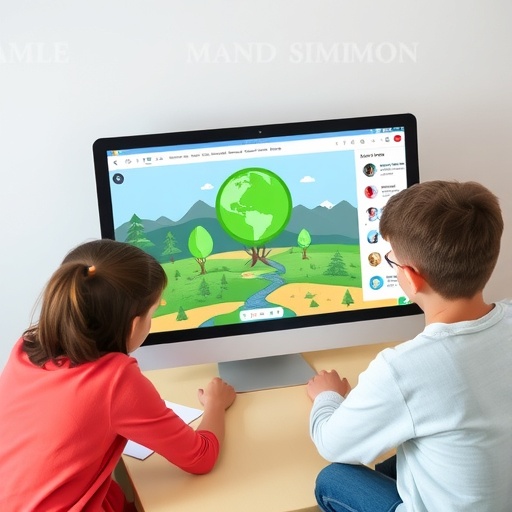
In an ever-evolving world where climate change dominates global conversations, educational tools play a crucial role in shaping young minds. Recent research sheds light on the effectiveness of innovative learning methods, particularly focusing on an interactive visualization of the carbon cycle. An intriguing report by Höst, Koć-Januchta, Mani, and colleagues offers insights into pupils’ engagement with this unique educational approach. The findings indicate that such interactive tools not only stimulate interest but also deepen understanding of complex environmental processes.
At the heart of this research is the carbon cycle, a fundamental concept in ecology that explains how carbon atoms cycle through various forms and reservoirs on Earth. By visualizing this process interactively, students gain a dynamic perspective of how carbon impacts our planet. As such, the study explores the ways in which this visualization enhances comprehension amongst students, allowing them to grasp abstract concepts in a tangible manner.
One of the primary objectives of this research was to evaluate the engagement levels of pupils when exposed to the interactive carbon cycle visualization. Engagement is a crucial component in educational settings, as it directly correlates with knowledge retention and academic performance. The findings suggest that students are more likely to remain interested and invested in their learning when they can actively participate in their education rather than passively absorb information. This research therefore holds significant implications for future educational methodologies.
Moreover, the interactive nature of the visualization encourages exploration and inquiry-based learning. Instead of following a traditional lecture model, this approach fosters a hands-on learning environment where students can manipulate variables and observe outcomes in real-time. This methodological shift is indicative of a broader trend in education, where technology is increasingly being integrated to facilitate deeper understanding. The usage of interactive tools is proving essential in molding a curriculum that resonates with the digital age.
Importantly, the study illustrates differences observed in engagement levels among various demographics within the student population. Factors such as age, background knowledge, and interest in science were analyzed to assess how these variables influenced students’ interaction with the visual representation of the carbon cycle. For instance, younger students exhibited heightened curiosity and willingness to explore, suggesting that incorporating technology in early education could foster a lifelong passion for learning science.
It is also noteworthy how collaborative learning emerged as a theme during the research. Many students preferred to engage with their peers when navigating the interactive visualization. This collaboration not only resulted in richer discussions but also promoted critical thinking skills. By working together, students were able to share insights and challenge each other’s understanding, leading to a more profound grasp of the carbon cycle’s implications.
Aside from engagement, the study evaluated the effectiveness of the visualization in improving students’ cognitive understanding of the carbon cycle. Researchers monitored students’ performance in assessments before and after interacting with the visualization, revealing significant improvements in their ability to articulate and apply concepts related to carbon cycling. This improvement is particularly important in today’s educational landscape where STEM (science, technology, engineering, and mathematics) skills are paramount.
Furthermore, the significance of visual learning cannot be understated. Human cognition benefits from visual stimuli, which can simplify complex information. This aligns with existing research that supports the idea that visuals can enhance information retention and comprehension. Therefore, the interactive visualization serves as an ideal complement to traditional educational methods, enriching the learning experience.
Feedback from students indicated that the interactive nature of the carbon cycle visualization made the topic of climate change feel more relevant and immediate. This emotionally engaging aspect can lead to increased environmental awareness among pupils, thus potentially inspiring future generations to address climate issues proactively. The role of education in addressing climate change cannot be overlooked, as informed individuals are more likely to engage in environmentally conscious behaviors.
However, the research is not without its limitations. While the results are compelling, the authors caution against overgeneralizing their findings. The study primarily involved a specific demographic and setting, which may not reflect the experiences of all students. Further research across diverse contexts is needed to determine the broader applicability of interactive visualizations in science education.
As we look forward, it is essential for educational institutions to embrace innovative approaches to teaching complex subjects like the carbon cycle. The positive outcomes highlighted in this research could pave the way for the development of a curriculum that prioritizes active learning and technological integration. As educators seek to engage students in meaningful ways, the insights gained from this study can inform the design of future educational resources.
In conclusion, Höst, Koć-Januchta, and Mani’s research presents a promising avenue for enhancing educational approaches in environmental science. By leveraging interactive visualizations, educators have the power to inspire curiosity, deepen understanding, and cultivate future stewards of our planet. As we face pressing global challenges like climate change, empowering students through innovative education becomes more essential than ever.
In summary, the potential of interactive visualizations in education, especially concerning complex topics such as the carbon cycle, marks a significant step forward. As we continue to explore and expand our educational methods, this research serves as a beacon of hope and a guide for what the future of engaging learning experiences can hold.
Subject of Research: Engagement and evaluation of an interactive visualization of the carbon cycle.
Article Title: Pupils’ engagement with and evaluation of an interactive visualization of the carbon cycle.
Article References:
Höst, G., Koć-Januchta, M.M., Mani, M. et al. Pupils’ engagement with and evaluation of an interactive visualization of the carbon cycle.
Discov Educ (2025). https://doi.org/10.1007/s44217-025-01035-y
Image Credits: AI Generated
DOI:
Keywords: Carbon cycle, interactive visualization, education, student engagement, STEM learning, environmental awareness.


