

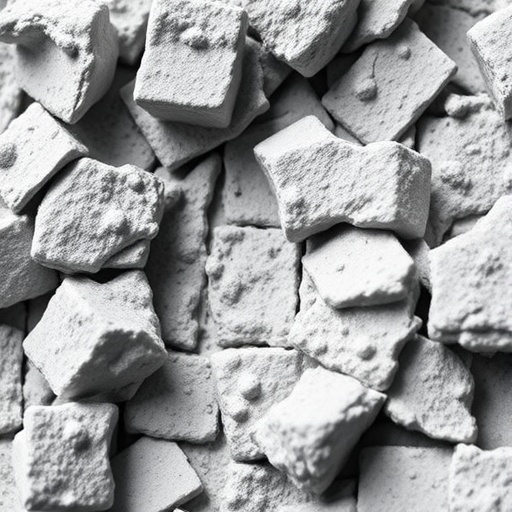
Recent advancements in the field of environmental science have spotlighted a groundbreaking study by Zouch et al., aiming to address the persistent issue of molybdenum oxyanion contamination. Molybdenum, while a crucial element in several industrial applications, often contaminates soil and water systems as a result of mining, agricultural runoff, and industrial processes. This research aligns with the urgent global need to manage toxic substances effectively, particularly in settings where environmental and public health are at stake.
The study sheds light on the innovative use of alkali-activated geopolymer binders as a viable method for the stabilization and solidification of molybdenum oxyanions. These binders, known for their low environmental impact and remarkable performance characteristics, offer an alternative to traditional cement-based products, which can often exacerbate environmental issues due to their high carbon footprint.
Alkali-activated geopolymer technology operates by chemically activating aluminosilicate materials, which then react to form a solid matrix encapsulating the contaminants. The choice of feedstock for this technology is pivotal. The study emphasizes the importance of using a sustainably sourced aluminosilicate, thereby reducing reliance on non-renewable resources. This aspect is significant, as it not only impacts the environmental viability of the solution but also opens opportunities for recycling industrial by-products.
In terms of methodology, the researchers conducted a series of experiments to evaluate the effectiveness of different alkali-activated geopolymers in stabilizing molybdenum oxyanions. Various parameters, such as the alkali concentration, curing time, and temperature, were meticulously varied to determine their effects on the stabilization efficiency. The outcomes revealed that specific combinations of these factors significantly enhanced the binding capacity of the geopolymer matrix, making it a potent weapon against molybdenum contamination.
One noteworthy finding of the study was that the stabilization process led to a substantial reduction in the leachability of molybdenum oxyanions. This is critical, as leachability is a significant concern when considering the environmental impact of stabilizing agents. By minimizing the leaching potential, the alkali-activated geopolymers not only immobilize the morbid substance but also provide a longer-term solution for managing contaminated sites.
Furthermore, the research examined the microstructure of the synthesized geopolymers through advanced characterization techniques. Scanning electron microscopy and X-ray diffraction analyses illustrated the crystalline and amorphous phases present, contributing to the physico-chemical understanding of how these materials interact with contaminants. The study’s intricate detailing of these structural factors ultimately supports the argument for the superiority of these geopolymers in solidification processes.
A significant advantage of using alkali-activated geopolymer binders is their ability to withstand extreme environmental conditions. The researchers tested the performance of these binders under various pH levels and temperatures, demonstrating that they maintain their structural integrity and contaminant-binding capability even in harsh environments. This resilience is essential for their application in various contaminated sites across diverse geographical locations.
Moreover, the environmental implications of adopting geopolymer technology are far-reaching. By utilizing industrial by-products as raw materials, this method contributes to the circular economy by reducing waste and promoting resource recovery. Transitioning towards such sustainable practices in the construction and waste management sectors can significantly mitigate the negative impact of industrial activities on ecosystems.
Public reception of this research is poised to be profound, given the growing awareness of environmental sustainability among communities globally. As more individuals become cognizant of ecological issues, the demand for innovative, eco-friendly solutions will likely push this technology into mainstream acceptance. Engaging the public through educational initiatives and outreach can enhance understanding of the importance of addressing molybdenum contamination and how alkali-activated geopolymers offer a tangible solution.
As further research unfolds, the potential applications of this technology could extend beyond simply stabilizing molybdenum oxyanions. The versatility of alkali-activated geopolymer technology may offer pathways to address various heavy metal contaminations, providing a broader spectrum for environmental remediation efforts. Continued innovation in this field may lead to new formulations and techniques that enhance the performance of these geopolymers even further.
In conclusion, Zouch et al.’s research represents a significant stride toward effective remediation processes for contaminated sites plagued by molybdenum oxyanions. By marrying environmental science with innovative engineering approaches, the study has paved the way for the adoption of alkali-activated geopolymers in practical applications. This not only addresses immediate contamination concerns but also fosters sustainable practices that future generations can rely upon to safeguard environmental health.
The journey from research to real-world application is intricate, requiring collaboration between scientists, industry leaders, and policymakers. Harnessing the power of alkali-activated geopolymers could eventually lead to cleaner environments, healthier ecosystems, and a sustainable future for our communities.
This remarkable piece of research contributes significantly to the expanding body of knowledge on environmental remediation technologies, offering hope in the ongoing battle against pollution. As momentum builds around these findings, the interplay between science, industry, and community engagement will be essential to translate research breakthroughs into real-world successes. This commitment to innovation and sustainability could redefine our approach to environmental challenges.
Strong advocacy for this technology and similar research efforts can inspire a shift in how society perceives contamination issues, emphasizing that effective solutions are not only needed but also achievable.
Subject of Research: Molybdenum Oxyanion Stabilization and Solidification
Article Title: Efficient stabilization and solidification of molybdenum oxyanions using alkali-activated geopolymer binders.
Article References:
Zouch, A., Mamindy-Pajany, Y., Abriak, NE. et al. Efficient stabilization and solidification of molybdenum oxyanions using alkali-activated geopolymer binders. Environ Sci Pollut Res (2025). https://doi.org/10.1007/s11356-025-37296-1
Image Credits: AI Generated
DOI: https://doi.org/10.1007/s11356-025-37296-1
Keywords: Molybdenum, Geopolymers, Environmental Science, Stabilization, Contamination, Oxyanions, Sustainable Practices, Heavy Metals.


