

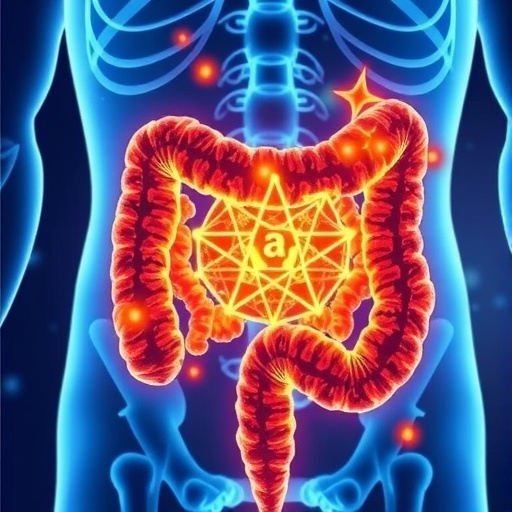
A groundbreaking study spearheaded by researchers at the University of Liège reveals a complex and somewhat paradoxical role for the lipid transfer protein Stard7 in the genesis and progression of intestinal cancers. Traditionally classified as a minor player, Stard7 has been known primarily for its function in transporting specific lipids to mitochondria—the cellular organelles pivotal for energy production and metabolic regulation. However, emerging evidence positions Stard7 as a crucial regulator in mitochondrial metabolism, cellular stress response pathways, and ultimately, tumor development within the intestinal milieu.
Colon cancer ranks as the third most commonly diagnosed cancer worldwide and is the second leading cause of cancer-related mortality, underscoring the urgency to unravel the intricate molecular underpinnings that drive this aggressive disease. Although advances have been made in early detection and treatment, the fundamental mechanisms that initiate and perpetuate colon carcinogenesis remain incompletely understood. To address this, scientists at the GIGA Medical Chemistry Laboratory at the University of Liège embarked on generating sophisticated, genetically engineered mouse models that faithfully emulate the complex physiological and pathological features observed in human colorectal cancer.
Central to this inquiry is the Stard7 protein, previously considered to have a marginal role confined to lipid transport targeted at maintaining mitochondrial integrity and function. Mitochondria, often referred to as the “powerhouses” of the cell, rely on these lipid deliveries to sustain their membrane structure and bioenergetic capacity. Disruption of this lipid trafficking compromises mitochondrial architecture and limits ATP production, the vital energy currency for cellular processes.
To dissect Stard7’s exact contribution to intestinal homeostasis and oncogenesis, the researchers employed a conditional gene knockout strategy, selectively inactivating Stard7 expression exclusively in intestinal epithelial cells. This tissue-specific approach enabled the delineation of direct consequences stemming from Stard7 deficiency in the intestine without confounding effects from other organs. The results were striking: intestinal cells deprived of Stard7 exhibited markedly impaired mitochondrial respiration, evidenced by diminished energy output and a compensatory upregulation of reactive oxygen species (ROS).
Elevated ROS levels induce oxidative stress, known to inflict DNA damage and disrupt cellular macromolecules, thereby fostering a mutagenic environment conducive to malignant transformation. In response to this mitochondrial dysfunction and oxidative burden, affected intestinal cells underwent profound metabolic reprogramming. Their lipid compositions were altered, and two pivotal signaling axes were activated: mTORC1 (mechanistic target of rapamycin complex 1) and the integrated stress response regulator ATF4 (activating transcription factor 4). mTORC1 activation stimulates anabolic growth pathways, promoting cell proliferation; concurrently, ATF4 orchestrates a stress-adaptive transcriptional program that enhances serine biosynthesis, supplying amino acids that cancer cells preferentially utilize to support rapid division and survival under duress.
A particularly novel and unexpected finding was the context-dependent duality of Stard7’s role in tumor biology. In an inflammatory-driven colorectal cancer model, which simulates the chronic intestinal inflammation seen in conditions such as inflammatory bowel disease (IBD), loss of Stard7 surprisingly conferred a protective effect by attenuating tumor development. Conversely, in a separate model designed to replicate the most prevalent form of human colon cancer—induced by mutations in the APC tumor suppressor gene—Stard7 deficiency dramatically accelerated tumor progression. The data suggest that Stard7 functions variably—either as a tumor promoter or suppressor—depending on the mutational landscape and inflammatory status of the tissue microenvironment.
This dichotomy highlights the intricate interplay between mitochondrial metabolism, cellular stress responses, and oncogenic signaling cascades in intestinal epithelial cells. It underscores a vital principle in cancer biology: the functional impact of any single gene or protein can drastically change depending on the intricate network of genetic alterations and epigenetic modifications present within a tumor. Such complexity is a stark reminder of the challenges confronting personalized medicine, which aims to design therapies tailored to the unique molecular profile of each patient’s cancer.
To further advance this research, the creation of a novel mouse model with combined APC mutation and intestinal-specific Stard7 deficiency was a pivotal breakthrough. These mice rapidly develop numerous tumors localized predominantly in the distal colon—the region most frequently afflicted in human colorectal cancer cases—thereby providing an invaluable tool for investigating tumor biology and testing treatment strategies that closely recapitulate human disease progression.
Moreover, the study found that the gut microbiome composition in this double-mutant model mirrored that observed in colorectal cancer patients. Given the emerging recognition of the gut microbiota’s influence on cancer development, immune modulation, and therapeutic responses, this finding opens new investigative avenues into how mitochondrial dysfunction, microbiota dysbiosis, and oncogenesis are interconnected.
This research exemplifies the complexity and nuance that underlie tumorigenesis, emphasizing that targeting metabolic pathways such as those involving Stard7 must be context-specific. Therapeutic strategies aimed at modulating Stard7 or related metabolic regulators should consider the genetic background of tumors and the systemic environmental factors at play, including inflammation and microbiome status.
In conclusion, the University of Liège team’s work not only deepens our understanding of how mitochondrial lipid transfer proteins intersect with cellular metabolism and cancer biology but also establishes a robust experimental platform to uncover novel treatment modalities. By acknowledging and harnessing the context-dependent nature of proteins like Stard7, future therapies might circumvent current limitations in colorectal cancer treatment, offering new hope for improved patient outcomes in one of the world’s deadliest malignancies.
Subject of Research: The role of the lipid transfer protein Stard7 in mitochondrial metabolism and its context-dependent influence on intestinal tumor development.
Article Title: The lipid transfer protein STARD7 controls intestinal tumor development in a context-dependent manner
News Publication Date: 30-Mar-2026
Web References: DOI link
Image Credits: University of Liège / Kateryna Shostak
Keywords: Stard7, mitochondrial dysfunction, colorectal cancer, lipid transfer protein, intestinal tumor, APC mutation, mTORC1, ATF4, reactive oxygen species, metabolic reprogramming, gut microbiota, personalized medicine


