

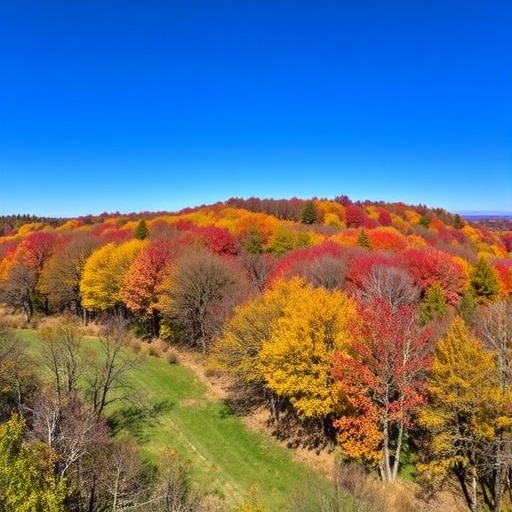
In a groundbreaking study published in Commun Earth Environ, a team of researchers led by Yu, H., Mo, Z., and Tan, T. sheds light on the intricate dynamics between environmental changes and plant physiology. Their findings suggest that earlier springs and warmer autumns are contributing to a widening gap between the timing of leaf coloration in trees and the cessation of photosynthesis. This research not only underscores the importance of understanding plant responses to climate shifts but also has significant implications for ecosystems and agriculture.
As climate change accelerates, the signs are everywhere—from melting glaciers to rising sea levels. However, one of the subtler impacts is seen in the phenology of trees, particularly how they respond to shifting seasonal patterns. The research team employed a robust analytical approach, utilizing long-term datasets from various geographical regions to ascertain how changes in temperature are affecting leaf coloration and photosynthetic activity. Their results indicate a concerning trend where the onset of spring is occurring notably earlier compared to previous decades, while autumn temperatures are warming further into the seasonal transition.
The season of spring has always been synonymous with renewal and growth; however, the research highlights an unsettling reality. As the global temperature continues to rise, many tree species are beginning their growth cycles earlier than before. This shift seems to be exacerbating the physiological processes that govern non-photosynthetic functions, such as leaf coloration. The correlation between warmer, earlier springs and altered phenological events is becoming increasingly evident, raising alarms among ecologists and plant biologists alike.
Autumn brings its own challenges. The research indicates that not only is the onset of fall arriving later, but the temperatures during this season are also significantly warmer. This combination leads to a mismatch in the biological clock of trees, which can result in trees retaining their leaves longer without the associated physiological changes that occur during photosynthesis cessation. Consequently, trees experience a prolonged period where their leaves display vibrant colors without the underlying metabolic processes that historically accompanied such visual transformations.
The impacts of these phenological shifts are profound, suggesting potential disruptions in ecosystem dynamics. Trees play crucial roles in their environments; they provide habitat, contribute to biodiversity, and are integral to the carbon cycle. If leaf coloration and photosynthetic cessation do not align as expected, this could lead to adverse effects on various levels. For example, herbivores depend on specific signals from plants for feeding, and a mismatch may deprive them of essential resources.
Through extensive data analysis, the researchers found that this discrepancy in plant responses could be tied back to specific climatic variables. For instance, they showed that changes in soil temperature and the timing of first frost events played critical roles in influencing tree physiology. These aspects underscore the pressing need for further research to understand the underlying mechanisms influencing these biological shifts.
Additionally, the study contributes to an ongoing discourse regarding the implications for agriculture. Farmers and agricultural practitioners depend on predictable seasonal patterns to optimize planting and harvesting cycles. Unpredictable phenological changes may lead to decreased crop yields and altered pest dynamics, creating further challenges in food security. This research thus serves as a clarion call for agricultural adaptation strategies in response to a changing climate.
Moreover, the findings of this study bring to light the necessity for integrated approaches in managing forests and natural resources. Comprehensive forest management strategies must take into account the latest climatic data and biological responses to ensure the sustainability of forest ecosystems. As trees experience these earlier springs and warmer autumns, forest management must adjust to avoid potential declines in forest health and productivity.
As climate models continue to predict shifts in global temperatures, it becomes increasingly urgent to communicate these findings to policymakers, land managers, and the public. By articulating the connection between climate change and ecological health, there is potential to foster a greater understanding of our environmental responsibilities. Ensuring that ecosystems remain resilient in the face of change is paramount for sustaining the services they provide.
In conclusion, the research conducted by Yu and colleagues offers critical insights into the ecological ramifications of climate change, particularly concerning tree physiology. The observed discrepancies between leaf coloration and photosynthetic cessation pose significant questions regarding future ecosystem health and agricultural stability. As the pace of climate change quickens, research like this will be essential in guiding responses and shaping policies aimed at mitigating its impacts on our planet.
This study not only enriches our understanding of climate dynamics but also emphasizes the interconnectedness of biological systems and their responses to environmental pressures. As scientists continue to unravel the complexities of climate change, it becomes ever more essential to consider the implications of phenological mismatches for our ecosystems and agriculture alike.
Understanding these patterns helps to paint a broader picture of the health of our planet. By raising awareness and pushing for informed action, researchers hope to mitigate some of the adverse consequences associated with climate change. This research is a critical stepping stone toward developing comprehensive strategies that can address the multifaceted challenges posed by our changing climate.
Subject of Research: The impact of climate change on the phenology of trees, specifically the relationship between leaf coloration and photosynthetic cessation.
Article Title: Earlier spring onset and autumn warming increase the discrepancy between leaf coloration and photosynthetic cessation.
Article References:
Yu, H., Mo, Z., Tan, T. et al. Earlier spring onset and autumn warming increase the discrepancy between leaf coloration and photosynthetic cessation.
Commun Earth Environ (2026). https://doi.org/10.1038/s43247-026-03239-y
Image Credits: AI Generated
DOI: 10.1038/s43247-026-03239-y
Keywords: climate change, phenology, leaf coloration, photosynthesis, ecosystem health, agriculture, forest management, ecological dynamics.


