

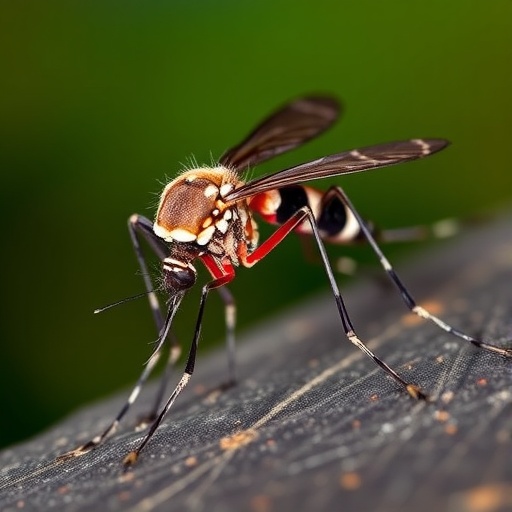
A groundbreaking study spearheaded by researchers at the Harvard T.H. Chan School of Public Health has revealed critical insights into the genomic evolution of Anopheles darlingi, the principal mosquito vector for malaria in South America. Published in the prestigious journal Science on March 26, 2026, this investigation marks the first comprehensive sequencing of over a thousand complete genomes of this species across multiple South American countries. The findings highlight the mosquito’s emerging resistance to insecticides, posing significant challenges to malaria control efforts within the region and potentially across the globe.
Malaria remains a persistent public health menace in the Americas, with more than 600,000 annual cases primarily concentrated in Brazil, Colombia, and Venezuela. Despite decades of concerted efforts to curtail transmission, the resilience and adaptability of Anopheles darlingi have hindered eradication measures. This new research delivers an unprecedented population genomics perspective, unearthing the evolutionary dynamics that underpin the species’ adaptability in diverse environments ranging from dense rainforests to urban landscapes.
The team sequenced whole genomes from 1,094 female Anopheles darlingi specimens sampled across 16 geographically and ecologically diverse sites, including forests, wetlands, grasslands, agricultural zones, mining areas, and metropolitan centers. Sampling spanned six countries: French Guiana, Brazil, Guyana, Peru, Venezuela, and Colombia. This expansive dataset provided unparalleled resolution into the genetic architecture shaping mosquito populations across the continent, revealing not only patterns of divergence but also signals of adaptive evolution linked to insecticide resistance.
Traditionally, population genetic studies of Anopheles darlingi have relied on selected genetic markers, which impose limitations on detecting nuanced evolutionary changes. By undertaking whole-genome sequencing, the researchers gained deep insights into genomic regions under selection pressure. This approach uncovered a surprising and widespread emergence of resistance-associated allelic variants, even though this species has not been subjected to intensive vector control campaigns involving heavy insecticide applications, unlike analogous vectors in other global regions.
The resistance phenotypes detected appear to be influenced not just by insecticides used in public health vector control but also by agricultural insecticides pervasive across the continent. This revelation is particularly concerning as it suggests that wide-scale environmental exposure is driving resistant genotypes, compounding the difficulty of interrupting malaria transmission cycles. The study discusses at length how these evolutionary pressures reshape the vector population, potentially exacerbating disease persistence.
Comprehensive genomic analyses highlighted significant genetic divergence among populations of Anopheles darlingi. For instance, dissimilarities between populations in Guyana and Venezuela underscore how geographic and ecological barriers contribute to localized genomic differentiation. Such divergence indicates a high evolutionary potential within the species, enabling rapid adaptation to environmental changes and human interventions, which complicates the deployment of standardized vector control strategies.
Jacob Tennessen, lead author and research scientist in the Department of Immunology and Infectious Diseases, emphasizes the broader implications of these findings. He warns of the risks posed by resistant mosquito populations facilitating the development and spread of drug-resistant malaria parasite strains in the Americas. The genomic data provide a critical foundation for improved vector surveillance and could ultimately inform novel strategies to disrupt malaria transmission more effectively.
Despite the groundbreaking nature of this research, senior author Daniel Neafsey, an associate professor at Harvard Chan, points out that the study constitutes foundational science rather than immediate policy guidance. He advocates for further research to translate these genomic insights into applied vector control interventions. Such efforts are essential to prevent malaria incidence from escalating due to evolving insecticide resistance and to ensure that scientific advances are optimally leveraged for public health impact.
The multi-institutional collaboration brought together expertise from various disciplines, including vector biology, genomics, epidemiology, and computational biology. Several team members from the Neafsey Laboratory along with colleagues from Harvard Chan and international partners contributed to the comprehensive analyses that underpin the study’s novel conclusions. Their interdisciplinary approach exemplifies how genome science can reveal intricate evolutionary responses in disease vectors.
Funding for this ambitious project was received from the National Institutes of Health (NIH), the Bill & Melinda Gates Foundation, the Agence Nationale de la Recherche (France), and Brazil’s National Council for Scientific and Technological Development. These resources were crucial for large-scale sample collection, high-throughput sequencing, and advanced computational analyses that together established a robust population genomics framework for Anopheles darlingi.
The study’s results advocate for revisiting current vector control programs in South America, taking into account the ecological and evolutionary complexities revealed by genome-wide data. Incorporating genetic monitoring of resistance markers alongside traditional entomological surveillance could enable more dynamic and responsive public health strategies, potentially forestalling the escalation of chemical resistance and safeguarding the gains made in malaria control.
This pioneering research not only advances understanding of Anopheles darlingi biology but also sets a precedent for similar genomic studies on other malaria vectors in the Americas. The authors stress the importance of expanding this work beyond a single species to comprehensively map vector genomic landscapes across the continent. Such efforts are critical for guiding next-generation malaria prevention initiatives tailored to the unique evolutionary contexts of diverse Anopheles species.
In sum, the Harvard-led study elucidates the complex genomic underpinnings that facilitate Anopheles darlingi’s rapid adaptation under selective pressure from insecticides in South America. By leveraging complete genome sequences from over a thousand mosquitoes, researchers have highlighted critical evolutionary challenges confronting malaria control efforts. These insights herald a new era of vector genomics research aimed at combating one of humanity’s most entrenched infectious diseases.
Subject of Research: Population genomics and insecticide resistance in Anopheles darlingi, a key malaria vector in South America
Article Title: Population genomics of Anopheles darlingi, the principal South American malaria vector mosquito
News Publication Date: March 26, 2026
Web References:
DOI link to article
References:
- Tennessen JA, Brosula R, Chabanol E, et al. Population genomics of Anopheles darlingi, the principal South American malaria vector mosquito. Science. 2026;doi:10.1126/science.adw9761.
Keywords: Anopheles darlingi, malaria, genome sequencing, insecticide resistance, vector control, South America, population genomics, evolutionary biology, public health, vector biology


