

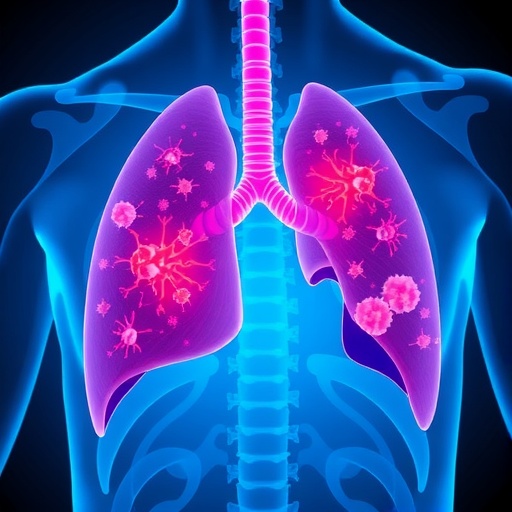
In a groundbreaking study published recently in Nature Communications, a team of researchers led by Wang, Li, and Mo unveiled a novel therapeutic approach that holds profound implications for the global fight against tuberculosis (TB). This innovative strategy integrates the precision of ultrasound technology with cutting-edge immunotherapy to target the complex microenvironment of granulomas—specialized immune structures that harbor the Mycobacterium tuberculosis (Mtb) pathogen. Their findings not only offer a promising treatment paradigm but also introduce a powerful method aimed at preventing recurrence, a persistent challenge in TB management worldwide.
Tuberculosis remains a major public health threat, especially in low- and middle-income countries. Despite significant advances in diagnosis and antibiotic therapy, treatment failure and disease relapse continue to undermine global control efforts. Central to TB’s resilience is the formation of granulomas—organized aggregates of immune cells that sequester the bacteria but also create a niche favoring persistence and latent infection. The inability of conventional therapies to fully penetrate this architectural and biochemical fortress has long frustrated clinicians and researchers, necessitating therapeutic innovations capable of overcoming these biological barriers.
The research team has ingeniously harnessed the power of sono-immunotherapy, an emerging modality that utilizes the mechanical and biological effects of focused ultrasound to enhance immune response. By directing ultrasound waves at granulomas, the therapy modulates the local microenvironment in a way that both disrupts the protective niche for Mtb and amplifies the host immune system’s ability to recognize and eradicate the infected cells. This dual mechanism breaks the stalemate between bacterial persistence and immune containment, signaling a paradigm shift in TB therapy.
Granulomas create a hypoxic, acidic, and immunosuppressive local milieu aimed at limiting bacterial dissemination but paradoxically fostering Mtb’s dormancy and antibiotic tolerance. The researchers meticulously characterized this microenvironment, identifying key features that impair immune cell function and reduce drug bioavailability. Their approach employing ultrasound serves to transiently remodel this microenvironment, improving oxygenation and pH balance while facilitating better penetration of immune cells and therapeutic agents. Such dynamic remodeling is critical to reversing the immunosuppressive status quo within granulomas.
One of the study’s most noteworthy aspects is the targeted immunomodulation. Ultrasound exposure induces mechanical stress and mild hyperthermia, which enhance antigen presentation and increase the expression of co-stimulatory molecules on macrophages and dendritic cells resident in granulomas. This stimulation galvanizes T-cell responses critical for long-term immunity and reduces Mtb’s ability to evade immune detection. The upregulation of immune checkpoint molecules is also modulated, preventing excessive inflammation while maintaining effective bacterial clearance.
Integrating immunotherapy with ultrasound offers advantages over traditional drug regimens. By localizing treatment effects within granulomas, systemic toxicity can be minimized, reducing adverse effects often associated with prolonged antibiotic use. Moreover, the therapy’s non-invasive nature and ability to be finely tuned in real time provide a versatile tool adaptable to patient-specific disease presentations and granuloma heterogeneity. This personalized approach aligns with precision medicine goals and could revolutionize TB treatment paradigms.
The research utilized advanced imaging and molecular profiling techniques to monitor therapeutic effect in vivo. Longitudinal assessments revealed substantial reductions in granuloma size and bacterial load following sono-immunotherapy application. Importantly, treated subjects demonstrated a dramatic decrease in recurrence rates during extended follow-up periods compared to controls receiving standard care. These outcomes underscore the durability and efficacy of targeting granuloma microenvironments as a means of long-term disease control.
Fundamental to the study’s success is the multidisciplinary collaboration bridging microbiology, immunology, biomedical engineering, and clinical medicine. The team developed a sophisticated ultrasound delivery system capable of penetrating deep tissue layers with precision, minimizing off-target effects. Parallel investigations into signaling pathways activated by mechanical stimulation unveiled novel insights into host-pathogen interactions, opening avenues for further therapeutic innovation beyond TB.
The researchers also addressed potential limitations. They emphasized the need for careful calibration of ultrasound parameters to avoid tissue damage and preserve the structural integrity of healthy lung tissue. Strategies for optimizing treatment duration and frequency were explored, balancing maximal immunological benefit against practical considerations such as patient compliance and device accessibility. They proposed integration with existing antibiotic protocols to harness synergistic effects for comprehensive management.
Global implications of this work are far-reaching, especially considering the staggering morbidity and mortality caused by TB worldwide. The technology’s scalability and adaptability render it promising for deployment in resource-limited settings, where TB burden is highest and infrastructure for complex treatments may be scarce. Portable ultrasound devices combined with immunotherapeutic agents represent a feasible and impactful intervention to reduce disease transmission and improve patient outcomes on a population scale.
Furthermore, the principles elucidated herein may extend to other granulomatous diseases characterized by persistent, localized infections or chronic inflammation. The concept of microenvironment-guided sono-immunotherapy opens a new frontier in treating conditions where conventional therapies have failed to achieve durable remission. As such, the study’s impact transcends tuberculosis, positioning it as a beacon for innovation in infectious disease therapeutics.
Looking forward, ongoing clinical trials inspired by this preclinical research are poised to validate safety and efficacy in diverse human populations. The integration of biomarkers to predict responsiveness and monitor therapeutic progress will refine patient selection and treatment personalization. Additionally, exploration of adjunctive agents to potentiate ultrasound-induced immunomodulation may further enhance clinical success.
In summary, the integration of granuloma microenvironment-guided sono-immunotherapy represents a sophisticated, targeted approach to one of humanity’s oldest and most stubborn infectious diseases. By leveraging mechanical forces to convert immunosuppressive niches into active battlegrounds, this technology promises to revolutionize tuberculosis therapy, mitigate recurrence, and pave the way for innovative treatments of other complex infectious conditions. This study epitomizes the power of interdisciplinary research in overcoming longstanding biomedical challenges.
As tuberculosis continues to challenge global health systems, embracing such novel, mechanistically informed therapeutic strategies holds the potential not just to improve individual patient outcomes but to catalyze public health breakthroughs at the global scale. The scientific community and healthcare practitioners alike eagerly anticipate the translation of this promising technology from bench to bedside, heralding a new era in infectious disease control.
Subject of Research: Sono-immunotherapy targeting the granuloma microenvironment to treat and prevent tuberculosis recurrence.
Article Title: Granulomas microenvironment-guided sono-immunotherapy to treat and prevent recurrence of tuberculosis.
Article References:
Wang, W., Li, F., Mo, W. et al. Granulomas microenvironment-guided sono-immunotherapy to treat and prevent recurrence of tuberculosis. Nat Commun (2026). https://doi.org/10.1038/s41467-026-69420-1
Image Credits: AI Generated


