

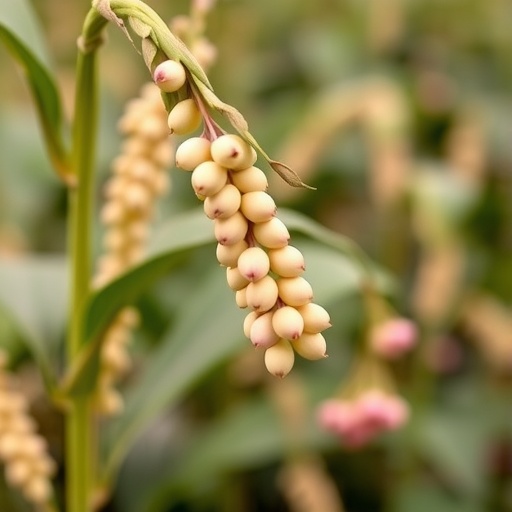
China’s Soybean Crisis: A Pathway Through Innovative Cropping Systems and Dietary Reform
In the face of mounting global pressures on food security and environmental sustainability, China, the world’s largest importer of soybeans, is confronting a critical challenge. Its burgeoning demand for soybeans, essential for animal feed and food products, has outpaced domestic production capabilities, resulting in a significant reliance on international markets. This dependence not only exposes the country to geopolitical risks but also poses substantial sustainability concerns, including carbon emissions associated with long-distance transportation. Addressing this soybean crisis requires a nuanced understanding of agricultural practices, consumption habits, and systemic reforms. Recent groundbreaking research by Liu, Xin, Wang, and colleagues, published in npj Sustainable Agriculture, sheds light on potential pathways to resolve these issues through optimized cropping systems and shifts in dietary structures.
At the core of the challenge is China’s constrained arable land, which limits the expansion of soybean cultivation. Traditional monoculture systems prioritize crops like maize and wheat, often at the expense of soybean growth. The researchers propose a strategic redesign of cropping systems, integrating soybeans more effectively without compromising total crop yields. By adopting intercropping and crop rotation methods, it is possible to enhance land use efficiency. Such cropping systems not only bolster soybean output but also improve soil health and reduce pest infestations. This synergistic approach is vital to sustaining productivity in the long term while minimizing environmental degradation.
Technically, the study utilizes spatial and crop simulation models to evaluate the outcomes of different cropping system configurations across China’s diverse agroecological zones. By applying climate-smart agricultural principles, the researchers identify regions where soybean integration can be most beneficial. These models incorporate variables such as soil fertility, water availability, and crop phenology, enabling precise tailoring of cropping sequences. Their findings suggest that northern and northeastern provinces, with their cooler climates and suitable growing seasons, hold significant promise for intensified soybean cultivation within multi-cropping frameworks. This scientific rigor demonstrates the feasibility of boosting domestic production through agronomic innovation.
Dietary structure optimization emerges as another critical dimension of the solution. China’s diet has historically been characterized by high meat consumption, which drives demand for soybean-based animal feed. The research advocates for a gradual shift toward plant-based proteins and balanced diets that are environmentally sustainable. Reducing meat intake, even modestly, can dramatically decrease soybean import pressures. This dietary transition requires public awareness campaigns, policy incentives, and the development of appealing plant-derived food products. The interplay between agricultural production and consumption patterns highlights the complexity of the soybean crisis and the need for integrated solutions.
Furthermore, the study evaluates the environmental implications of various intervention scenarios. Life cycle assessment tools are employed to quantify greenhouse gas emissions, water footprints, and land use changes associated with soybean production and consumption. Importantly, the optimized cropping systems coupled with dietary shifts demonstrate substantial environmental benefits. The projected reduction in imports can lower the global carbon footprint arising from soybean cultivation in ecologically sensitive exporting regions, such as the Amazon rainforest. This underscores the global significance of China’s agricultural reforms in mitigating climate change.
One of the more nuanced aspects of this research is the exploration of policy frameworks that can facilitate the proposed transformations. The authors emphasize that government support through subsidies, research funding, and extension services is essential for farmer adoption of new cropping systems. Additionally, policy mechanisms that encourage dietary diversity and sustainable consumption patterns can amplify the benefits. China’s recent commitment to carbon neutrality by 2060 provides a strategic impetus to harmonize agricultural policies with climate goals, creating a supportive environment for innovation.
The economic dimension of the soybean crisis also receives attention. The study models the cost implications of restructuring cropping systems and altering dietary behaviors, finding that long-term savings in import expenditures and environmental mitigation outweigh the initial investments. This economic analysis includes sensitivity scenarios considering fluctuations in global soybean markets. By minimizing dependency on imports, China can enhance its agricultural resilience and economic stability. The intertwined economic and environmental benefits present a compelling case for swift action.
In addition to national strategies, the research acknowledges the role of international collaboration. Since soybean trade is a global endeavor, cooperation with exporting countries on sustainable production practices and trade policies can further reinforce food security. Sharing technological innovations and harmonizing sustainability standards can reduce the ecological impacts of soybean supply chains worldwide. This multilateral perspective broadens the scope of the solution beyond China’s borders, emphasizing the interconnected nature of global agriculture.
Technological advancements such as precision agriculture and genomic breeding are identified as enablers to accelerate progress. Precision farming tools facilitate optimized input use, minimizing waste and enhancing crop yields. Meanwhile, breeding programs targeting soybean varieties adapted to local climates and resistant to pests or diseases can significantly elevate productivity. The integration of these technologies within the proposed cropping system frameworks provides a scalable and adaptable pathway to meet China’s soybean needs sustainably.
Public acceptance and cultural preferences are highlighted as vital factors in shaping dietary shifts. Understanding and respecting regional food traditions while promoting alternative sources of protein requires sensitive communication and culinary innovation. The researchers recommend participatory approaches involving consumers, farmers, industry stakeholders, and policymakers to co-create sustainable food systems. Such inclusive processes increase the likelihood of successful adoption and lasting impact.
The study’s comprehensive approach underscores the importance of viewing the soybean crisis as a multifaceted challenge. Agriculture, consumption, environment, economics, policy, and culture are interconnected domains where change is required. By holistically addressing these spheres, China’s strategy can serve as a global model for reconciling food security with sustainability. The methodology demonstrated by Liu and colleagues, combining empirical data, modeling, and policy analysis, establishes a replicable template for other nations grappling with similar issues.
Looking forward, the authors suggest continuous monitoring and adaptive management to respond to emerging climate trends, market shifts, and technological developments. Establishing robust data systems and decision-support tools will enable stakeholders to optimize interventions dynamically. This resilience-focused approach ensures that gains in soybean production and consumption sustainability are maintained amid uncertainties.
In summary, this seminal research offers a detailed roadmap to unlocking solutions to China’s soybean crisis. By optimizing cropping systems aligned with local agroecological conditions and reshaping dietary structures towards sustainability, China can reduce its dependency on imports while advancing its environmental goals. The findings emphasize that integrated strategies, supported by policy innovation and technological progress, are indispensable to securing the future of soybean production and food security. As global demand for plant-based proteins escalates, this work reverberates far beyond China’s borders, providing crucial insights for sustainable agriculture worldwide.
The urgency of the soybean issue in China reflects a broader imperative to transform global food systems. Balancing productivity, profitability, and planetary health requires scientific ingenuity coupled with societal commitment. This study epitomizes such integrated innovation, revealing pathways that are simultaneously viable, scalable, and impactful. As the agricultural landscape evolves dramatically in the coming decades, embracing multifaceted solutions like those proposed here will be essential for nourishing the planet sustainably.
Subject of Research: Optimization of cropping systems and dietary structures to address China’s soybean shortage and achieve sustainable agriculture.
Article Title: Unlocking solutions to China’s soybean crisis: optimizing cropping systems and dietary structures.
Article References:
Liu, X., Xin, L., Wang, Y. et al. Unlocking solutions to China’s soybean crisis: optimizing cropping systems and dietary structures.
npj Sustain. Agric. 4, 30 (2026). https://doi.org/10.1038/s44264-026-00139-8
Image Credits: AI Generated
DOI: https://doi.org/10.1038/s44264-026-00139-8


