

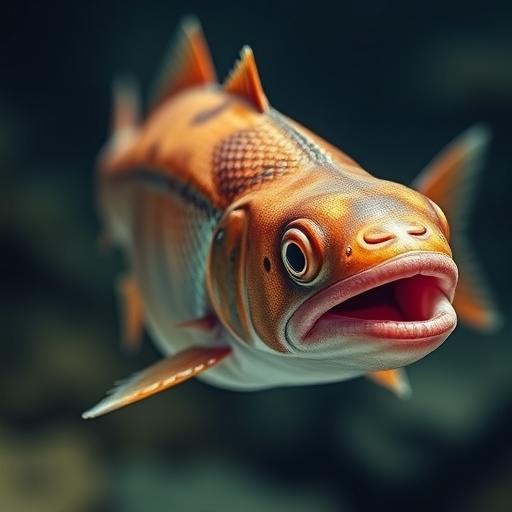
Across the temperate seas surrounding Britain, a silent but profound shift is occurring within marine ecosystems—fish predators are subsisting on progressively smaller meals. This disruptive change, unveiled by emergent research from the University of Essex in collaboration with the UK Government’s Centre for Environment, Fisheries, and Aquaculture Science (Cefas), underscores how warming oceans combined with the pressures of commercial fishing are squeezing the very fabric of oceanic food webs. The findings compel a reevaluation of how we approach conservation and resource management in marine environments under the dual assault of climate change and industrial activity.
The study meticulously analyzed an unprecedented dataset derived from the stomach contents of over 50,000 marine predators collected over three and a half decades, spanning key bodies of water including the North Sea, English Channel, and Norwegian Sea. This vast temporal and spatial scale allowed the researchers to observe tangible shifts in dietary habits among species like cod, haddock, and thorny skate—all vital predators within the Northeast Atlantic. Their findings reveal a clear pattern: warming seas correlate with predators increasingly consuming smaller fish and invertebrates such as sprat, krill, and crabs.
From a bioenergetics perspective, the reduction in prey size translates directly into diminished energy intake per feeding event. Smaller prey inherently contain less caloric and nutrient content, meaning predators must expend more effort to meet their metabolic needs. This energy deficit can cascade through trophic levels, weakening these apex species and, by extension, rendering entire marine ecosystems more vulnerable to perturbation. The consequences extend beyond individual health—reduced predator vitality threatens population sustainability and compromises the regulatory roles these species play within their habitats.
Compounding this phenomenon, commercial fishing exacerbates the pressure on marine ecosystems by preferentially removing larger species. This selective depletion shrinks the average size and diversity of prey species available to predators, effectively creating an echo chamber where smaller prey dominate the food landscape. The interplay of warming temperatures and intense fishing pressure synergistically drives down prey size, a decay that could accelerate destabilization within the food web.
Amy Shurety, lead researcher at Essex’s School of Life Sciences, emphasizes the integrative nature of these threats. “Our research reveals that climate change and commercial fishing are not isolated challenges; their impacts intersect and amplify one another,” she notes. This coupling effect suggests that traditional fisheries management, which often addresses single species or localized quotas, may fail to capture the broader ecological dynamics at play. Instead, holistic strategies that consider entire food webs and ecosystem interdependencies are urgently needed to maintain marine health.
The physiological underpinnings of prey size reduction within the context of climate change are well-documented. Warmer waters elevate metabolic rates in ectothermic organisms while simultaneously reducing dissolved oxygen availability. This environmental squeeze favors smaller-bodied individuals within species, as these organisms have proportionally greater surface area to volume ratios conducive to oxygen uptake and lower absolute energy requirements, making them more viable under hypoxic and warmer conditions. The study quantifies this effect, revealing that for every 1°C increase in sea temperature, there is an approximate 1.8% decline in the size of prey animals consumed by predators.
Interestingly, predators adapt to these shifts by broadening their dietary niches, incorporating a wider array of species—often lower on the trophic ladder—to compensate for smaller prey sizes. While this dietary plasticity might seem beneficial, it comes at an energetic cost. Energy transfer across trophic levels is intrinsically inefficient; feeding down the food chain generally results in reduced net energy gains compared to optimal predation on larger, more energy-rich prey. This inefficiency may leave top predators with less energy to allocate toward essential biological functions such as growth, reproduction, and immune defense.
Such findings spotlight a potentially worrisome feedback loop: as sea temperatures climb and fishing pressure persists, predators are forced into energetically costly feeding regimes on diminishing prey. Over time, this could precipitate population declines of key predator species, triggering broader ecosystem shifts that ripple through the marine environment. Marine food webs, already considered fragile, risk systemic destabilization if these stressors continue unabated.
The research advocates an urgent transition in fisheries policy frameworks toward ecosystem-based management (EBM), an approach that explicitly incorporates interactions across species and the cumulative impacts of environmental change. EBM encourages the consideration of predator-prey dynamics, energy flows, and habitat conditions, departing from the historically narrow focus on stock abundance and catch limits. Shurety asserts, “Managing climate change and fisheries impacts in isolation is no longer tenable—integrated approaches are essential for the resilience and sustainability of marine ecosystems.”
The integrity of this groundbreaking study stems from the longstanding and systematic data collection by Cefas, whose comprehensive marine predator diet database provides a robust foundation for such complex ecological analyses. Leveraging statistical modeling and longitudinal data empowers scientists to detect subtle but critical ecological trends shaped by anthropogenic influences.
This revelation about shrinking prey sizes and altered predator diets is not merely an academic curiosity; it has palpable implications for food security, biodiversity conservation, and the livelihoods of coastal communities dependent on marine resources. As the ocean transforms under increasingly warm climates and intensified fishing, the choices made today in fisheries management and conservation will dictate the resilience of marine ecosystems for generations to come.
In conclusion, this study elucidates how commercial fishing acts as a force multiplier of climate-induced changes in marine food webs. The synergistic pressure results in predators facing an energetic bottleneck through smaller, less nutritious prey. Only through integrated management strategies—ones that harmonize climate mitigation efforts with sustainable fisheries governance—can the vitality of marine ecosystems be preserved amid the mounting challenges of the Anthropocene.
Subject of Research: Animals
Article Title: Commercial fishing amplifies impacts of increasing temperature on predator-prey interactions in marine ecosystems
News Publication Date: 19-Jan-2026
Web References: https://doi.org/10.1038/s41467-025-67362-8
Keywords: Marine fishes, Marine food webs


