

An Innovative Approach to Predicting Treatment Outcomes in Canine Diffuse Large B-Cell Lymphoma Offers Hope for Human Cancer Therapies
Diffuse large B-cell lymphoma (DLBCL), an aggressive form of blood cancer, currently poses significant treatment challenges, especially among older patients vulnerable to chemotherapy-induced cardiac toxicity. The standard treatment combines an antibody targeting malignant B cells with a regimen of four chemotherapy agents, a protocol that successfully cures approximately 70% of affected individuals. However, this approach fails in nearly one-third of patients and often entails harsh side effects, placing a critical demand on more personalized and less harmful therapies.
Despite the imperative for innovation, clinical hesitancy remains pervasive due to the absence of reliable biomarkers that can predict patient responses early in the treatment course. Clinicians find themselves constrained by the unpredictability of novel therapies, limiting their willingness to deviate from established regimens that, while imperfect, remain the gold standard.
A groundbreaking study conducted by researchers at the Cummings School of Veterinary Medicine at Tufts University in collaboration with UMass Chan Medical School now illuminates a promising strategy to circumvent these barriers. By leveraging the unique biological parallels in pet dogs naturally afflicted with DLBCL, the study explores how blood-based immune gene expression signatures can serve as early indicators of long-term survivorship and treatment efficacy.
The research employed samples collected from a randomized clinical trial involving canine subjects subjected to three experimental treatment protocols. Each protocol incorporated a canine analog of the therapeutic antibody used in humans, paired with a reduced dose of doxorubicin—one of the traditional chemotherapy components—to mitigate toxicity. Subsequently, dogs received one of three novel immunotherapy treatments designed to stimulate the immune system’s anti-cancer response. Notably, two of these immunotherapies are currently being evaluated in human clinical trials, underscoring the translational potential of these findings.
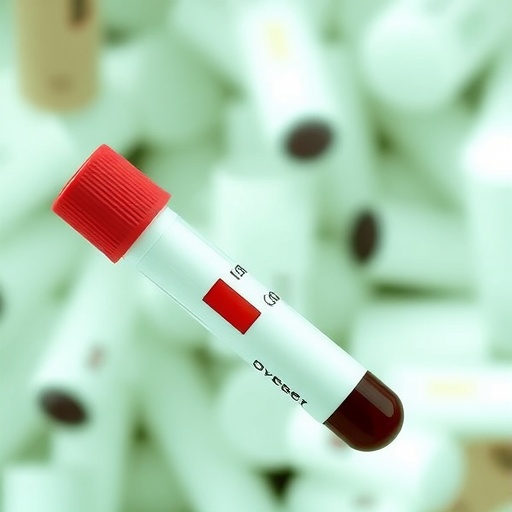
Rather than examining tumor biopsies, the investigators focused on peripheral blood mononuclear cells (PBMCs), harnessing a minimally invasive “liquid biopsy” technique increasingly recognized in both veterinary and human oncology. By sampling at multiple intervals—prior to treatment, seven days post-initiation but before immunotherapy administration, at the conclusion of the combined chemo-immunotherapy cycle, and at either cancer relapse or 400 days post-treatment for disease-free subjects—the study offers a dynamic portrait of the evolving immune landscape.
Crucial insights emerged when gene expression profiles were stratified based on clinical outcomes. Dogs exhibiting prolonged remission demonstrated elevated activity in two immune-related genes: CD1E and CCL14. CD1E encodes a critical molecule involved in antigen presentation, facilitating the activation of T cells tasked with targeting cancerous cells. CCL14 functions as a chemokine that recruits immune effectors to focal sites of malignancy, enhancing local immune surveillance and response capabilities.
These discoveries imply that robust baseline immune functionality, reflected by heightened CD1E and CCL14 expression, may underpin more favorable therapeutic responses. Intriguingly, therapeutic response appeared independent of the specific immunotherapy administered, suggesting that preexisting immune competence, rather than the particular immunomodulatory agent, dictates long-term outcomes.
Equally unexpected was the identification of a detrimental role for certain interferon-stimulated genes (ISGs), traditionally regarded as anti-cancer mediators. Interferons, as cytokines, orchestrate immune cell communication and bolster anti-tumor activity. However, in this context of blood cancer, elevated ISG activity correlated with worse prognoses, including abbreviated survival and rapid relapse. This paradoxical finding challenges entrenched paradigms, hinting that interferon signaling might inadvertently foster the survival and proliferative capacity of lymphoma cells in some cases.
Further, the team pinpointed three specific genes—TBHD, NPNT, and ISG20—whose upregulation within just one week of treatment initiation reliably predicted poorer outcomes. Capitalizing on this, Heather Gardner, co-senior author and expert in veterinary oncology diagnostics, devised a streamlined laboratory assay capable of detecting these gene expression changes in clinical settings, offering a practical tool to enhance early prognostic assessments.
The translational implications of this work are profound. A blood-based test applied early during treatment could empower veterinarians—and potentially human oncologists—to identify patients at elevated risk of relapse. This would enable timely therapeutic adjustments, potentially improving survival rates and diminishing unnecessary exposure to toxic agents.
Cheryl London, co-senior author and distinguished professor in comparative oncology, emphasizes the intent to validate whether guiding treatment decisions through this biomarker assay can tangibly extend survival among dogs suffering from lymphoma. Such validation would pave the way for analogous strategies in human medicine, where reducing chemotherapy-induced toxicity without compromising efficacy remains a paramount objective.
The study exemplifies the power of comparative oncology, using insights from naturally occurring cancers in companion animals to inform human clinical research. By capturing the complex interplay between the immune system and cancer, it expands the frontier of precision medicine, heralding a future where treatment is tailored not only to the tumor’s characteristics but also to the host’s immune milieu.
As these findings echo across disciplines, they raise compelling questions about the nuanced roles of immune pathways in cancer progression and response. They further underscore the necessity of revisiting established biological dogmas within specific disease contexts to unlock more effective and less harmful cancer therapies.
Supported by NIH funding and published in Scientific Reports, this research exemplifies the collaborative potential between veterinary and human medicine, illustrating how cross-species investigations can reveal biomarkers and therapeutic avenues of mutual benefit.
Subject of Research: Animals
Article Title: Peripheral blood mononuclear cell gene expression signatures predict long-term survivorship in canine DLBCL
News Publication Date: 25-Mar-2026
Web References:
– https://rdcu.be/e9YUf
– http://dx.doi.org/10.1038/s41598-026-44677-0
References: Research supported by NIH under award numbers U01CA224153-01 and K01OD028268-01A1; details in Scientific Reports publication.
Keywords: Diffuse large B-cell lymphoma, canine lymphoma, immunotherapy, gene expression, liquid biopsy, immune biomarkers, interferon-stimulated genes, chemotherapy toxicity, translational oncology, comparative oncology, peripheral blood mononuclear cells, precision medicine


