

In a compelling convergence of intellectual endeavor and interdisciplinary exploration, the Society for Industrial and Applied Mathematics (SIAM) has announced the joint convening of four of its premier conferences in 2026. This unprecedented alliance brings together the 2026 SIAM Annual Meeting (AN26), the SIAM Conference on Applied Mathematics Education (ED26), the SIAM Conference on the Life Sciences (LS26), and the SIAM Conference on Mathematics of Planet Earth (MPE26). This monumental gathering reflects the profound interconnectedness of mathematical sciences in addressing complex global challenges and advances a new paradigm for collaborative scientific inquiry.
The 2026 SIAM Annual Meeting is the flagship conference that routinely encapsulates the latest advancements in applied mathematics, computational science, and their applications to various domains. This meeting is not merely a forum for presenting research but a crucible where new ideas are forged at the intersection of theory and application. The 2026 edition promises to showcase cutting-edge methodologies in numerical analysis, scientific computing, optimization, and data science, highlighting transformative innovations that elevate the mathematical sciences.
Simultaneously, the SIAM Conference on Applied Mathematics Education (ED26) underscores the critical role of pedagogy in shaping future mathematical scientists. With the rapid evolution of technology and scientific questions, the educational landscape is continually challenged to adapt. ED26 will delve into innovative instructional strategies, curriculum developments, and technological integration that better prepare students and professionals for the demands of a data-driven and computationally intensive world. This conference iteration is set to explore how educational frameworks can be optimized using insights from cognitive science and learning analytics.
The SIAM Conference on the Life Sciences (LS26) embodies the application of mathematical modeling and computational techniques to biological systems. Biomathematics, systems biology, and epidemiological modeling stand at the forefront of this conference, where mathematical tools elucidate the complexities of living systems. The 2026 conference will amplify efforts to understand phenomena such as cellular processes, genetic networks, and disease dynamics through rigorous quantitative analysis, fostering collaborations that bridge mathematics with medicine and biology.
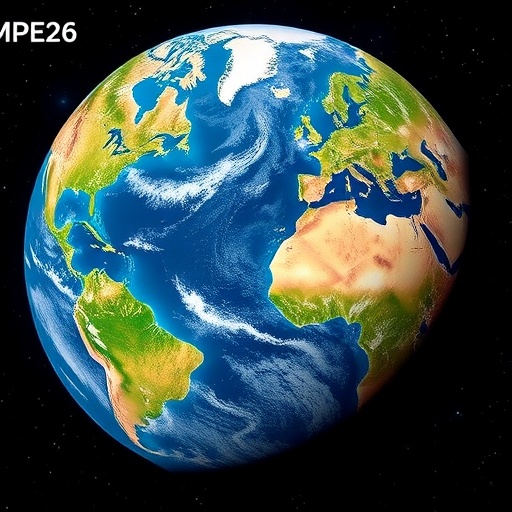
Equally significant, the SIAM Conference on Mathematics of Planet Earth (MPE26) focuses on the crucial intersection of mathematics and environmental science. Given the escalating urgency of climate change, resource management, and ecological sustainability, the MPE26 conference serves as a platform to advance mathematical modeling of geophysical and environmental systems. Novel techniques in uncertainty quantification, data assimilation, and high-performance simulations will be explored, providing vital insights into planetary-scale processes like climate dynamics, oceanography, and natural hazard prediction.
The convergence of these four conferences into a single, cohesive event foreshadows a groundbreaking expansion of collaborative research possibilities. Researchers specializing in diverse subfields will share methodologies, data, and theoretical frameworks, fostering interdisciplinary breakthroughs that transcend the traditional boundaries of applied mathematics. This synthesis will not only fuel scientific progress but also amplify the societal impact of mathematical research by addressing multifaceted problems from education to planetary health.
Attendees can expect a robust program featuring plenary talks from trailblazing experts, interactive workshops, and panel discussions that scrutinize emerging challenges in mathematics and its applications. The joint meeting format will facilitate cross-pollination of ideas, providing fertile ground for early-career researchers and established scientists alike to network, challenge conventions, and collectively envision the future of their disciplines.
Beyond the scientific program, the 2026 gathering is anticipated to present innovative technological platforms that enhance participation and knowledge exchange. Interactive poster sessions augmented with virtual reality elements, real-time data visualization tools, and AI-assisted discussion forums will exemplify how technology can transform the conference experience, making knowledge sharing more dynamic and inclusive.
The commitment to inclusivity and diversity will also be a hallmark of this event, with initiatives designed to support underrepresented communities within the mathematical sciences. Workshops and mentorship programs aimed at broadening participation will contribute to creating a more equitable scientific ecosystem, ensuring that the next generation of mathematical talent is nurtured from diverse backgrounds.
Moreover, these conferences will likely address the growing role of artificial intelligence and machine learning in mathematical research. As algorithmic approaches become essential across disciplines, sessions will explore how these tools aid in hypothesis generation, pattern recognition, and even the automation of theorem proving, signaling a paradigm shift in how research is conducted and knowledge is generated.
The 2026 joint conference rendezvous is also poised to highlight the interplay between mathematics and policy-making. With planetary health and education in the spotlight, discussions will extend toward how mathematical models inform governmental decisions on climate action, public health interventions, and education reform. These conversations will illuminate the responsibilities and challenges faced by mathematical scientists in an era where data-driven policy is paramount.
In essence, the collaborative configuration of AN26, ED26, LS26, and MPE26 exemplifies a visionary approach to the future of mathematical sciences. By dissolving silos and fostering interdisciplinary dialogue, this initiative promises not only academic enrichment but also tangible contributions to pressing societal needs. The 2026 event is set to be a landmark in fostering a mathematics community that is innovative, inclusive, and deeply engaged with the grand challenges of our time.
Scientists, educators, and policymakers alike await this convergence with anticipation, recognizing it as a unique opportunity to witness and partake in the evolution of applied mathematics at the nexus of education, life sciences, environmental science, and computational innovation. As the mathematical community prepares for this landmark event, the world stands to benefit from the transformative knowledge that emerges from such a powerful alliance.
For further information or media inquiries, interested parties may reach out to Kimberly Haines of the Society for Industrial and Applied Mathematics (SIAM) via email at khaines@siam.org or by phone at 215-382-9800.
Subject of Research: Joint 2026 conferences in applied mathematics focusing on education, life sciences, planetary science, and the annual meeting of SIAM.
News Publication Date: Not specified.
Web References:
– https://www.siam.org/conferences-events/siam-conferences/an26/
– https://www.siam.org/conferences-events/siam-conferences/ed26/
– https://www.siam.org/conferences-events/siam-conferences/ls26/
– https://www.siam.org/conferences-events/siam-conferences/mpe26/
Keywords: Applied Mathematics, Education, Life Sciences, Planet Earth Mathematics, SIAM Annual Meeting, Interdisciplinary Research, Computational Science, Mathematical Modeling, Data Science, Climate Change, Biomathematics, Scientific Computing


