

A recent comprehensive survey conducted in Orange County, California, reveals a politically disenchanted electorate facing deep frustration with the current national and state leadership, disapproval that transcends party lines, and an unsettled outlook toward the impending 2026 gubernatorial race. This data comes from the UCI-OC Poll, administered by the University of California, Irvine’s School of Social Ecology, which surveyed 1,202 adults across the county in both English and Spanish in late March. The detailed results depict a county that serves as a microcosm of broader national sentiments, illustrating the complex and fluid nature of modern American politics.
President Donald Trump’s standing among Orange County residents remains notably poor, with only 35% approving of his performance contrasted sharply against a 62% disapproval rate. This stark disparity is particularly significant in a region historically characterized by a politically mixed electorate, oscillating between conservative and liberal tendencies. Jon B. Gould, the poll’s director and dean at the School of Social Ecology, emphasized the importance of this finding, underscoring how such pronounced disapproval in a “purple” county might reflect broader national dissatisfaction with Trump’s presidency and political influence.
Examining demographic breakdowns reveals that Trump’s support is confined almost exclusively to his loyal Republican base, where approval rates exceed 80%. In stark contrast, independents harbor strong negative sentiments, with about 70% expressing disapproval, and only a minority approving of Trump. Democrats, predictably, exhibit the most pronounced disfavor, with disapproval reaching 95%. These data suggest that Trump’s appeal remains highly polarized and limited to his core party supporters.
Further demographical insights reveal generational and ethnic divides in support for Trump. Younger voters, spanning from late teens to those in their early 30s, represent the most critical demographic, with disapproval levels ranging between 65% and nearly 80%. White residents in the county display a near-even split in their opinions on Trump, while both Latino and Asian communities largely disapprove. This divide signals a complex interplay of race, age, and political identity in shaping political attitudes in Orange County.
California Governor Gavin Newsom fares slightly better than Trump but still faces significant public dissatisfaction. His approval among all surveyed residents rests at 38%, with a disapproval figure of 55%. Notably, his backing within the Democratic base, where he generally ought to enjoy strong support, is weaker than Trump’s among Republicans, with approximately 70% approval. Republican opposition is robust, with nearly nine out of ten Republicans expressing disapproval. Independents are similarly skeptical, giving Newsom a 30% approval rating paired with a disapproval majority exceeding 50%.
The widespread dissatisfaction with Newsom echoes the broader mood of pessimism permeating Orange County. Residents overwhelmingly express negative views regarding the direction of both California and the United States. Sixty-two percent believe that the country is headed in the wrong direction, while 57% feel the same about the state’s trajectory. These sentiments reflect entrenched dissatisfaction rather than transient reactions to recent events, as they are consistent with data from prior polls conducted after the 2024 elections.
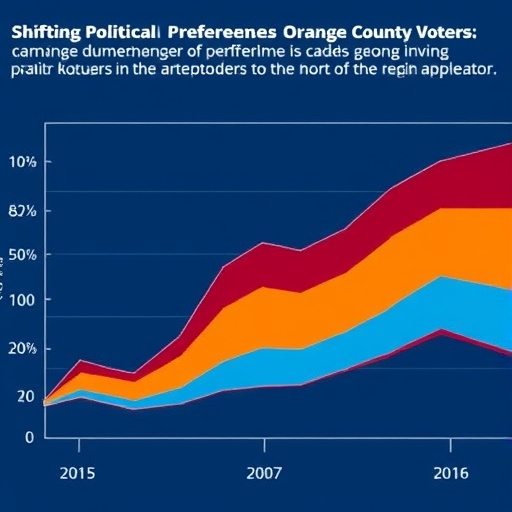
Such pervasive discontent may be prompting a shift away from traditional party allegiances. Orange County’s politically diverse population identifies approximately 34% as Democrats, 30% as Republicans, and 36% as independents or aligned with other affiliations. This distribution confirms the area as a politically competitive and complex landscape, where a significant portion of the electorate remains unaffiliated and arguably disengaged from rigid party frameworks. This fluidity has important ramifications for election dynamics and candidate strategies.
Looking ahead to the 2026 gubernatorial race, the poll reveals an electorate far from settled. With the California June primary approaching, 25% of respondents remain undecided on their preferred candidate, and an additional 6% indicate they would abstain from voting altogether. This means nearly one-third of the county’s voters have not yet committed, underscoring the open nature of the race and the volatility of voter preferences at this stage.
In the preferences expressed, Republican commentator Steve Hilton edges ahead with 23% support, marking him as a frontrunner in a diverse field. Behind Hilton, the contest is tightly contested, with Republican Chad Bianco, Democratic businessman Tom Steyer, and former U.S. Representative Katie Porter each garnering approximately 14% support. This dispersion of preferences underscores the electorate’s indecisiveness and suggests the potential for significant shifts as the campaign progresses.
The GOP candidates’ early advantage appears driven by higher engagement among Republican voters at this preliminary phase, while Democratic and independent voters continue to show greater levels of uncertainty. This discrepancy in candidate support may evolve as the primary season advances and campaigns intensify their outreach. It also reflects the broader trend of less predictable voter behavior witnessed across the county, complicating assumptions about partisan loyalties.
Intriguingly, while partisan affiliations show signs of wavering, Democrats hold a meaningful 13-point lead over Republicans on the generic congressional ballot, with a 47% to 34% advantage. This margin exceeds the party affiliation split, indicating that Democrats are successfully attracting votes beyond their core base, particularly from Latino, Asian, and younger voter groups. This cross-party appeal, however tentative, could influence multiple races and reflects underlying demographic shifts within Orange County.
Economic ideologies within the electorate reveal sharp generational cleavages. Although capitalism remains the generally favored economic system, particularly among older generations, Gen Z stands out in its prevailing negative views, with 52% viewing capitalism unfavorably versus 35% positive. Millennials present a near-even split, while support for socialism peaks among younger demographics — ranging from 42% to 45% — and declines significantly among older residents. These ideological divides signal a potentially transformative shift in economic perspectives that could impact future policy debates and electoral strategies.
Synthesis of the data culminates in a portrait of an electorate defined not by entrenched partisanship or clear ideological realignment, but by pervasive uncertainty and dissatisfaction. Jon B. Gould characterizes the findings as reflective of a politically fluid environment marked by modest attachments to political parties and widespread discontent with leadership at both state and national tiers. The inability of the electorate to coalesce decisively around candidates foretells a contentious and dynamic political landscape in forthcoming elections.
As the political calendar advances toward the 2026 California gubernatorial primary, and eventually the general elections, the insights from the UCI-OC Poll provide a vital lens into the evolving dynamics of Orange County’s electorate. Voters are expressing a heightened skepticism, a strong desire for new leadership approaches, and a willingness to reconsider long-standing partisan commitments. This ambivalence underscores the critical importance of candidate engagement, policy responsiveness, and strategic communication to sway an audience characterized by both volatility and vigilance.
For scholars and political operatives alike, the Orange County electorate emerges as a test case for broader trends in American politics: the interplay of demography, ideology, and disillusionment fostering a political climate ripe for change. Whether these dynamics translate into substantive shifts or reinforce the status quo remains contingent on the responses of elected officials, candidates, and political parties to the underlying signals of frustration and the demands of a transforming constituency.
Subject of Research: Voter attitudes and political preferences in Orange County, California
Article Title: Orange County Electorate Revealed: Deep Discontent and an Unsettled 2026 Gubernatorial Race
News Publication Date: April 2024
Web References: UCI-OC Poll website (University of California, Irvine)
References: UCI-OC Poll conducted March 24-31, 2024
Image Credits: N/A
Keywords: Orange County, UCI-OC Poll, voter attitudes, political discontent, Donald Trump, Gavin Newsom, gubernatorial race 2026, California politics, generational divide, economic ideology, partisan dissatisfaction


