

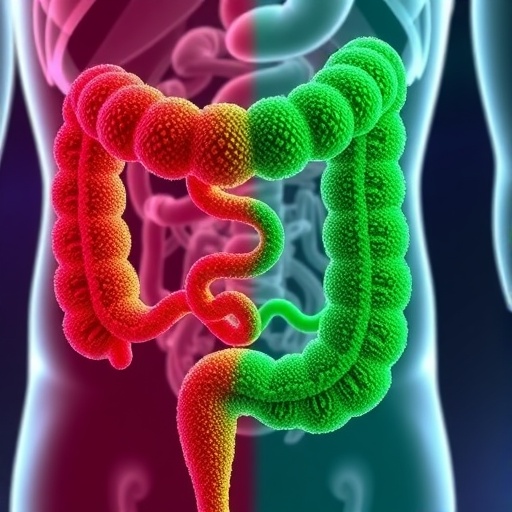
In the relentless pursuit to unravel the mysteries of colorectal cancer (CRC), an emerging frontier shifts the focus from cancer cells alone to the microscopic communities inhabiting the tumor microenvironment. A groundbreaking study published this March in the British Journal of Cancer sheds unprecedented light on how the bacterial flora within tumors dynamically reorganizes as colorectal cancer advances, offering profound implications for prognosis and therapeutic strategies. For years, researchers have noted that malignant tissues harbor distinct bacterial populations compared to healthy mucosal areas. Yet, the drivers behind these microbial shifts remained elusive—until now.
Colorectal cancer is notorious not only for its lethality but also for its complex relationship with the gut microbiome—a densely packed ecosystem of bacteria, viruses, and fungi interwoven with intestinal health. The latest research reveals that tumor-resident bacterial communities do not remain static but undergo profound compositional changes throughout disease progression. These dynamic alterations intimately correlate with clinical outcomes, suggesting that intratumoural microbiota may actively influence tumor biology rather than passively reflecting the cancer environment.
The investigative team employed advanced sequencing and metagenomic profiling to characterize the intricate interplay between tumor development stages and bacterial communities. Their data demonstrate a marked reorganization of bacterial taxa within the tumor microenvironment during colorectal cancer progression. Early-stage tumors sport bacterial profiles markedly different from those observed in late-stage cancers, indicating a complex, temporally evolving microbial landscape rather than a singular pathogenic signature.
Critically, these microbial shifts are not random. Instead, they appear orchestrated by tumor-related factors or mutualistic bacterial adaptations, fostering an environment conducive to cancer proliferation and immune evasion. For instance, bacteria known for pro-inflammatory and genotoxic properties were enriched in advanced tumors, potentially exacerbating genomic instability and promoting aggressive tumor phenotypes. Conversely, beneficial commensals diminished, weakening mucosal barriers and immune surveillance at critical junctures.
This dynamic reorganization also correlates with patient outcomes, highlighting bacterial community composition as a potential prognostic biomarker. The researchers observed that specific bacterial profiles associate strongly with poorer survival rates and resistance to conventional therapies, such as chemotherapy. This insight opens avenues for microbiota-targeted interventions that may recalibrate the tumor microecosystem to enhance treatment efficacy and improve survival prospects.
Beyond mapping bacterial diversity, the study probes mechanisms underlying the microbial rewiring. Hypotheses involve tumor-secreted metabolites, hypoxic niches, and immune modulation reshaping microbial habitats. Tumors create selective pressures that favor colonization by opportunistic pathogens while suppressing anti-inflammatory commensals. This bidirectional crosstalk establishes a feedback loop driving tumor progression and microbiome remodeling in concert.
The researchers underscore the need to differentiate intratumoural microbiota from luminal microbiome alterations. While gut lumen communities fluctuate due to diet or antibiotics, tumor-associated bacteria organize uniquely, reflecting localized niches influenced by cancer cell signaling and the surrounding matrix. This refinement challenges prior assumptions that gut microbiota changes were mere byproducts of illness rather than active participants in oncogenic pathways.
Considerable interest now centers on therapeutic exploitation of these findings. Targeting deleterious bacteria with precision antibiotics or microbiome-modulating agents could complement standard care, potentially reversing microbial imbalances that exacerbate tumor growth. Preclinical models exploring probiotic or fecal microbiota transplant approaches are underway, emphasizing microbiota as an integral aspect of personalized oncology.
Moreover, these insights necessitate revisiting CRC screening and diagnostics. Incorporating microbial profiling into stool-based tests or tumor biopsies could improve early detection and stratification of patients at risk of aggressive disease. Enhanced molecular diagnostics integrating microbiome signatures promise to refine prognostic accuracy and guide tailored interventions.
The study also prompts a paradigm shift in our understanding of cancer ecosystems. Tumors exist not as isolated clonal expansions but as complex habitats shaped by intimate host-microbe interactions. Recognizing microbiota as active drivers of cancer progression underscores the holistic nature of oncogenesis and the potential for innovative multimodal treatment regimens.
Future research must address longitudinal dynamics, dissect causal relationships, and unravel bacterial functional contributions beyond compositional descriptions. Multi-omics integration combining metagenomics, transcriptomics, and metabolomics will deepen mechanistic insights. Furthermore, expanding investigations across diverse populations will clarify how genetic and environmental factors modulate tumor-microbiota interplay.
This pioneering work ignites fresh enthusiasm for microbiome oncology, positioning bacteria as pivotal agents in colorectal cancer’s natural history. As scientific paradigms evolve to encompass microbial ecology within tumors, the potential to transform CRC management beckons—ushering in an era where targeting tiny tenants within tumors may tilt survival odds decisively.
In sum, the dynamic reorganization of intratumoural bacterial flora outlined in this landmark study heralds a new epoch in colorectal cancer research. By illuminating the bacterial landscapes that accompany and potentially drive malignant progression, it opens promising horizons for diagnostics, prognostics, and therapeutics. Harnessing this knowledge could redefine clinical pathways, offering hope against one of the world’s deadliest malignancies through microbial mastery at the microscopic frontier.
Subject of Research:
Dynamic reorganization of intratumoural bacterial florae during colorectal cancer progression and its impact on clinical outcomes.
Article Title:
Dynamic reorganisation of intratumoural bacterial florae during colorectal cancer progression.
Article References:
Li, M., Li, Y., Li, C. et al. Dynamic reorganisation of intratumoural bacterial florae during colorectal cancer progression. Br J Cancer (2026). https://doi.org/10.1038/s41416-026-03344-x
Image Credits: AI Generated
DOI: 06 March 2026


