

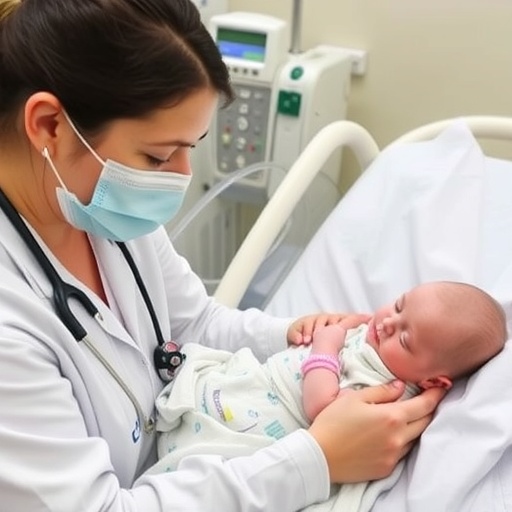
In the evolving landscape of medical specialties, a groundbreaking proposal has garnered significant attention and support from the European Society for Pediatric and Neonatal Intensive Care (ESPNIC). The proposal advocates for the establishment of a distinct residency program dedicated exclusively to Neonatal Critical Care Medicine (NCCM). This initiative represents a pivotal moment in neonatal healthcare, heralding a specialized approach aimed at improving the outcomes for the most vulnerable patient population—critically ill newborns.
The traditional training pathway for neonatologists and pediatric intensivists involves a broad curriculum encompassing various aspects of pediatric care, often diluting the focus on the nuances of critical care in neonates. Proponents of the new residency program argue that the complexity and specificity of neonatal critical care demand a dedicated training environment. This specialized residency would immerse trainees in advanced physiological, technological, and pharmacological principles unique to the neonatal period, fostering an unparalleled depth of expertise.
Neonates present a distinct physiological profile characterized by immature organ systems, rapidly changing developmental stages, and heightened susceptibility to complications such as sepsis, respiratory distress syndrome, and intraventricular hemorrhage. These factors necessitate a level of clinical acumen and technological proficiency that surpasses the general pediatric or adult intensive care paradigms. The call for a tailored residency program is therefore grounded in the imperative to equip physicians with skills specifically designed to navigate these complexities.
Technological advancements further underscore the necessity of specialized neonatal critical care training. Innovations in extracorporeal membrane oxygenation (ECMO), targeted drug delivery, and minimally invasive monitoring devices have transformed neonatal intensive care units (NICUs). Mastery of these cutting-edge technologies requires dedicated educational pathways emphasizing practical application, troubleshooting, and interpretation of nuanced clinical data. A focused NCCM residency promises to bridge the gap between innovation and clinical implementation more effectively than generalized training models.
Moreover, the integration of genomics and personalized medicine in neonatal care highlights the expanding knowledge horizon that future neonatologists must embrace. Genetic screening, metabolomics, and epigenetic profiling are progressively influencing diagnostic and therapeutic strategies in critically ill neonates. A residency tailored to NCCM would provide structured exposure to these emerging fields, ensuring physicians remain at the forefront of evidence-based neonatal care.
Another rationale for the proposal lies in the high emotional and ethical stakes associated with neonatal intensive care. Decisions regarding the initiation or withdrawal of life-sustaining treatments often involve profound ethical dilemmas. A dedicated residency program would incorporate robust training in medical ethics, communication with families, and interdisciplinary collaboration, preparing specialists to navigate these challenges with sensitivity and professionalism.
ESPNIC’s endorsement of the residency proposal reflects a consensus among leading experts about the urgent need to enhance the quality and safety of neonatal critical care. Their support is grounded in extensive evidence indicating that specialized care teams and focused training correlate with improved patient outcomes, including reduced mortality, decreased incidence of complications, and better long-term neurodevelopmental prognosis.
The proposal also addresses workforce sustainability in neonatal care. The current model’s broad scope can contribute to professional burnout and a shortage of adequately trained neonatologists equipped to manage the complexities of the NICU environment. Introducing a specialized residency aims to attract and retain talent by offering a clear, defined career trajectory marked by intensive, cohesive training that acknowledges and meets the rigors of neonatal critical care.
From an educational standpoint, the creation of an NCCM residency program necessitates a reexamination of existing curricula. Training institutions would need to develop comprehensive modules covering advanced neonatal resuscitation, multi-organ support, neonatal pharmacology, state-of-the-art diagnostic technologies, and bereavement counseling. Simulation-based education and interdisciplinary team training would feature prominently, fostering clinical competence and teamwork skills indispensable in high-stakes NICU settings.
Implementing this residency program poses logistical and regulatory challenges, including accreditation processes, faculty development, resource allocation, and integration with existing pediatric residency frameworks. However, the anticipated benefits—improved clinical outcomes, enhanced trainee preparedness, and optimized resource utilization—underscore the value of overcoming these hurdles. ESPNIC’s proposal serves as a catalyst for dialogue among healthcare institutions, regulatory bodies, and policymakers.
Internationally, there is growing recognition of neonatal critical care as a distinct sub-specialty. Countries with advanced perinatal healthcare systems have begun pilot programs that align with the spirit of this proposal, reinforcing its global relevance. Cross-border collaborations and knowledge exchange initiatives are expected to emerge from this momentum, fostering a cohesive global standard for neonatal critical care education and practice.
In conclusion, the proposal to establish a dedicated Neonatal Critical Care Medicine residency represents a visionary step forward in pediatric healthcare. By acknowledging the unique challenges of neonatal intensive care and tailoring educational pathways accordingly, the initiative promises to enhance care quality, foster innovation adoption, and address ethical and emotional complexities more effectively. ESPNIC’s endorsement not only lends credibility but also galvanizes the medical community to embrace this transformation for the benefit of the smallest patients and their families.
As neonatal medicine continues to evolve rapidly, this proposal marks a critical juncture where specialization can translate into tangible improvements in survival rates and quality of life. The adoption of a dedicated NCCM residency could redefine training standards, optimize clinical practice, and ultimately save countless newborn lives worldwide. The medical community eagerly awaits the implementation of this progressive step that honors both scientific rigor and compassionate care.
Subject of Research: Neonatal Critical Care Medicine training and specialization.
Article Title: Yes, it is time for a separate residency “Neonatal Critical Care Medicine”: the European Society for Pediatric and Neonatal Intensive Care supports the proposal.
Article References:
De Luca, D., Sanchez-Luna, M., Raimondi, F. et al. Yes, it is time for a separate residency “Neonatal Critical Care Medicine”: the European Society for Pediatric and Neonatal Intensive Care supports the proposal. J Perinatol (2025). https://doi.org/10.1038/s41372-025-02502-y
Image Credits: AI Generated
DOI: 18 November 2025


