

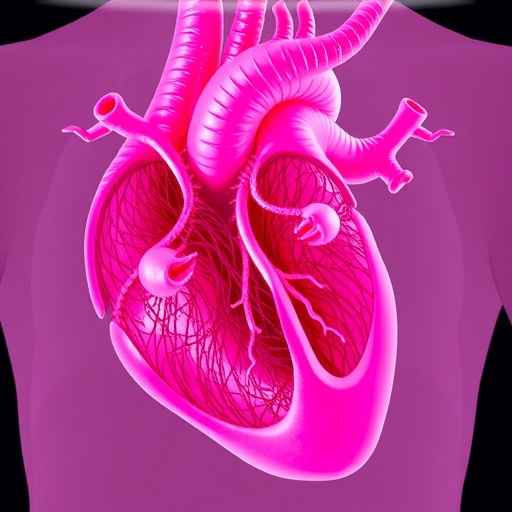
In a significant advancement for cardiovascular research, a recent study published in Angiogenesis highlights the protective role of Semaphorin 3A in combatting thoracic aortic aneurysm (TAA) dissection. This study, led by researchers Wu, Zhang, and their colleagues, paves the way for innovative therapeutic strategies aimed at tackling one of the most critical challenges in cardiovascular health. An aortic aneurysm is an outpouching or bulging in the wall of the aorta, which can lead to life-threatening complications if it ruptures. The thoracic aorta, in particular, is vulnerable, and dissection in this area is associated with high mortality rates.
The research emphasizes the importance of angiogenesis, the process by which new blood vessels form from existing ones, in the progression of thoracic aortic diseases. In cases of aortic dilation and dissection, aberrant angiogenesis can exacerbate the condition, leading to an increased risk of rupture. Therefore, understanding the mechanisms behind this process becomes crucial for developing targeted interventions. The researchers focused on Semaphorin 3A, a member of the semaphorin family of proteins that are known to regulate various aspects of neuronal growth and pathway guidance, and recently identified as a modulator of vascular biology.
Through a series of experiments, the team elucidated the pathway by which Semaphorin 3A exerts its protective effects on the aorta. By utilizing both in vitro and in vivo models, they demonstrated that this protein significantly suppresses angiogenesis in the aortic wall. This suppression not only slowed down vessel formation but also maintained the structural integrity of the aorta in the face of stressors typically associated with aneurysms. The intricate balance between angiogenic activity and stabilization is vital to prevent the progression of TAA conditions, and herein lies the crux of Semaphorin 3A’s function.
Moreover, the authors discussed how the expression levels of Semaphorin 3A varied in TAA tissue compared to normal aortic tissue. They found a pronounced decrease in Semaphorin 3A in samples from patients suffering from aortic dissections, suggesting that a deficiency in this protein could be a contributing factor in the development of the disease. This discovery not only enriches the fundamental understanding of vascular pathophysiology but also signals potential biomarkers for early detection and intervention.
Another key aspect of the study presents an innovative perspective on therapeutic intervention. The research team explored the possibility of augmenting Semaphorin 3A activity as a therapeutic strategy. This could involve either direct administration of recombinant Semaphorin 3A or the development of small molecules that enhance its signaling pathways. Such advances could revolutionize treatment approaches for patients at risk of TAA, as they could potentially stabilize and reverse disease progression, reducing the need for surgical interventions.
Despite its promising findings, the study also acknowledges several limitations that warrant further investigation. The complex interplay of diseases and the multifactorial nature of aortic aneurysms require exhaustive research efforts to fully comprehend the role of Semaphorin 3A in diverse aortic pathologies. Future research efforts are expected to explore the molecular mechanisms underlying the protein’s protective effects and its interactions with other signaling pathways that contribute to vascular health.
In conclusion, the study presents Semaphorin 3A as a vital player in the fight against thoracic aortic aneurysms. By shining a light on its role in angiogenesis and vascular integrity, researchers hope to pave the way for innovative treatments that could mitigate the risks associated with aneurysms. As cardiovascular disease remains one of the leading causes of mortality worldwide, these findings could hold the key to significantly improving patient outcomes in the future.
The implications of this research extend beyond academic interest; they resonate in clinical practice and public health. With a growing aging population and increasing prevalence of cardiovascular diseases, understanding the underlying mechanisms and developing new therapies is critical. The translation of this knowledge into clinical settings could eventually lead to more efficient management protocols, enhancing patient care and reducing healthcare burdens associated with thoracic aortic conditions.
As the dialogue around cardiovascular health expands, continued funding and collaboration in this research area are crucial. The findings from Wu, Zhang, and colleagues underscore the importance of marrying basic scientific discovery with clinical application to tackle pressing health challenges. Through their rigorous exploration of Semaphorin 3A, they not only illuminate a path forward but also inspire a new generation of researchers in the field.
Each step forward in understanding cardiovascular diseases brings us closer to establishing concrete solutions that can save lives. As we anticipate further developments from this research, the scientific community stands poised to explore the numerous applications that Semaphorin 3A could foster in treating thoracic aortic aneurysms and potentially other related vascular disorders. This is a prime example of how targeted research can lead to breakthroughs that redefine treatment paradigms and enhance patient prognoses in previously challenging medical conditions.
Subject of Research: Cardiovascular health, specifically the role of Semaphorin 3A in thoracic aortic aneurysms.
Article Title: Semaphorin 3A protects against thoracic aortic aneurysm dissection by suppressing aortic angiogenesis.
Article References:
Wu, LF., Zhang, JJ., Zhang, X. et al. Semaphorin 3A protects against thoracic aortic aneurysm dissection by suppressing aortic angiogenesis. Angiogenesis 28, 39 (2025). https://doi.org/10.1007/s10456-025-09992-6
Image Credits: AI Generated
DOI: https://doi.org/10.1007/s10456-025-09992-6
Keywords: Semaphorin 3A, thoracic aortic aneurysm, angiogenesis, cardiovascular disease, vascular health, therapeutic strategies.


