

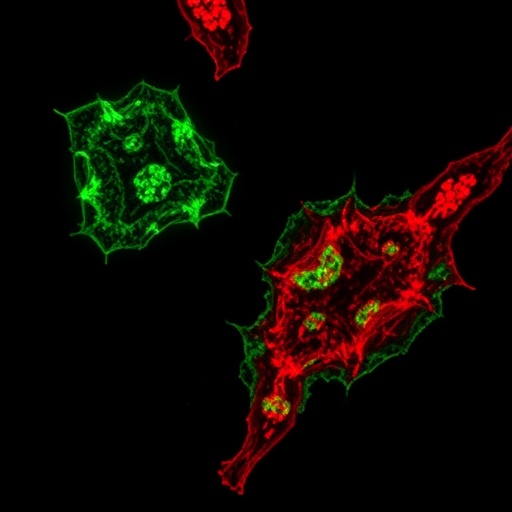
In a groundbreaking study poised to reshape our understanding of cellular protein regulation, researchers Zhu, Pan, Cui, and their team have unveiled critical mechanisms by which the SEL1L-HRD1 complex governs hormone maturation in pancreatic islet α cells. Published in Nature Communications in 2026, this research elucidates how the endoplasmic reticulum-associated degradation (ERAD) pathway, specifically through SEL1L-HRD1, facilitates the precise maturation of prohormone convertase 2 (PC2), thereby influencing glucagon production—a pivotal hormone in glucose metabolism.
The pancreas, a vital organ for maintaining glucose homeostasis, contains islets of Langerhans composed of diverse cell types, including α cells responsible for secreting glucagon. Glucagon serves as a counterbalance to insulin by promoting glucose release during hypoglycemia. Understanding how glucagon biosynthesis and secretion are regulated at a molecular level is essential for unraveling the complexities of metabolic diseases such as diabetes mellitus.
Central to this process is the maturation of PC2, an enzyme critical for converting proglucagon precursors into active glucagon peptides. The newly reported findings highlight the SEL1L-HRD1 complex, a key component of the ERAD system that surveils and degrades misfolded or unassembled proteins within the endoplasmic reticulum (ER), as an essential facilitator of PC2 maturation. This role of SEL1L-HRD1 extends beyond quality control to actively modulating hormone biosynthesis.
Using a combination of biochemical assays, advanced imaging techniques, and genetic models, the research team demonstrated that disruption of SEL1L or HRD1 significantly impairs PC2 maturation. This impairment leads to defective glucagon production, underlining the complex’s indispensable function in α cell physiology. These observations illuminate the fine balance maintained by ERAD in ensuring the fidelity of hormone processing pathways.
Mechanistically, SEL1L-HRD1 targets improperly folded intermediates of PC2 for degradation, preventing their accumulation and potential cellular stress. However, its sophisticated regulation allows for the proper folding and activation of PC2, suggesting a dual role that both safeguards cellular integrity and fine-tunes enzymatic availability. This duality may represent a paradigm shift in how scientists view ERAD – not merely as a disposal pathway but as a finely tuned modulator of hormone maturation.
Further, the study reveals that perturbations in the ERAD pathway can have profound systemic consequences. Given that glucagon is central to maintaining blood glucose levels, the faulty maturation of PC2 due to impaired SEL1L-HRD1 function could contribute to dysregulated glucose metabolism—a hallmark of diabetes. By linking ER quality control to metabolic hormone regulation, this work opens promising avenues for therapeutic interventions targeting ERAD components.
Intriguingly, the team uncovered that the SEL1L-HRD1 complex’s function is tightly integrated with ER stress responses. ER stress, often triggered by accumulation of misfolded proteins, activates adaptive pathways including the unfolded protein response (UPR). The interplay between ERAD and UPR ensures cellular homeostasis; however, chronic disruption can tilt the balance towards metabolic dysfunction. This intricate crosstalk emphasizes the broader physiological relevance of protein quality control mechanisms.
The implications of these discoveries resonate beyond α cells, suggesting that ERAD may similarly regulate the maturation of other prohormone convertases or secretory enzymes across different tissues. This broader regulatory schema invites deeper exploration into ERAD’s role across endocrine and exocrine systems, potentially unveiling novel targets for a variety of diseases linked to protein misfolding and hormone dysregulation.
By harnessing genetically engineered mouse models lacking SEL1L or HRD1 specifically in α cells, the researchers intricately mapped phenotypic outcomes. These animals exhibited diminished circulating glucagon levels and impaired glucose tolerance, effectively phenocopying clinical features seen in glucagon deficiency syndromes. Such model systems provide robust platforms for studying ERAD-related dysfunction in vivo and evaluating therapeutic strategies.
Moreover, the study highlights potential compensatory mechanisms that cells may enlist to offset defective ERAD function. Upregulation of chaperone proteins and alternative degradation pathways were observed, underscoring cellular resilience but also indicating limits to adaptability. These findings invite further research into boosting intrinsic cellular defense systems as complementary approaches to modulate hormone maturation.
Crucially, Zhu and colleagues’ work provides a molecular rationale for developing ERAD-targeted drugs that could fine-tune glucagon production. For patients with diseases characterized by hyper- or hypoglucagonemia, such as type 2 diabetes or glucagonoma respectively, manipulating the SEL1L-HRD1 axis may offer a novel therapeutic angle. Precision targeting of ERAD components could recalibrate hormone levels without disrupting broader cellular functions.
This research also underscores the necessity to rethink the conceptual boundaries of protein degradation pathways. Rather than a passive cleanup crew, the ERAD system emerges as an active participant in hormone biosynthesis, enzymatic maturation, and metabolic regulation. Such a paradigm shift will likely stimulate new investigations aimed at delineating specialized ERAD roles in diverse cellular contexts.
The comprehensive elucidation of SEL1L-HRD1’s role in glucagon production also exemplifies the power of multidisciplinary research, blending molecular biology, physiology, and translational medicine. The work stands as a testament to how dissecting fundamental cellular processes can illuminate pathophysiological mechanisms, guiding innovative treatments for complex metabolic disorders.
In summary, the identification of SEL1L-HRD1 ERAD’s facilitative role in PC2 maturation provides a critical piece in the puzzle of islet α cell function and glucose homeostasis. These insights broaden the horizon on protein quality control’s involvement in endocrine regulation and highlight novel molecular targets for managing metabolic diseases. As the field advances, the therapeutic promise of modulating ERAD activity to optimize hormone production is an exciting frontier poised to reshape clinical practice.
The exciting discovery described in this study underscores the intricate choreography within cellular organelles that ensures systemic metabolic balance. By unveiling the molecular underpinnings of glucagon biosynthesis through ERAD pathways, Zhu et al. have opened a new chapter in both cell biology and metabolic disease research—one that may translate into life-changing therapies for millions affected by diabetes worldwide.
Subject of Research:
The role of the SEL1L-HRD1 ER-associated degradation complex in facilitating prohormone convertase 2 maturation and regulating glucagon production in pancreatic islet α cells.
Article Title:
SEL1L-HRD1 ER-associated degradation facilitates prohormone convertase 2 maturation and glucagon production in islet α cells.
Article References:
Zhu, W., Pan, L., Cui, X. et al. SEL1L-HRD1 ER-associated degradation facilitates prohormone convertase 2 maturation and glucagon production in islet α cells. Nat Commun (2026). https://doi.org/10.1038/s41467-026-69928-6
Image Credits: AI Generated


