

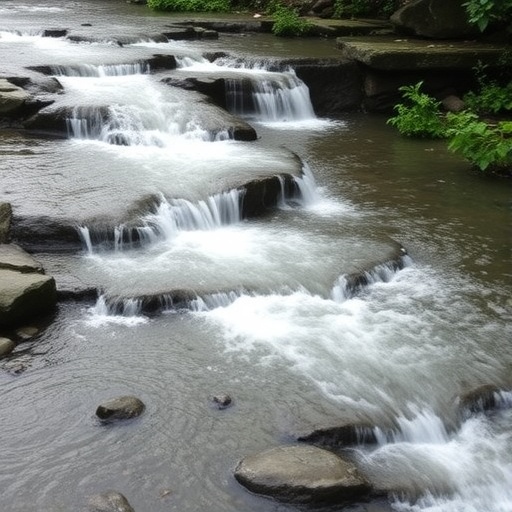
In the quest to unravel the intricate dynamics of Earth’s critical zone, a recent study published in Environmental Earth Sciences sheds unprecedented light on the hydrogeochemical behavior and seasonal variability of water sources within the Munnar Critical Zone Observatory (CZO) located in the ecologically rich Southern Western Ghats of India. This comprehensive investigation, spearheaded by Sreelesh, Dutta, Rani, and colleagues, not only charts the fluctuating chemical landscapes of groundwater and surface waters across seasons but also unravels a compelling phenomenon known as chemostasis—a state of chemical equilibrium despite varying hydrological inputs.
Nestled within the biodiversity hotspot of the Western Ghats, the Munnar CZO presents a natural laboratory characterized by its complex topography, monsoon-driven climate patterns, and diverse lithological formations. These factors coalesce to influence the region’s hydrology profoundly. The research team embarked on an extensive sampling campaign to capture the temporal variability of water chemistry, focusing on parameters such as major ions, trace elements, and isotopic signatures. Their goal was to decode the interplay between seasonal precipitation variations and the geochemical evolution of water as it traverses through soil, bedrock, and aquifers.
One of the most striking revelations of this study revolves around the concept of chemostasis—the tendency of chemical concentrations in water bodies to remain relatively constant despite fluctuating discharge volumes and external inputs. Traditionally, it has been expected that seasonal changes in rainfall and runoff would induce significant compositional shifts in the water. However, the Munnar CZO data defied this assumption, exhibiting remarkable chemical stability amid pronounced hydrological variation. This finding challenges conventional paradigms and suggests underlying regulatory mechanisms that buffer the system against compositional perturbations.
The team attributes this chemostatic behavior to a delicate balance of hydrogeochemical processes operating in tandem. Foremost is the role of mineral weathering, which releases ions into the groundwater at rates that compensate for dilution effects during monsoon peak flows. Silicate and carbonate minerals in the region’s bedrock undergo dissolution reactions that inject consistent chemical signatures regardless of volume fluctuations. Concurrently, biogeochemical interactions within the soil matrix, including microbial activity and organic matter transformations, modulate ion exchange processes, further stabilizing the water chemistry.
Seasonal climatic cycles in the Western Ghats impose a dual character on the hydrological regime—wet monsoon months characterized by intense precipitation and high runoff, juxtaposed against dry seasons with reduced recharge. The researchers meticulously tracked how these cycles influenced water sources, noting that despite large swings in water volume, the chemical fingerprints of streams, springs, and shallow wells remained steadfast. Isotopic analyses reinforced these observations, revealing minimal shifts in isotopic ratios that typically signal source mixing or evapotranspiration effects.
Such hydrogeochemical resilience is not merely an academic curiosity but holds profound ecological and socio-economic implications. The Southern Western Ghats sustains myriad endemic species and supports local communities reliant on consistent and clean water supply. Understanding the mechanisms that sustain chemostatic equilibrium can inform water resource management strategies that ensure water quality amidst the vagaries of climate variability. It also offers predictive power in anticipating how these mountain ecosystems might respond to future climatic shifts or anthropogenic stressors.
Underlying these observations is the influence of the region’s heterogeneous geology. The Munnar landscape is a mosaic of charnockites, gneisses, and amphibolites, each contributing distinct mineral assemblages that interact uniquely with infiltrating water. The study illustrates how lithological diversity translates into spatial variability in water chemistry, even as temporal variability remains subdued. This spatial-temporal matrix underscores the complexity of critical zone processes and the need for integrative sampling approaches combining hydrology, geochemistry, and geomorphology.
Furthermore, the researchers highlight the role of subsurface flow paths and residence times in achieving chemostasis. Water traversing deeper or longer paths tends to acquire more pronounced mineral signals, compensating for dilution effects occurring during high flow conditions. These dynamic yet balanced processes ensure the persistence of stable chemical baselines, which are vital for nutrient cycling and the maintenance of aquatic ecosystems downstream.
Comparative insights drawn from similar critical zone observatories worldwide reveal that chemostasis might be a common attribute in well-buffered mountain systems, though the underlying drivers can differ based on regional geology and climate. The Munnar CZO thus joins an emerging cadre of sites where nuanced hydrogeochemical equilibrium processes are elucidated, enriching global understanding of water system resilience.
Technologically, the study leveraged state-of-the-art analytical techniques, including mass spectrometry for precise isotopic measurements and ion chromatography for major ion quantification. These tools enabled the researchers to dissect subtle geochemical trends and delineate the influence of various weathering pathways. Coupled with hydrometric data and climate records, the multidisciplinary approach presents a robust framework for future critical zone investigations.
The timing of the study captures an era marked by increasing climatic uncertainty, with monsoon patterns in the Indian subcontinent showing signs of alteration. Insights into the system’s inherent chemical steadiness provide a reassuring perspective but also cautionary signals regarding thresholds beyond which chemostasis might fail. Monitoring such tipping points remains a research priority, especially given the region’s vulnerability to land use changes and pollution pressures.
In light of these findings, the authors advocate for sustained, high-resolution monitoring programs across the Southern Western Ghats. Expanding spatial coverage and integrating biological assessments could further unravel how hydrogeochemical stability interfaces with ecosystem health. Moreover, exploring anthropogenic impacts such as agricultural runoff and tourism-induced contamination would complement the baseline established by this work.
The study’s implications transcend regional watersheds, speaking to global challenges of water security and ecosystem resilience under climatic flux. Critical zones worldwide, serving as interfaces between atmosphere, biosphere, and lithosphere, are pivotal in regulating water quality. Unlocking the mechanisms of chemostasis enhances our capacity to predict and manage these fragile systems under mounting environmental stress.
At its core, this research underscores the elegance of natural equilibria operating beneath our feet—complex yet harmonious balances sustaining water quality against the odds. The revelation of chemostatic behavior in the Munnar CZO invites a reevaluation of hydrological models that often assume linear responses to climatic drivers. Embracing such nuanced understanding fosters more effective stewardship of critical zone resources.
While the study provides comprehensive coverage of hydrogeochemical dynamics, it also paves the way for interdisciplinary dialogues linking geochemistry with ecology, climatology, and social sciences. Such integrative perspectives are essential for crafting holistic responses to global water challenges, emphasizing the interconnectedness that defines the critical zone framework.
In sum, Sreelesh and colleagues have illuminated a facet of Earth system behavior that harmonizes water chemistry amidst seasonal upheaval, reinforcing the Southern Western Ghats’ status as a keystone natural laboratory. Their pioneering work not only advances scientific frontiers but also resonates with broader aspirations to safeguard water resources in an era of unprecedented environmental change.
Subject of Research: Hydrogeochemical dynamics and seasonal variability of water sources in the Munnar Critical Zone Observatory, focusing on the mechanisms underlying chemostatic behavior.
Article Title: Hydrogeochemical dynamics and seasonal variability of water sources in the Munnar CZO, Southern Western Ghats, India: unveiling chemostatic behaviour.
Article References: Sreelesh, R., Dutta, M.K., Rani, G.V.A. et al. Hydrogeochemical dynamics and seasonal variability of water sources in the Munnar CZO, Southern Western Ghats, India: unveiling chemostatic behaviour. Environ Earth Sci 84, 311 (2025). https://doi.org/10.1007/s12665-025-12301-5
Image Credits: AI Generated


