

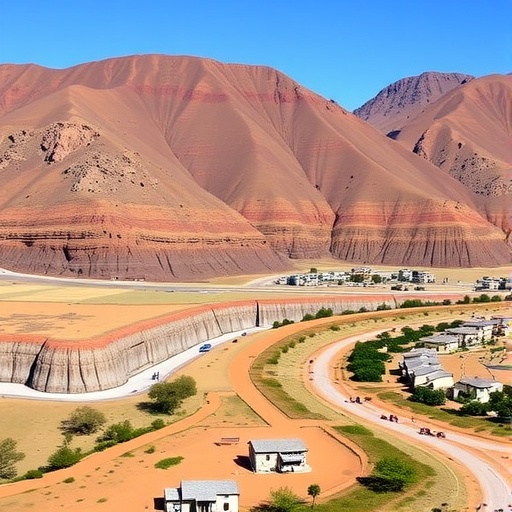
In a groundbreaking new study published in PLOS One, researchers have unveiled compelling evidence that seabird guano played a pivotal role in fertilizing the Chincha Valley of Peru as early as 1250 CE. This discovery sheds new light on the agricultural foundation that supported the expansion of pre-Inca societies in this region. By enhancing soil fertility with nutrient-rich guano, these ancient communities likely boosted crop yields, enabling population growth and political complexity well before the rise of the Inca Empire.
The Chincha Valley, located along Peru’s arid southern coast, has long fascinated archaeologists due to the remarkable resilience and sophistication of its pre-Columbian civilizations. The valley’s harsh, desert-like environment posed significant challenges to traditional agriculture, yet fertile lands flourished. The secret, according to the new research, lay in the sea. The authors present detailed isotopic analyses of maize samples and archaeological data revealing that seabird-derived nutrients enriched the valley’s agricultural soils over centuries.
Key to this prehistoric agricultural innovation were three dominant guano-producing seabird species: the Peruvian booby (Sula variegata), the Peruvian pelican (Pelecanus thagus), and the Guanay cormorant (Leucocarbo bougainvilliorum). These birds, nesting in massive colonies on offshore islands, deposited guano rich in nitrogen, phosphorus, and other essential minerals. The guano was collected or naturally deposited on the mainland fields, directly fertilizing crops and enhancing soil productivity.
The interdisciplinary team from Australia and the United States employed cutting-edge stable isotope methods to analyze ancient maize samples from archaeological sites in the Chincha Valley. Their findings demonstrated elevated levels of nitrogen isotopes, which are consistent with agricultural fertilization using seabird guano. This empirical data bridges a critical gap between ecological processes and socio-cultural development in pre-Inca Peru.
Historically, guano has been recognized as a potent fertilizer, widely used in the 19th century to support global agriculture. However, its role in pre-modern civilizations, especially in South America, remained largely speculative until this study. The new research not only confirms the antiquity of guano use but also pinpoints its societal ramifications, providing a fresh perspective on the origins of agricultural intensification on the Peruvian coast.
The study further suggests that the exploitation of seabird guano was a sophisticated form of resource management. The pre-Inca societies functioned within a complex ecological framework where marine and terrestrial systems interacted seamlessly. By harnessing the nutrient cycling from seabirds, these communities demonstrated ecological ingenuity, capitalizing on natural fertilization to overcome environmental constraints.
This fertilization likely contributed to intensified maize agriculture, a staple crop crucial for sustaining large populations. Increased crop productivity would have facilitated social stratification and the development of political centers within the Chincha Valley. Such advancements paved the way for the subsequent emergence of the expansive Inca Empire, which eventually integrated and expanded these early agricultural systems.
Moreover, these findings add a new dimension to understanding human-animal interactions in ancient times. Seabirds were not only vital ecological agents but indirectly became key contributors to human civilization’s expansion in the region. Their guano, often thought of as mere waste, was integral to agricultural success and societal transformation. This interdependence across species highlights early examples of humans leveraging environmental processes to stimulate cultural evolution.
The methodological approach of this research underscores the growing importance of isotopic archaeology in reconstructing ancient lifeways and environments. By applying granular biochemical analyses to recovered plant remains, the authors were able to trace nutrient pathways and confirm anthropogenic fertilization practices. Such methods open new avenues for examining agricultural practices in other pre-industrial societies worldwide.
While the study focuses specifically on the Chincha Valley, its implications resonate more broadly across coastal arid regions where seabirds colonize. As climate change and modern environmental challenges threaten these fragile ecosystems, understanding historical sustainability practices offers valuable lessons. The pre-Inca use of guano exemplifies a renewable and ecologically sound fertilization strategy, highlighting ancient wisdom that could inspire contemporary agricultural innovations.
This research received generous support from grants by the National Science Foundation, the Ford Foundation, and National Geographic Young Explorers Grant Program, among others. Importantly, the investigators emphasized that funding organizations had no role in shaping the study’s design or outcomes, affirming scientific independence and rigor.
With no competing interests declared, the authors invite further interdisciplinary exploration to uncover how natural resources shaped pre-Columbian civilizations beyond mere subsistence. Their findings underscore the intricate relationship between environment, economy, and society, inviting a reevaluation of the drivers behind early complex societies in the Andean region.
In summary, through innovative use of isotopic data and archaeological evidence, this study compellingly argues that seabird guano fertilization was central to agricultural intensification and societal expansion in pre-Inca Peru. By connecting marine ecology to terrestrial agriculture, it reveals a nuanced narrative of how ancient civilizations thrived in challenging environments, laying the foundation for one of the most remarkable cultures in the Americas.
Subject of Research: The role of seabird guano fertilization in the agricultural expansion and societal development of pre-Inca Peru.
Article Title: Seabirds shaped the expansion of pre-Inca society in Peru
News Publication Date: 11-Feb-2026
Web References: 10.1371/journal.pone.0341263
Image Credits: Bongers et al., 2026, PLOS One, CC-BY 4.0; Photos by Diego H. and Claude Kolwelter (iNaturalist.org), licensed under CC-BY 4.0.
Keywords: seabird guano, pre-Inca agriculture, Chincha Valley, Peru, isotopic analysis, maize fertilization, marine-terrestrial ecological interactions, Guanay cormorant, Peruvian pelican, Peruvian booby, early complex societies, archaeological science


