

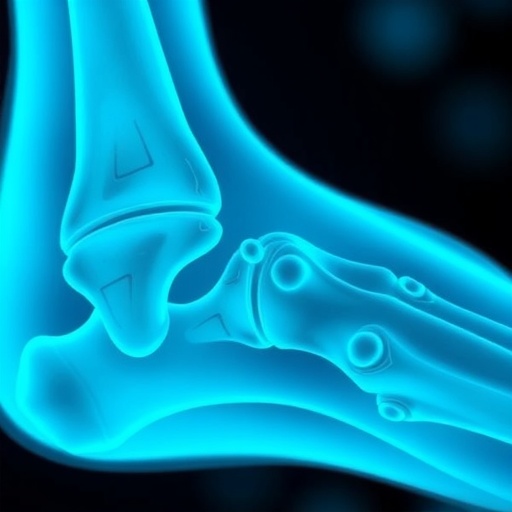
In a groundbreaking advance in the fight against osteosarcoma, researchers at Case Western Reserve University and University Hospitals have developed a novel immunotherapy with the potential to revolutionize treatment for this devastating bone cancer. Osteosarcoma, predominantly affecting children, adolescents, and young adults during rapid bone growth phases, has long posed a significant clinical challenge due to its aggressive nature and resistance to conventional therapies. This new study introduces an engineered immune treatment—termed OSM CAR-T therapy—that exhibits potent anti-tumor activity against osteosarcoma cells, fundamentally shifting the paradigm of targeted cancer therapy.
Osteosarcoma accounts for the majority of bone cancer cases in younger populations, with approximately 1,000 new diagnoses annually in the United States alone. Despite intensive chemotherapy and surgical interventions, survival rates have plateaued for decades. The reasons for this stagnation include the tumor’s complex biology and its propensity for metastasis, which significantly limits the effectiveness of existing modalities. Genetic mutations in bone-forming mesenchymal cells and, in some cases, inherited predispositions have been implicated in the disease’s pathogenesis, but precise molecular targets for therapy have remained elusive.
The research team has capitalized on recent advances in CAR-T cell technology, which reprograms a patient’s own T cells to recognize and eradicate cancer cells. While CAR-T treatments have transformed outcomes for hematological malignancies such as leukemia and lymphoma, solid tumors like osteosarcoma present unique obstacles. Tumor heterogeneity, immune evasion mechanisms, and a suppressive microenvironment reduce the efficacy of traditional CAR-T approaches in these contexts.
Addressing these challenges, the team engineered CAR-T cells to specifically target Oncostatin M (OSM) receptors present on osteosarcoma cells. OSM is a cytokine involved in inflammation and tissue remodeling, and its receptor is aberrantly expressed on these tumors. By designing the CAR-T cells to recognize multiple receptor sites associated with OSM, the therapy achieves a more comprehensive identification and destruction of cancerous cells. This multi-targeting capability is critical in overcoming the limitations of prior CAR-T constructs that focused on singular antigens.
The experimental data, obtained through rigorous in vivo studies employing mouse models of human osteosarcoma, are compelling. OSM CAR-T cells exhibited robust cytotoxicity across diverse patient-derived tumor samples, effectively reducing tumor burden. Furthermore, the therapy demonstrated significant efficacy in combating metastatic lesions—an area where conventional treatment frequently fails. The ability of OSM CAR-T cells to infiltrate and eliminate tumors in secondary organs instills hope for patients with advanced disease presentations.
Technical evaluation of the immune response revealed that OSM CAR-T cells retain functional persistence and proliferate upon exposure to tumor antigens, a hallmark of effective immunotherapies. Cytokine profiling confirmed that these modified cells produce targeted inflammatory signals conducive to tumor lysis without inducing systemic toxicity. Importantly, preclinical safety assessments showed no off-target effects or detrimental impacts on healthy tissues expressing normal levels of OSM receptors.
This research underscores the critical role that a multidisciplinary, collaborative environment plays in transforming scientific discoveries into viable clinical strategies. The synergy between Case Western Reserve University’s research expertise and the clinical infrastructure of University Hospitals facilitated the rapid design, production, and testing of these next-generation CAR-T cells. The institutions’ integrated resources allowed for comprehensive evaluation from molecular engineering to functional immune assays.
Looking ahead, the research team anticipates translating these promising preclinical results into clinical trials within the next two years. Success in human patients could inaugurate a new treatment era for osteosarcoma, potentially minimizing reliance on invasive surgeries and toxic chemotherapeutics. Such targeted immunotherapies might also extend survival and improve quality of life, particularly for those with metastatic or refractory disease who currently face limited options.
Beyond osteosarcoma, the novel principle of exploiting ligand-based CAR-T targeting through OSM receptor recognition may offer a blueprint for tackling other solid tumors exhibiting complex antigenic profiles. This strategy leverages the immune system’s adaptability, enabling more precise and customizable cancer treatments. As CAR-T technology continues to evolve, addressing tumor microenvironment challenges and optimizing persistence will be crucial to broadening its impact.
The leadership of Dr. Reshmi Parameswaran, associate professor at Case Western Reserve’s Department of Medicine and a key investigator within the Case Comprehensive Cancer Center’s Immuno-Oncology Program, was instrumental in this achievement. Dr. Parameswaran highlighted the therapy’s potential to overcome long-standing barriers, emphasizing the critical unmet need for novel osteosarcoma treatments that provide both efficacy and reduced toxicity compared to current standards.
Osteosarcoma’s biology—marked by rapid, aberrant bone growth and a high metastatic potential—necessitates innovative approaches like OSM CAR-T. Traditional chemotherapy and surgery offer only incremental improvements, often accompanied by significant side effects and functional limitations. This new immunotherapy embodies a precision medicine approach that directs the immune system’s cytotoxic capacity strictly against malignant cells, minimizing collateral damage.
While the path from preclinical research to approved clinical application is complex and requires careful validation in human subjects, OSM CAR-T therapy’s preliminary success paves a hopeful road. If larger-scale trials confirm safety and efficacy, this treatment could emerge as a powerful weapon in the arsenal against pediatric and young adult bone cancers, fulfilling a four-decade void in meaningful therapeutic progress. The work exemplifies how targeted immunotherapies hold transformative promise for even the most challenging solid tumors.
Subject of Research: Animals
Article Title: Oncostatin-M Ligand-Based CAR-T Therapy Displays Robust Anti-Tumor Activity Against Osteosarcoma
News Publication Date: 17-Mar-2026
Web References: https://doi.org/10.1186/s12916-026-04729-8
References: BMC Medicine publication DOI 10.1186/s12916-026-04729-8
Image Credits: Case Western Reserve University
Keywords: Bone cancer, Osteosarcoma, CAR-T therapy, Immunotherapy, Oncostatin M, Solid tumors, Pediatric cancer, Metastasis, Immune engineering, Targeted therapy


