

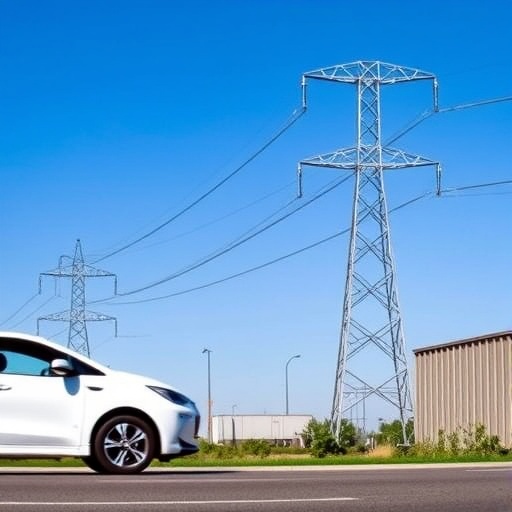
A recent comprehensive analysis conducted by researchers at Queen Mary University of London has raised critical concerns over the effectiveness of the United Kingdom’s current electrification strategies designed to meet net-zero carbon emissions targets. The study explicitly points out that the deployment of electric vehicles (EVs) and heat pumps has not yielded the anticipated carbon savings, challenging prevailing policy assumptions. This research argues that the UK’s urgent focus should shift from rapid electrification toward enhancing grid infrastructure, expanding renewable capacity, and implementing carbon capture technologies to truly facilitate the transition to a carbon-neutral future.
Using empirical data from 2023, Professors Alan Drew and David Dunstan meticulously reassessed the UK’s trajectory for decarbonising electricity generation by 2030. Their analysis exposes that the intermittency and variability of wind and solar power capabilities are far more significant than previously modeled in net-zero planning. These renewable energy sources frequently fail to provide consistent output, creating energy supply deficits that are currently compensated by gas-fired power plants. This reality undermines the environmental benefits of increased electrification since EVs and heat pumps amplify electricity demand precisely during these gas-dependent intervals, negating any measurable reductions in carbon emissions.
A concerning corollary of this imbalance is the substantial financial burden imposed by wind curtailment events. Wind curtailment occurs when wind turbines, or other renewable generators, are forced to reduce or cease output because the electricity grid cannot accept or transmit the surplus power. According to the analysis, curtailment expenses exceeded £1 billion in 2025 alone and are projected to surge dramatically to an accumulative £20 billion by 2030 if the grid remains unreformed and unable to efficiently integrate the growing renewable share. This inefficiency not only wastes potential clean energy but also strains public resources and investor confidence in renewables.
The researchers emphasize that the UK’s current decarbonisation strategy is premature in its prioritization of electrifying transport and heating apparatus without ensuring a robust, resilient grid infrastructure that can handle peak and variable demands. They assert that until the power system achieves significant levels of surplus clean energy, deploying technologies like EVs and heat pumps will not deliver net emission reductions. The underlying grid bottlenecks—insufficient transmission capacity, lack of large-scale energy storage, and intermittent renewable output—must be resolved to enable these technologies to function as genuinely low-carbon solutions.
In response to these findings, the study recommends a strategic realignment emphasizing four critical priorities. First, the UK must invest heavily in modernizing and strengthening its electricity grid to mitigate curtailment and enable seamless transmission from renewable generation hubs to high-demand regions. This involves upgrading transmission lines, deploying smart grid technologies, and improving grid flexibility to better accommodate renewable variability.
Second, accelerating the development and integration of renewable generation capacity—particularly wind and solar—remains essential. However, this expansion must be thoughtfully managed to align generation growth with enhancements in grid infrastructure and storage capabilities, thereby avoiding the costly curtailment observed today.
Third, there must be a concerted effort to develop and deploy energy absorption technologies capable of utilizing surplus renewable electricity. Technologies such as green hydrogen production via electrolysis or synthetic fuel generation represent promising avenues to convert excess electricity into storable, transportable forms of energy. These solutions not only help balance supply and demand but also create valuable clean fuel alternatives, diversifying the decarbonisation portfolio.
Finally, the continued operation of gas-fired power stations, projected to run roughly half the time by 2030, underscores the urgent need for rapid implementation of carbon capture and storage (CCS) technologies. CCS can significantly reduce emissions from fossil-fuel-based generators, bridging the gap until renewable energy and storage capabilities sufficiently replace conventional power sources.
This “sanity check” conducted by Drew and Dunstan serves as a critical reality recalibration for policymakers and the public. It highlights the danger of overreliance on optimistic assumptions about storage scalability and electrification benefits that remain unproven under current grid conditions. The paper calls for data-driven, pragmatic policymaking focused on tangible bottlenecks affecting the UK power system’s ability to decarbonise efficiently.
Professor Alan Drew emphasized the immediate need to reevaluate the UK’s energy transition strategies: “Electric vehicles and heat pumps will eventually play a vital role; however, the present evidence shows that these technologies are not currently delivering emission reductions. We must prioritize strengthening grid infrastructure, expanding renewables, and addressing the formidable challenge of storing surplus renewable electricity.”
Professor David Dunstan further added, “Our analysis equips stakeholders with factual insights into the decarbonisation process. Achieving net-zero goals is within reach but requires a concentrated focus on the critical chokepoints in the energy system rather than superficial, politically driven fixes.”
In conclusion, while the ambition to electrify transport and heating aligns with long-term decarbonisation pathways, the current conditions of the UK electricity grid and renewable power system limitations mean these measures alone do not suffice. Success demands a deliberate sequence of infrastructure upgrades, renewable capacity expansion, development of energy storage and conversion technologies, along with CCS deployment to effectively reduce emissions. This research underlines the urgency of basing energy policy on empirical data and realistic technological readiness to ensure that the UK’s climate goals are met both efficiently and sustainably.
Subject of Research: Decarbonisation pathways for British electricity generation focusing on the role of grid infrastructure, renewable variability, and electrification impact.
Article Title: Reappraisal of paths to decarbonising British electricity generation in 2030
News Publication Date: 5-Feb-2026
Web References: http://dx.doi.org/10.1088/2753-3751/ae4235
References: Drew, A., & Dunstan, D. (2026). Reappraisal of paths to decarbonising British electricity generation in 2030. Environmental Research Energy.
Keywords: Anthropogenic carbon dioxide, Resource policy, Carbon


