

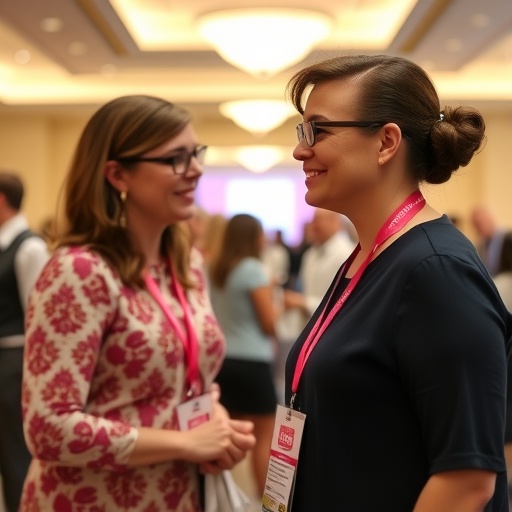
The San Antonio Breast Cancer Symposium® (SABCS) has once again solidified its role as a seminal event in the global oncology community, drawing a remarkable attendance exceeding 11,000 participants from 104 nations in 2025. Held annually in December at the Henry B. González Convention Center in San Antonio, Texas, this gathering not only advances scientific knowledge but also significantly stimulates the local economy, injecting nearly $40 million into the city’s fiscal landscape. This dual impact underscores the symposium’s standing as both a scientific beacon and an economic engine.
Since its inception in 1977 with a modest group of 50 attendees, SABCS has evolved into a cornerstone event uniting a diverse cohort of oncologists, researchers, nurses, and patient advocates committed to innovation in breast cancer research and clinical care. The symposium’s continual growth mirrors the escalating global urgency to address breast cancer’s multifaceted challenges through collaborative scientific endeavors. Its hosting by UT Health San Antonio’s Mays Cancer Center, in partnership with the American Association for Cancer Research (AACR), highlights the integration of cutting-edge research with clinical practice.
The 2025 symposium showcased groundbreaking studies that are reshaping the breast cancer therapeutic landscape. Among these was the presentation on giredestrant, an oral selective estrogen receptor degrader, which demonstrated a statistically significant extension in progression-free survival compared to standard endocrine therapies in early-stage hormone receptor-positive breast cancer. This development emphasizes the maturation of targeted hormone treatments that balance efficacy with improved patient tolerability.
Parallel to advancements in hormone receptor-positive malignancies, SABCS 2025 illuminated progress in treating the notoriously challenging HER2-positive subgroup. Data supporting the addition of tucatinib, a highly selective HER2 tyrosine kinase inhibitor, to existing regimens showed a noteworthy improvement in delaying disease progression. Remarkably, this regimen achieved these clinical benefits while reducing reliance on cytotoxic chemotherapy, thereby potentially mitigating long-term adverse effects and enhancing patients’ quality of life.
Innovative immunotherapeutic approaches also took center stage at the symposium, particularly concerning triple-negative breast cancer (TNBC), a subtype characterized by poor prognosis and limited targeted treatment options. Early-phase trials of a novel vaccine strategy elicited immune responses in 74% of participants, an encouraging signal that harnessing the immune system could pave a viable path toward both treatment and prevention strategies for aggressive breast cancers. These findings catalyze a paradigm shift from conventional therapies to immune-based modalities.
Integral to the symposium’s discourse was the emphasis on the heterogeneity of patient populations, highlighting research that elucidates the unique biological and psychosocial needs of younger breast cancer patients. This segment of attendees underscored the pressing need for personalized treatment regimens that account for the long-term survivorship issues and fertility preservation, factors critically relevant for this demographic. Additionally, lifestyle considerations such as obesity and nutrition emerged as modifiable risk factors that directly influence cancer incidence and treatment responsiveness, steering public health strategies toward integrative oncology.
SABCS 2025 also featured compelling investigations into the pharmacodynamics and therapeutic implications of GLP-1 receptor agonists—commonly prescribed for weight management—in the context of breast cancer care. Presented by fellows from UT Health San Antonio, these studies examined how these agents may affect tumor microenvironment, treatment efficacy, and adverse effect profiles, foreshadowing a nuanced intersection between metabolic therapies and oncologic outcomes.
The symposium’s role extends beyond scientific exchange to act as a powerful catalyst for local and global economic development. The influx of delegates during the four-day event generated over $22.8 million in direct expenditure within San Antonio, catalyzing revenue streams for hotels, dining establishments, and transportation services, while simultaneously supporting thousands of jobs. This economic influx reinforces the symposium’s stature as a vital contributor to the city’s robust $21.5 billion tourism industry and broader economic ecosystem.
Leaders of the Mays Cancer Center eloquently captured the symbiosis between research excellence and community impact during SABCS. Dr. Virginia Kaklamani, co-chair of SABCS, and Dr. Lei Zheng, executive director of the Mays Cancer Center, articulated how the symposium embodies the institution’s commitment to innovative translational research—moving discoveries swiftly from bench to bedside—and reinforces San Antonio’s identity as a global hub for cancer research.
The synthesis of groundbreaking discoveries presented at SABCS precipitates tangible improvements in clinical practice, elucidating the symposium’s role as a fulcrum of innovation that directly benefits patient populations worldwide. Margaret Foti, CEO of AACR, emphasized the gathering’s consistent ability to convene the foremost minds in breast cancer research, fostering a collaborative environment that accelerates the development of novel therapeutic and preventive modalities.
Looking ahead to the 49th annual symposium scheduled for December 8–11, 2026, expectations remain high for continued scientific breakthroughs and interdisciplinary collaboration. As breast cancer remains a leading cause of cancer morbidity and mortality globally, events such as SABCS are indispensable for disseminating knowledge, shaping clinical guidelines, and inspiring the next generation of oncology researchers and clinicians.
UT Health San Antonio’s stewardship of SABCS, alongside AACR’s partnership, exemplifies a model framework for orchestrating events that merge scientific rigor, patient-centered care evolution, and substantial socioeconomic contributions. The Mays Cancer Center’s alignment with MD Anderson Cancer Center further enhances access to advanced therapeutic options, empowering both research innovation and community health outcomes in South Texas and beyond.
In sum, the 2025 San Antonio Breast Cancer Symposium not only catalyzed pivotal advancements across multiple domains of breast cancer research but also demonstrated the intrinsic value of such scientific congregations in fostering global health innovation and fortifying local economies. This confluence of scientific excellence and regional impact positions SABCS as a unique and invaluable institution in the global fight against breast cancer.
Subject of Research: Breast cancer research, including targeted therapies, immunotherapy, and translational science.
Article Title: Groundbreaking Advances at the 2025 San Antonio Breast Cancer Symposium Propel Global Oncology Forward
News Publication Date: March 31, 2026
Web References: https://sabcs.org, https://cancer.uthscsa.edu/, https://uthscsa.edu
Keywords: Breast cancer, oncology, cancer research, clinical research, translational research, drug development, hormone therapy, HER2-positive breast cancer, immunotherapy, triple-negative breast cancer, GLP-1 receptor agonists, breast cancer vaccine


