

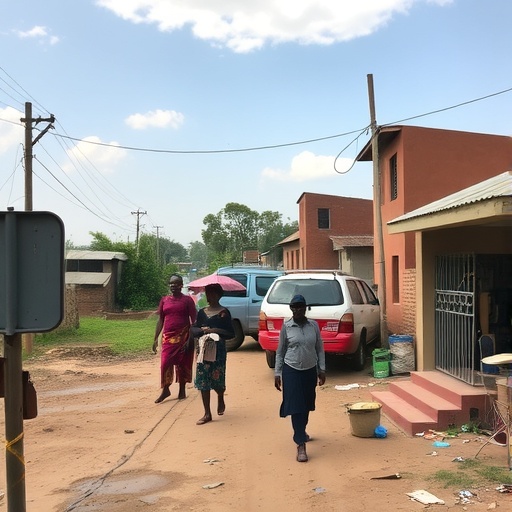
In the realms of development studies and sustainability, understanding the dynamics between rural and urban areas is increasingly vital. A recent study titled “The Effect of Rural–Urban Linkages on Rural Livelihoods in Sebata, Oromia, Ethiopia,” authored by researchers Garoma, Gutema, and Tolossa, takes a comprehensive look at how these intricate connections shape the livelihoods of rural residents. As the world continues to urbanize, the impact on rural communities cannot be underestimated, and this research offers critical insights into the ways these interactions can either enhance or hinder rural development.
This study is particularly significant in a region like Oromia, Ethiopia, where agricultural practices are the backbone of the local economy. The authors meticulously delve into how rural-urban linkages may improve access to markets, services, and infrastructure, ultimately elevating the livelihoods of the agricultural population. By assessing the various dimensions of these linkages, the researchers illuminate the multifaceted nature of rural livelihoods, demonstrating that these connections can provide a pathway to economic resilience and sustainability.
One of the key findings of the study highlights how increased access to urban markets can offer rural farmers new opportunities. By connecting with urban consumers, they can diversify their products and potentially receive better prices for their crops. Moreover, the study emphasizes the role of technology in facilitating these market interactions. Access to information and communication technologies is becoming a game-changer, enabling farmers to obtain real-time data on market trends and pricing, thus allowing them to make informed decisions.
Furthermore, rural-urban linkages are presented as a conduit through which information about best practices and innovation can be transmitted. In regions like Sebata, where traditional farming methods are prevalent, the infusion of modern techniques represents a revolutionary shift. These new agricultural practices not only boost productivity but also encourage sustainable methods that are less harmful to the environment. The harnessing of knowledge from urban centers can lead to more resilient agricultural systems that are equipped to face the challenges posed by climate change.
Additionally, the study takes into account the social aspects of these linkages. The migration of youth from rural areas to urban centers in search of better opportunities is not merely a loss for rural communities; it can also lead to the flow of remittances back to their families. This influx of capital can significantly impact the rural economy, allowing families to invest in education, health, and local businesses. The authors point out that while migration can lead to challenges, it also creates a network of support that can spurn innovation in rural areas.
However, the relationship between rural and urban areas is not without its challenges. The study thoughtfully addresses the potential negative effects of rapid urbanization, which can lead to social inequality and the marginalization of certain groups within the rural population. As some rural communities gain access to enhanced capabilities and resources, others may be left behind, exacerbating the divide between different socioeconomic classes.
Local governance plays a crucial role in mediating the effects of urban-rural linkages. The study outlines how policymakers in Oromia must take an active stance in fostering an inclusive environment where the benefits of these linkages are accessible to all. Engaging with local communities and understanding their unique challenges are essential in designing interventions that empower rural residents rather than marginalizing them further.
The research methodology deployed by the authors is robust, incorporating both quantitative and qualitative analyses to paint a holistic portrait of the rural livelihoods in Sebata. This dual approach enables them to capture the nuances of rural experiences and gather insights that might be missed through a singular lens. Interviews, surveys, and participatory observation were employed to collect data, giving voice to the rural communities and allowing their stories to inform the research outcomes.
As the findings are disseminated, they hold promise for future research directions and practical applications. The role of rural-urban linkages in facilitating sustainable development is an emerging field that warrants further exploration. The authors suggest that studies in different geographical contexts could enhance the understanding of how these linkages function globally, providing valuable lessons for policymakers and practitioners aiming for impactful and scalable interventions.
In conclusion, “The Effect of Rural–Urban Linkages on Rural Livelihoods in Sebata, Oromia, Ethiopia” presents critical insights into the intertwined nature of rural and urban economies. The research emphasizes that fostering these linkages can offer a pathway towards sustainability and resilience for rural communities. However, it also warns of the challenges that accompany urbanization, urging a proactive approach from governments and stakeholders to ensure equitable access to resources. The interplay of agriculture, technology, migration, and policy forms an intricate tapestry that is crucial for future developments in rural areas, setting the stage for a more resilient global economy.
The contributions of Garoma, Gutema, and Tolossa pave the way for further inquiry into rural-urban dynamics, emphasizing the need for interdisciplinary approaches to tackle the pressing issues faced by rural communities. As urban areas continue to expand, a balanced focus on the livelihoods of rural residents becomes imperative for sustainable development.
Subject of Research: Rural-Urban Linkages and Their Impact on Livelihoods
Article Title: The Effect of Rural–Urban Linkages on Rural Livelihoods in Sebata, Oromia, Ethiopia
Article References:
Garoma, T., Gutema, P. & Tolossa, D. The effect of rural–urban linkages on rural livelihoods in Sebata, Oromia, Ethiopia.
Discov Sustain (2025). https://doi.org/10.1007/s43621-025-02533-7
Image Credits: AI Generated
DOI: 10.1007/s43621-025-02533-7
Keywords: Rural Development, Urbanization, Livelihoods, Sustainability, Ethiopia, Agricultural Practices, Migration, Policy Development.


