

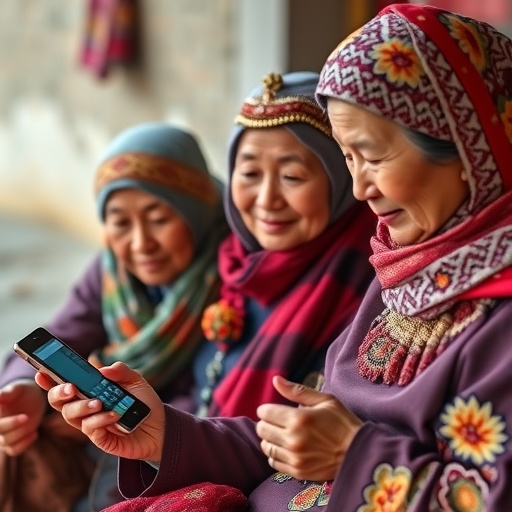
In the rapidly evolving landscape of healthcare, smartphones have emerged as pivotal tools, especially among underserved populations. A recent qualitative study conducted by Zhang, X., Zhang, J., Pan, Y., and colleagues has shed light on the unique experiences of rural empty-nest older adults in China as they seek medical services via smartphones. This study serves as a crucial exploration of the intersection between technology and healthcare access, revealing insights that may influence future health interventions.
The phenomenon of “empty-nest” elderly individuals—those whose children have moved away—presents a growing public health concern, particularly in rural settings. These populations often face barriers to accessing healthcare, including geographic isolation and limited mobility. The introduction of smartphones into the equation opens a new frontier; however, the effectiveness of these devices in meeting the health needs of older adults warrants serious investigation.
Zhang et al. conducted comprehensive interviews with a diverse cohort of older adults living in rural areas. The qualitative methodology allowed participants to express their concerns, experiences, and aspirations regarding technology use in healthcare. These narratives paint a compelling portrait of how older adults interpret, navigate, and utilize mobile health services in a rapidly digitizing world. Many participants expressed a yearning for improved access to medical consultations, a desire for timely information, and a need for a user-friendly interface that caters to their specific requirements.
One of the most striking findings from this study was the disparity in technology adoption among older adults. Many participants demonstrated an eager willingness to engage with technology, yet they often grappled with the nuances of smartphone functionality. Those with greater digital literacy were able to leverage mobile applications to book appointments, access telemedicine consultations, and monitor health metrics. Conversely, participants lacking these skills expressed frustration and anxiety, which hindered their ability to seek vital medical services.
Moreover, cultural factors played a critical role in shaping the experiences of older adults using smartphones for healthcare. In traditional settings, seeking medical help is often a communal decision involving family members. As such, the transition to digital healthcare platforms necessitates significant changes not only in individual behavior but also in family dynamics. Participants articulated the importance of familial support in boosting their confidence in using mobile health applications effectively.
Another crucial aspect uncovered in this qualitative study pertains to trust—specifically, the trust that older adults place in digital platforms. Many expressed skepticism about the reliability of information on health apps and concern about the security of their personal data. The researchers noted that building trust would be fundamental to encouraging broader adoption of mobile health solutions among this demographic. Health providers and app developers must regard these concerns seriously, ensuring that their platforms not only provide accurate information but also comply with data protection regulations.
Moreover, community engagement emerged as a vital strategy to promote technology adoption among older adults. Participants frequently mentioned the role of community centers and local health departments in facilitating workshops aimed at teaching digital literacy. These grassroots efforts can serve to demystify technology, providing older adults with the necessary skills to navigate health applications confidently. The researchers suggest that healthcare policymakers should consider integrating digital literacy programs into routine health services as a means of broadening access and improving patient outcomes.
As technological advancements continue to reshape healthcare paradigms, ensuring that elderly populations are not left behind becomes imperative. The study by Zhang et al. calls attention to the need for tailored health solutions that consider the unique challenges faced by rural empty-nest older adults. These insights are particularly relevant as healthcare systems worldwide increasingly pivot towards digital platforms, urging a careful examination of who benefits from such transitions.
Further, the implications of this study stretch beyond the confines of rural China. Globally, rural elderly populations often struggle with similar healthcare access challenges, bringing to light an international imperative to consider inclusive technology design. To develop effective health interventions, stakeholders must prioritize understanding the experiences and attitudes of older adults who may be hesitant to adopt new technologies.
In conclusion, the qualitative research conducted on the smartphone use of older adults in rural China furnishes valuable lessons for the future of digital healthcare. By placing the voices of elderly populations at the forefront of technological development, the medical community can cultivate a more inclusive environment that promotes health equity. This study serves as a clarion call for further research and initiatives aimed at ensuring that the promise of digital health is accessible to all, regardless of age or geographical location.
As mobile health technology continues to proliferate, the insights gleaned from Zhang et al.’s work underscore a fundamental truth: technology alone cannot solve healthcare disparities. It is only through understanding the multifaceted experiences of users, integrating community support, and fostering trust that we can hope to create a healthcare landscape where every individual has the tools and resources to thrive.
Subject of Research: Mobile health services among rural empty-nest older adults in China.
Article Title: Seeking medical services on the smartphone among rural empty-nest older adults in China: a qualitative study.
Article References:
Zhang, X., Zhang, J., Pan, Y. et al. Seeking medical services on the smartphone among rural empty-nest older adults in China: a qualitative study.
BMC Geriatr (2026). https://doi.org/10.1186/s12877-026-07046-0
Image Credits: AI Generated
DOI: 10.1186/s12877-026-07046-0
Keywords: smartphone, healthcare access, elderly, rural health, digital literacy, telemedicine, community engagement, technology adoption, qualitative research.


