

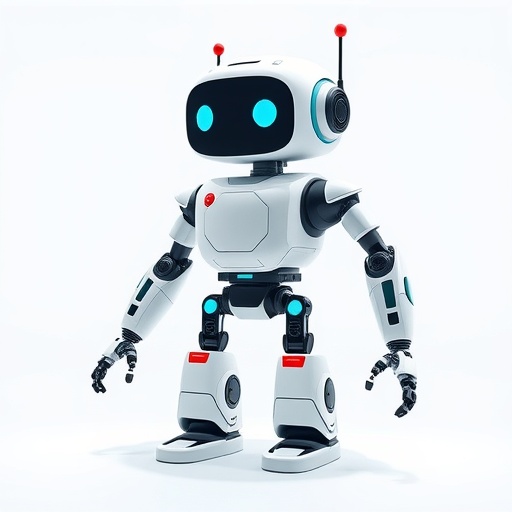
In a transformative leap for robotics and artificial intelligence, researchers have unveiled a groundbreaking framework that marries large language models (LLMs) with the Robot Operating System (ROS) to enable deeply versatile and autonomous embodied AI. This development addresses one of the field’s most persistent challenges: empowering robots to reliably interpret and execute complex natural language instructions in the physical world. By bridging the cognitive prowess of LLMs with robust robotic control architectures, this framework establishes new paradigms for embodied intelligence, opening the door for robots that learn, adapt, and operate with unprecedented autonomy.
At the heart of this innovation lies the seamless integration of open-source pretrained large language models directly into ROS, an industry-standard platform widely used for robot software development. This integration enables LLM-based agents to dynamically translate human language commands into actionable robot instructions. Crucially, the system supports multiple execution modes, including inline code generation and behavior trees, which are hierarchical models commonly employed to represent robot decision-making processes. This dual-mode capability ensures both flexibility and reliability in robot task execution, accommodating a wide range of robotic platforms and operational contexts.
Beyond translation of instructions, the framework introduces a novel approach to skill acquisition and refinement. Robots can autonomously learn novel atomic skills through imitation learning, a process whereby robots observe demonstrations and internalize new capabilities. More impressively, the system supports continual optimization of these skills via automated feedback loops derived either from environmental inputs or supervised human reflections. This closed-loop learning mechanism fosters adaptability, enabling robots to improve their performance over time without requiring constant manual reprogramming.
The researchers conducted extensive empirical evaluations across varied robotic embodiments and scenarios. These experiments rigorously validated the framework’s robustness, scalability, and versatility. Among the showcased use cases are long-horizon tasks, such as multi-step assembly operations, demonstrating the framework’s capacity to handle complex sequences of actions extending far beyond single-step commands. Other tests involved dynamic rearrangements on tabletops, a classic domain requiring both fine manipulation and real-time perception. The system also excelled in dynamic task optimization settings, illustrating real-world applicability where operating conditions continuously evolve.
One of the most compelling features highlighted is the framework’s support for remote supervisory control, which allows operators to oversee robot activity from a distance and intervene as necessary through natural language. This capability enhances human-robot collaboration, particularly in environments where direct human presence is restricted or hazardous. Operators can issue high-level instructions and receive interpretive feedback—typically realized through natural language summaries or clarifications—enabling more intuitive and efficient control workflows.
The open-source nature of the implementation stands out as a pivotal contribution, ensuring widespread accessibility and fostering community-driven advancements. By releasing all code and configurations publicly, the authors empower researchers and developers worldwide to experiment, customize, and extend the framework. This democratization of technology accelerates progress in embodied AI and facilitates cross-pollination between academia and industry, propelling innovation in robot autonomy.
A distinctive hallmark of this work is its reliance exclusively on open-source pretrained large language models rather than proprietary alternatives. This approach underscores a philosophical and practical commitment to transparency and transparency-friendly AI development. It also alleviates concerns tied to commercial usage restrictions, encouraging widespread adoption and collaboration across diverse institutions and projects.
Technically, the interaction between language models and the ROS ecosystem is orchestrated via an agent architecture capable of parsing and transforming outputs from LLMs into executable commands. The system encapsulates natural language understanding, task decomposition, and real-time control synthesis into a cohesive pipeline. Behavior trees engineered within ROS serve as high-level planners that can be dynamically modified during runtime, accommodating corrections or improvisations facilitated by the agent’s continual learning capabilities.
The framework leverages imitation learning algorithms that imbue robots with foundational competencies using relatively small data samples, significantly reducing the effort required for initial programming. Furthermore, skill refinement is achieved through automated optimization processes, which may involve reinforcement learning techniques guided by feedback signals. The inclusion of human-in-the-loop reflection allows experts to review, critique, and guide robot behavior iteratively, establishing a symbiotic learning environment that combines machine efficiency with human insight.
Experimental results reveal that robots governed by this framework demonstrate remarkably resilient performance even under uncertainty and unexpected disturbances. The multi-modal execution strategy enables fallback contingencies; for instance, if inline code execution encounters errors, the behavior tree mode can ensure continuity of operation by adhering to predefined safety and fallback routines. The ability to switch execution modes dynamically provides robustness that is critical for real-world deployments.
Beyond isolated task performance, the system excels at orchestrating collaborative multistep workflows, coordinating perception, manipulation, and navigation subsystems. This coordination is facilitated by the ROS infrastructure combined with the centralized language-driven decision-making of the LLM agent. The abstraction of complex task goals into natural language instructions democratizes robot programming, making sophisticated robot behavior accessible to non-expert users.
The potential applications of this framework span a broad spectrum, from industrial automation and service robotics to disaster response and teleoperation. The flexibility inherent in the design allows for scaling from simple home assistant robots to sophisticated mobile manipulators operating in dynamic, cluttered environments. Its adaptability also serves as a foundation for future research on lifelong learning and autonomous skill discovery in robotics.
This pioneering work significantly narrows the gap between human linguistic abilities and robotic physical execution, heralding a new era in embodied AI where robots can understand, learn from, and collaborate with humans in a manner previously thought to be years away. As the community adopts and builds upon this open-source framework, we can anticipate rapid strides in making robot autonomy more intelligent, accessible, and aligned with our everyday needs.
In sum, by harnessing the cognitive depth of large language models and the flexible, modular capabilities of the Robot Operating System, the presented framework offers a versatile platform that transforms robotic autonomy. Through its robust integration, continuous learning, and open accessibility, it sets a new benchmark for embodied AI systems capable of sophisticated interaction and action in the physical world.
Subject of Research: Large language model-enabled autonomous robots through a Robot Operating System framework.
Article Title: A robot operating system framework for using large language models in embodied AI.
Article References:
Mower, C.E., Wan, Y., Yu, H. et al. A robot operating system framework for using large language models in embodied AI. Nat Mach Intell (2026). https://doi.org/10.1038/s42256-026-01186-z
Image Credits: AI Generated
DOI: https://doi.org/10.1038/s42256-026-01186-z


