

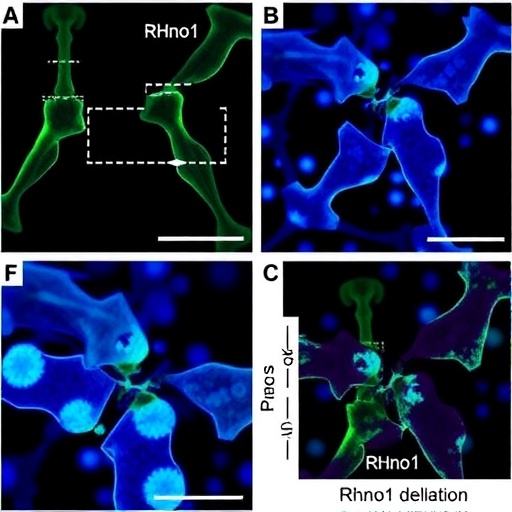
In a groundbreaking study published in Cell Death Discovery, researchers have unveiled critical insights into the molecular mechanisms governing DNA damage signaling and cell cycle checkpoints, focusing on the role of the gene Rhno1. This investigation harnessed a mouse model bearing a targeted deletion of Rhno1, shedding light on how its absence disrupts fundamental cellular processes that safeguard genomic stability. The findings, teeming with implications for cancer biology and therapeutic development, elucidate the intricacies of DNA damage response pathways and open new avenues for understanding disease pathogenesis linked to defective checkpoint control.
The integrity of the genome is constantly challenged by endogenous metabolic activities and exogenous insults. To combat this, cells rely on sophisticated signaling networks that detect DNA lesions, orchestrate repair, and regulate progression through the cell cycle. Central to this defense web is the precise operation of checkpoint proteins, which act as sentinels to halt cell division until damage is adequately repaired. Any failure in these systems can precipitate genomic instability, a hallmark of oncogenesis. The gene Rhno1 has emerged as a significant player in this landscape, yet its functional contributions remained enigmatic until now.
By employing a genetically engineered mouse model with a homozygous Rhno1 knockout, the team meticulously characterized the downstream effects on the DNA damage response (DDR) machinery. They observed pronounced deficiencies in the activation of key checkpoint kinases, such as ATM and ATR, and subsequent impaired phosphorylation of substrates instrumental in halting cell cycle progression. This defective signaling cascade rendered cells unable to appropriately respond to genotoxic stress, manifesting as heightened susceptibility to DNA lesions and chromosomal aberrations.
Crucially, the study reveals that Rhno1 deletion compromises the S-phase and G2/M checkpoints—critical control points ensuring that DNA has been faithfully replicated and that no damage persists before mitosis. Cells lacking Rhno1 exhibited accelerated entry into mitosis despite unresolved DNA breaks, culminating in mitotic catastrophe and increased apoptotic rates. This phenotype underscores Rhno1’s vital role in coordinating the temporal dynamics of cell cycle arrest and repair, highlighting its potential as a tumor suppressor entity.
To unravel the mechanistic underpinnings, the researchers delved into protein-protein interaction networks involving Rhno1. Their data revealed that Rhno1 acts as a molecular scaffold facilitating the assembly of checkpoint complexes and recruiting essential repair proteins to sites of damage. This scaffolding function is paramount for the amplification of DDR signals, ensuring robust cellular responses. Without Rhno1, these complexes are destabilized, leading to suboptimal repair and persistence of DNA lesions.
The investigative team further explored the consequences of Rhno1-mediated checkpoint failure on genomic stability. They documented an increased frequency of micronuclei formation and chromosomal translocations in Rhno1-null cells, classical markers of genomic instability that predispose cells to malignant transformation. These findings intimate that Rhno1 deficiency could potentiate oncogenic processes by sabotaging the very mechanisms designed to prevent cancerous progression.
In parallel, transcriptomic analyses revealed that the absence of Rhno1 perturbs expression profiles of multiple DNA repair genes, suggesting a broader regulatory role beyond direct checkpoint engagement. This transcriptional dysregulation exacerbates the cellular inability to counteract DNA damage. The comprehensive integration of signaling impairment and gene expression alterations delineates a multifaceted role for Rhno1 in genome maintenance.
The translational implications are profound. Tumors with defective DDR pathways often display heightened sensitivity to DNA-damaging chemotherapeutics and poly (ADP-ribose) polymerase (PARP) inhibitors. Understanding Rhno1’s role offers a potential biomarker for predicting therapeutic responsiveness and resistance mechanisms. Additionally, strategies aimed at restoring or mimicking Rhno1 function could enhance the efficacy of existing cancer treatments, offering a new frontier in personalized medicine.
Moreover, the study prompts a reevaluation of Rhno1’s place within the broader DDR hierarchy. It challenges the traditional perspectives that considered this gene as ancillary, instead positioning it as a critical coordinator of checkpoint fidelity. This paradigm shift galvanizes further research into the network of interactions underpinning DNA damage sensing and repair, with Rhno1 serving as a pivotal node.
Intriguingly, the mouse model developed in this research provides an invaluable platform for in vivo studies of DDR deficiencies. The authors demonstrated that Rhno1 deletion sensitized tissues to DNA-damaging agents, recapitulating aspects of human pathologies linked to chromosome instability syndromes. This model holds promise for dissecting the interplay between genetic background, environmental exposures, and cancer predisposition.
Future investigations are poised to unravel how Rhno1 interfaces with other molecular machineries, such as chromatin remodelers and replication fork stabilizers. Detailed structural studies may elucidate the precise binding domains critical for Rhno1’s scaffolding role, potentially guiding the design of small molecules to modulate its activity. Such endeavors could revolutionize strategies for DDR modulation in clinical settings.
This research highlights the nuanced complexity of maintaining genomic integrity and positions Rhno1 as an essential guardian of the genome. By explicating the molecular consequences of its deletion, the study enriches our comprehension of cellular quality control systems and underscores the delicate balance between proliferation and genome preservation. Ultimately, these insights have far-reaching implications for cancer biology, genomic medicine, and therapeutic innovation.
As we advance, the insights gained from this seminal work promise to reverberate across biomedical research, providing the conceptual framework for new diagnostics and interventions targeting the Achilles’ heel of cancer cells—their reliance on compromised DNA repair pathways. The revelation of Rhno1’s indispensable role invites a renewed focus on checkpoint biology, heralding a future where precision targeting of genome surveillance can arrest tumor progression with unprecedented efficacy.
In summary, the study conducted by Her, Santhosh, Gonzalez-Rodriguez, and colleagues delivers a compelling narrative about the critical role of Rhno1 in DNA damage signaling and cell cycle checkpoint control. Their mouse model vividly portrays the catastrophic cellular consequences of Rhno1 deficiency, reaffirming the gene’s status as a linchpin in maintaining genomic fidelity. This work not only fuels scientific curiosity but also propels translational prospects in combating diseases rooted in genomic instability.
Subject of Research: Defects in DNA damage signaling and cell cycle checkpoints in a mouse model with Rhno1 gene deletion.
Article Title: Defects in DNA damage signaling and cell cycle checkpoints in a mouse model of Rhno1 deletion.
Article References:
Her, J., Santhosh, A., Gonzalez-Rodriguez, Y. et al. Defects in DNA damage signaling and cell cycle checkpoints in a mouse model of Rhno1 deletion. Cell Death Discov. (2025). https://doi.org/10.1038/s41420-025-02912-z
Image Credits: AI Generated


