

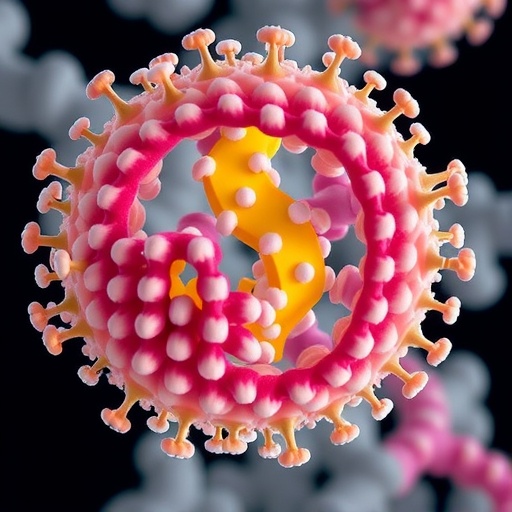
In a groundbreaking development poised to revolutionize the field of targeted protein degradation, Casasampere, Carneros, Roda, and their colleagues have unveiled a novel methodology that broadens the scope of small molecule chimeras. Their highly anticipated publication in Nature Communications (2026) introduces an innovative strategy that directly harnesses the 26S proteasome to degrade disease-causing proteins. This breakthrough sheds light on a hitherto challenging aspect of drug discovery—efficient and selective degradation of pathological proteins—offering new hope across numerous therapeutic areas, including oncology, neurology, and beyond.
Targeted protein degradation has emerged as a formidable tool in medicinal chemistry, spearheaded by technologies such as PROTACs (proteolysis-targeting chimeras) that leverage the cell’s ubiquitin-proteasome system. Historically, these bifunctional molecules recruit E3 ubiquitin ligases to label the protein of interest with ubiquitin chains, prompting proteasomal recognition and degradation. While successful, reliance on the limited repertoire of E3 ligases has posed limitations in target scope and tissue specificity. Casasampere et al. disrupt this paradigm by designing small molecule chimeras capable of directly engaging the 26S proteasome, the cellular machinery responsible for the final proteolytic step, bypassing some intrinsic complexities of the ubiquitination step.
The 26S proteasome is an ATP-dependent proteolytic complex renowned for its role in degrading polyubiquitinated proteins, maintaining proteostasis, and regulating cell cycle progression and signal transduction. Traditionally viewed as an untargetable cylindrical protease core complex, the 26S proteasome consists of a 20S core particle capped by 19S regulatory particles that recognize substrates, unfold them, and translocate them into the proteolytic chamber. Casasampere’s team engineered a new class of bifunctional molecules that physically tether the target protein directly to specific proteasomal subunits, effectively bypassing ubiquitination. This bold strategy introduces a direct degradation modality, contrasting with the classic hop-on-hop-off ubiquitin cascades.
The design principles hinge on a modular synthetic approach. One end of the chimera molecule binds with high affinity to the protein of interest, while the other interacts specifically with binding pockets on the 19S regulatory particle or accessory subunits instrumental in substrate recognition. This dual engagement coaxed the proteasome to selectively process the tethered protein, overcoming the proteasome’s usual substrate selectivity constraints. By strategically engineering linker length and molecular geometry, the researchers demonstrated precise spatial orientation essential for degradation efficacy, verified through biochemical assays and single-particle cryo-electron microscopy imaging.
Experimental validation was conducted across diverse cell lines, involving target proteins traditionally considered “undruggable” by classical PROTACs. The team was able to induce robust degradation of proteins implicated in oncogenic signaling, such as transcription factors and scaffold proteins lacking suitable E3 ligase recruitment motifs. Importantly, these effects were proteasome-dependent, as co-treatment with proteasome inhibitors completely abrogated the degradation signal, confirming mechanism specificity. Time-course studies demonstrated rapid kinetics of degradation, offering a therapeutic window advantage over conventional approaches.
Mechanistically, this approach promises more direct manipulation of the degradation endpoint in the proteostasis pathway, reducing reliance on endogenous cellular factors often limiting traditional targeted degradation therapies. The strategy might circumvent resistance mechanisms related to E3 ligase expression or function loss, a known challenge in the clinical translation of ubiquitin-dependent chimeras. Additionally, by targeting the proteasome, this technique harnesses a cellular node with ubiquitous presence and invariant activity across cell types, potentially allowing broader tissue applicability.
On the molecular level, Casasampere and colleagues revealed that tethering the substrate to proteasomal receptors triggers allosteric conformational changes heightening substrate engagement and unfolding efficiency, key steps facilitating proteolysis. High-resolution structural biology coupled with mutagenesis provided insights into binding interfaces and dynamic conformational states, advancing fundamental understanding of proteasomal plasticity. Such detailed mechanistic elucidation forms a critical foundation for rationally designing future chimeras with enhanced selectivity and potency.
From a drug development perspective, this approach opens avenues for tackling complex diseases with pathogenic proteins previously inaccessible by small molecules or biologics. Proteins involved in neurodegenerative diseases, for instance, often form insoluble aggregates resistant to cellular clearance. Direct recruitment of such aggregates to the proteasome could enhance proteolytic degradation, alleviating toxicity. Furthermore, rapidly degrading oncogenic drivers might lead to improved cancer therapeutics with diminished side effects, as transient target engagement mitigates off-target interactions common in inhibitor-based drugs.
Moreover, Casasampere’s team identified key chemical scaffolds amenable to large-scale medicinal chemistry optimization, laying groundwork for drug-like properties compatible with in vivo applications. Their initial pharmacokinetic and toxicity assays in animal models revealed favorable systemic exposure and minimal off-target effects, validating therapeutic potential. The versatility of this platform suggests adaptability not only for intracellular targets but potentially for extracellular or membrane-bound proteins through cell-penetrant chimera designs.
Complementing current targeted degradation technologies, this proteasome-directed approach could integrate synergistically with emerging modalities like molecular glues or lysosome-targeted strategies, enhancing combinatorial regimens that maximize protein clearance. As the field of targeted protein degradation matures rapidly, innovations like these will likely catalyze a new generation of personalized and precision medicines, accelerating the bench-to-bedside timeline for previously elusive molecular targets.
The implications of this research extend to understanding proteasomal pathology itself. Aberrant proteasome function is implicated in numerous diseases, including cancer and neurodegeneration. By providing molecular handles to modulate proteasomal substrate selection, future therapeutics might also rectify dysregulated proteostasis, restoring healthy cell physiology. This dual capacity to degrade harmful proteins while modulating proteasome activity portends a transformative therapeutic landscape.
In conclusion, Casasampere, Carneros, Roda, and their collaborators have elegantly redefined the contours of targeted protein degradation, pioneering direct proteasomal engagement through small molecule chimeras. This paradigm-shifting approach surmounts critical limitations of existing methods and unlocks a panoply of previously inaccessible protein targets. Their work marks a seminal advance at the convergence of chemical biology, structural biochemistry, and drug discovery, guaranteed to ignite further research and clinical translation in the coming years. The field now eagerly awaits expanded biological validation, clinical trials, and broad adoption of this proteasome-centered degradation technology as a staple of next-generation therapeutics.
Subject of Research:
Targeted protein degradation via small molecule chimeras directly engaging the 26S proteasome.
Article Title:
Expanding the targeted protein degradation approach with small molecule chimeras directed to the 26S proteasome.
Article References:
Casasampere, M., Carneros, H., Roda, T. et al. Expanding the targeted protein degradation approach with small molecule chimeras directed to the 26S proteasome. Nat Commun (2026). https://doi.org/10.1038/s41467-026-71132-5
Image Credits: AI Generated
DOI:
https://doi.org/10.1038/s41467-026-71132-5
Keywords:
Targeted protein degradation, 26S proteasome, small molecule chimeras, proteolysis-targeting, chemical biology, proteostasis, structural biochemistry, drug discovery, PROTAC alternatives, ubiquitin-independent degradation


