

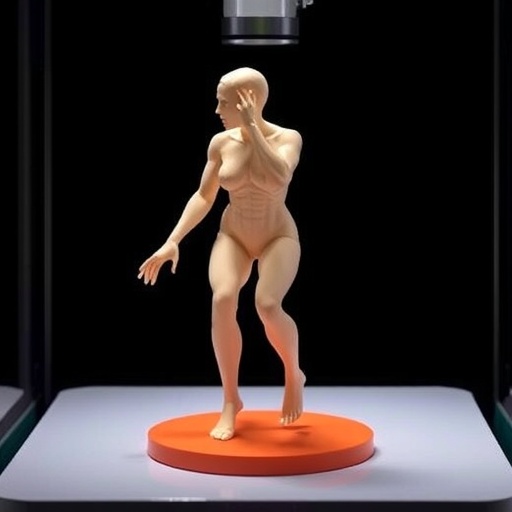
In the ever-evolving landscape of medical education, the integration of cutting-edge technologies has become paramount. One such technology that is making significant waves is 3D printing, a transformative tool that has the potential to revolutionize the way medical students learn and apply their knowledge in real-world scenarios. A recent study led by a team of researchers, including Heiser, Ruther, and Salahudeen, proposes a comprehensive curriculum that incorporates 3D printing into medical school education, potentially setting the stage for a new era in medical training.
The concept of 3D printing in medicine is not novel; however, its systematic inclusion in medical education has yet to gain the traction it deserves. The researchers aim to address this gap, suggesting a structured curriculum that not only introduces the principles of 3D printing but also encompasses its practical applications in various medical fields. This initiative responds to the increasing demand for innovative and hands-on learning experiences in medical training, where students are encouraged to engage with technology early in their careers.
Foremost among the compelling reasons for integrating 3D printing into medical curricula is its ability to create patient-specific models. These models can be used for pre-operative planning, allowing medical professionals to practice procedures on a replica of the patient’s anatomy. This tailored approach not only enhances the surgeon’s familiarity with the specificities of a patient’s condition but also significantly improves outcomes by reducing operation times and potential complications.
In addition to personalized surgical models, the researchers also discuss the potential of 3D printing in the development of prosthetics and implants. Medical students who are trained in 3D design and printing will be well-equipped to participate in the creation of customized prosthetics that fit better and function more naturally for patients. This hands-on experience is invaluable, as it empowers students to blend engineering principles with medical knowledge, ultimately leading to innovative solutions within the healthcare field.
The proposed curriculum emphasizes an interdisciplinary approach, whereby students from various medical specialties collaborate in small groups. This not only fosters teamwork and communication skills but also enables a richer learning environment where diverse perspectives can enrich the educational experience. For instance, future orthopedic surgeons could work alongside radiologists and biomedical engineers to design and fabricate orthopedic implants tailored to individual patients, enhancing the depth and relevance of their training.
To further the practical aspects of this educational initiative, workshops and lab sessions will be integral components of the curriculum. These activities will give students hands-on experience with 3D modeling software and printing technologies, bridging the gap between theory and practice. The importance of such experiential learning cannot be overstated, as it has been shown to enhance retention and application of knowledge far beyond traditional classroom settings.
Moreover, the curriculum is designed with the understanding that technology continues to advance rapidly. To keep pace with these changes, the educational program will include modules on the latest developments in 3D printing techniques and materials used in the process. By ensuring that medical students are educated on the most current advancements in this technology, the curriculum aims to prepare them for a future where such knowledge will be vital for their professional success.
The integration of 3D printing into medical curricula also extends to ethical considerations surrounding its use. As technology advances, medical professionals will need to confront ethical dilemmas, such as those related to patient privacy and the implications of creating body parts through innovative technologies. The proposed curriculum will tackle these challenges head-on, promoting critical thinking and ethical deliberation among tomorrow’s healthcare leaders.
Furthermore, the study highlights the potential for collaboration with industry partners. Engaging with companies that specialize in 3D printing technologies could provide students with invaluable insights and opportunities for internships and job placements post-graduation. These partnerships could enhance the educational experience, providing students with firsthand knowledge of the industry’s needs and practices while simultaneously fueling innovation through academic and corporate synergy.
As the demands of healthcare continue to evolve, the necessary skills for success are also transforming. The proposed curriculum acknowledges the need for medical graduates to be adaptable, with a toolkit of skills that includes technological fluency in areas like 3D printing. In cultivating these competencies, medical schools can ensure that graduates are not only well-prepared for current medical practices but also equipped to navigate the challenges of a rapidly changing landscape.
Adopting 3D printing as a core component of medical education promises to benefit the broader healthcare ecosystem. By producing graduates who are knowledgeable and proficient in utilizing these advanced technologies, the curriculum is set to drive innovations in patient care and treatment. Consequently, the resulting improvements in efficiency and effectiveness could lead to substantial advancements in public health outcomes over time.
Furthermore, the researchers behind this initiative are optimistic about the potential for broader applications beyond traditional medical education. They envision adaptable models that could be replicated in nursing programs, allied health fields, and even in patient education initiatives. As 3D printing technology continues to advance, it can serve as a vehicle not just for hands-on training but also for fostering a more collaborative and technologically savvy approach to healthcare.
In conclusion, the incorporation of 3D printing into medical school curricula represents a paradigm shift in how future healthcare professionals will be trained. This innovative approach not only prepares students for the practical demands of their careers but also encourages a mindset of creativity and adaptability. As the medical field increasingly integrates complex technologies, the ability to navigate and leverage these tools will be paramount in shaping the future of patient care and medical practice.
The study by Heiser, Ruther, and Salahudeen serves as a vital call to action for medical educators to embrace technological advancements to enhance teaching and learning. By fostering an environment that promotes innovation, collaboration, and ethical considerations, institutions can ensure that their graduates will lead the way in a healthcare landscape that is more complex and rapidly evolving than ever before.
Subject of Research: Integration of 3D printing in medical school curricula.
Article Title: Proposed medical school curricula for 3D printing.
Article References:
Heiser, D., Ruther, S., Salahudeen, O. et al. Proposed medical school curricula for 3D printing.
3D Print Med 11, 57 (2025). https://doi.org/10.1186/s41205-025-00306-6
Image Credits: AI Generated
DOI: https://doi.org/10.1186/s41205-025-00306-6
Keywords: 3D printing, medical education, curriculum development, healthcare innovation, ethical considerations, interdisciplinary collaboration.


